






Wine route
Brunello and Rosso loop
Half a day to a full day · 4 stops
Open the driveYour cellar, your trips, and the wines you've been tracking are right where you left them.
New here?
Free, always. Education first, we'll never sell you anything you didn't ask to see.
Already have an account?
Enter the email you signed up with and we'll send a link to choose a new password.
Tuscany · DOC
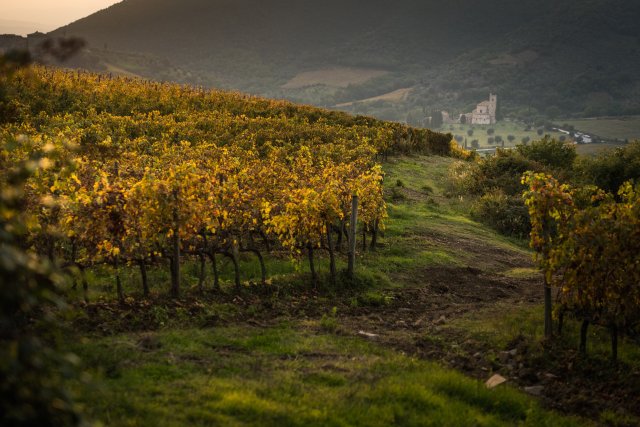
Montalcino's other label is Sant'Antimo DOC. It was created in 1996 and named for the Romanesque abbey south of the village. It covers the same hills as Brunello, but frees them from Sangiovese. Cabernet, Merlot, Chardonnay and the rest live here, alongside a serious Vin Santo tradition.
Decode the label
One word on the front changes the ageing, the strength and the price.
On the label
Rosso and varietals
Any Tuscan grape; varietals at 85%
The estate-name buy: Brunello cellars' international side.
No bottles in stock right now
On the label
Bianco
The white escape hatch
Mostly Chardonnay in practice.
No bottles in stock right now
On the label
Vin Santo and Occhio di Pernice
The dried-grape tradition
Sealed caratelli, years of patience, tiny volumes.
No bottles in stock right now
The boundary
Everything on this page, the estates, the bottles, the sub-zones, sits inside this line.
Wine route
Half a day to a full day · 4 stops
Open the drive
Estate 1
Montalcino
Tastings available
Estate 2
Montalcino
Tastings available
Estate 3
Montalcino
Tastings available
Estate 4
Montalcino
Tastings available
Estate 5
Montalcino
Tastings available
Estate 6
Montalcino
Tastings available
Estate 7
Montalcino
Tastings available
Estate 8
Castelnuovo dell'Abate
Tastings available
Estate 9
Montalcino
Book online
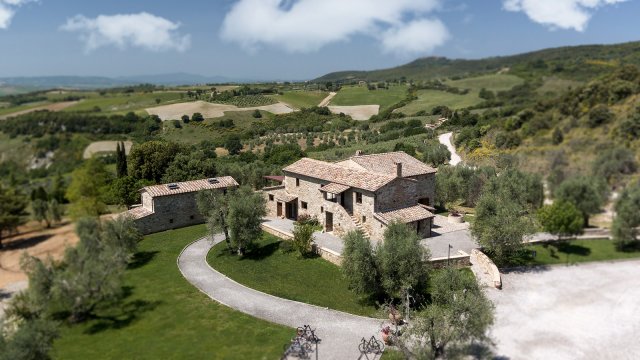
The zone sits inside the commune of Montalcino, the same galestro-and-clay hill country that makes Brunello, rising from the Orcia and Asso valleys to the village at 560 metres. The name comes from the southern slopes, where the abbey of Sant'Antimo stands among olives below Castelnuovo dell'Abate; the warmest exposures there ripen Cabernet and Merlot fully.
Inside the zone
Click or tap a pin for its estate. The numbered pins match the estate cards below.
Towns worth knowing
The abbey below Castelnuovo dell'Abate gives the DOC its name and its landmark.
In the glass
One profile at a time, never blended into a single set of bars.
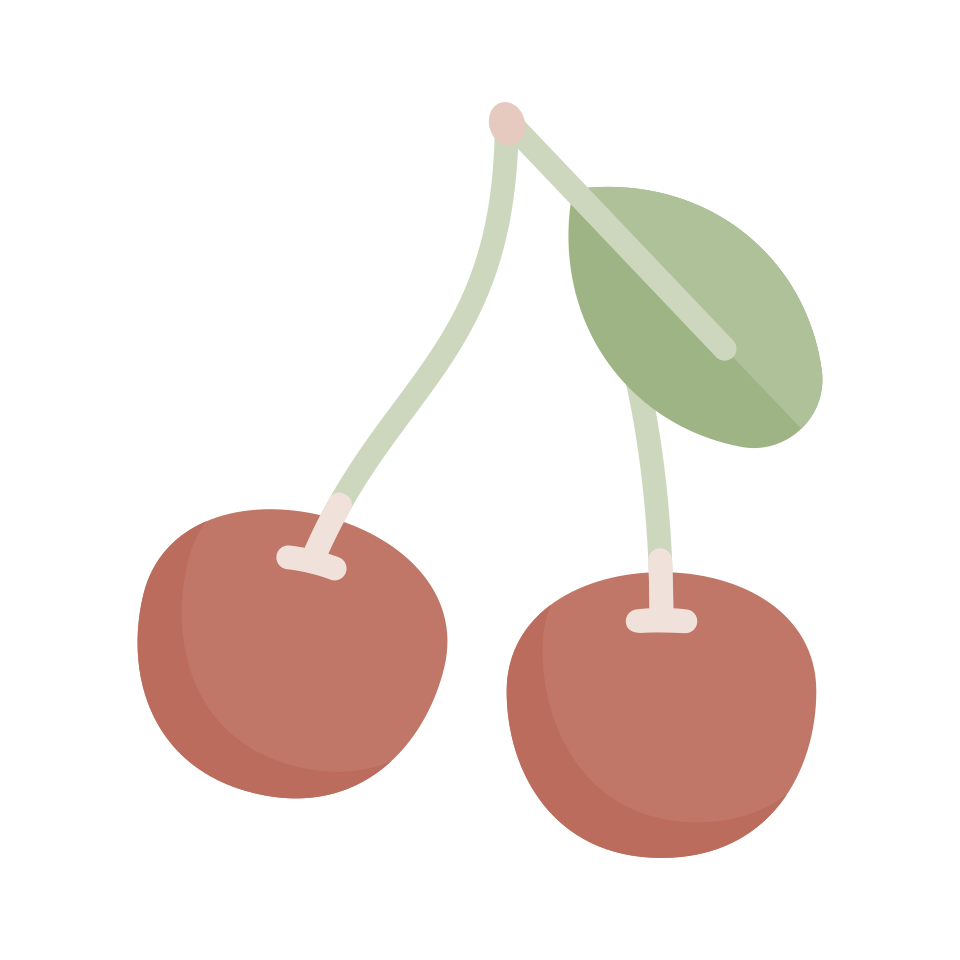
Black cherry
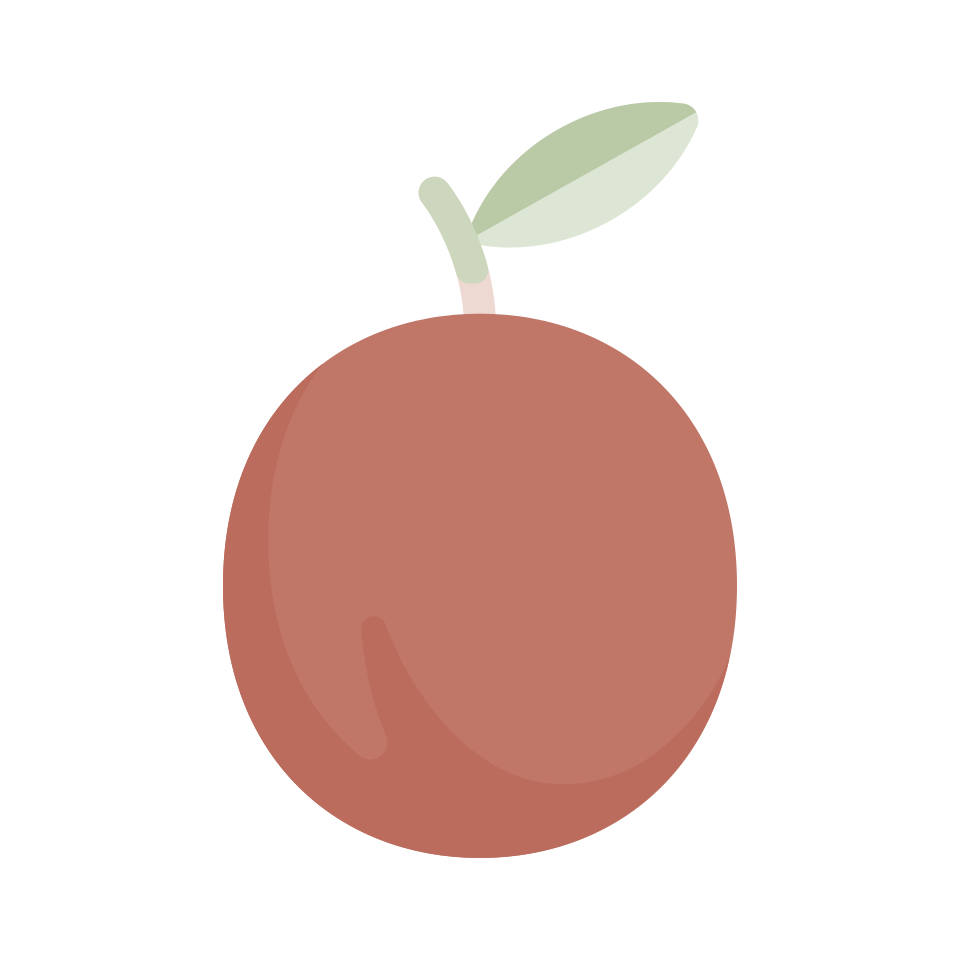
Plum

Tobacco

Apple

Butter

Honey
Raisin

Hazelnuts
The disciplinare
The same table on every denomination page, straight from the production rules.
Solid means the rules demand it. Striped means optional, up to that amount. The words on the right say the same rule.
Freedom by design rosso and bianco may blend any Tuscany-authorised grapes, the mirror image of Brunello's purity rule.
Varietals need 85 percent from Chardonnay to Pinot Nero, a named grape must dominate.
The sweet wines age sealed Vin Santo and Occhio di Pernice mature in small caratelli casks inside the zone.
Brunello's yields, nearly 9 tonnes per hectare for the main types, 8 for several varietals.
Ageing and alcohol minimums per tier are in the label guide above.
Cellar doors · inside the zone
9 working estates with their gates open, numbered to match their pins on the map above.
No estates match these filters. Clear a filter to see more.
Experiences in the Sant'Antimo zone
Cellar experiences here average around €73. These are the strongest fits for this page.
Tenute Silvio Nardi
Private tour of the company with visit to the vineyards and aging cellars. Tasting of 6 wines: 2 vintages of Manachiara (Brunello Cru) 2 vin…
Tenute Silvio Nardi
Private tour of the company with visit to the vineyards and aging cellars. Tasting of 7 wines: -6 vintages of Brunello di Montalcino from th…
Tenute Silvio Nardi
Short tour of the vineyards followed by a visit to the cellars. Tasting of 4 wines, including 2 vintages of our Brunello di Montalcino
Vintage provenance
No chart is published for Sant'Antimo itself. The consorzio's vintage stars rate Brunello di Montalcino, and while these hills share that weather, Sant'Antimo's free blends mean quality tracks each estate's choices more than the year.
What to check instead
The producer: quality here is tracked estate by estate rather than year by year.
The rules are Montalcino's mirror image. Sant'Antimo Rosso and Bianco may use any red or white grapes authorised in Tuscany, in any proportion. That is total freedom where Brunello demands purity. A wine named after one grape, from Chardonnay to Pinot Nero, needs 85 percent of that grape. Yields cap at 9 tonnes per hectare. The rosso must reach 12 percent alcohol and the bianco 11.5. The sweet wines are the traditional anchor. Vin Santo comes from at least 70 percent Trebbiano and Malvasia, dried on racks. The rosé-amber Vin Santo Occhio di Pernice comes from 50 to 70 percent Sangiovese with Malvasia Nera. Both age in sealed caratelli casks inside the zone.
On the table
The home country leads; global pairings that genuinely work follow.
In-depth guide
Same Montalcino hills, opposite rules. Brunello is Sangiovese alone, with long ageing required. Sant'Antimo allows any Tuscany-authorised grapes in any blend. That is where the zone's Cabernet, Merlot and Chardonnay go.
For wines that Brunello's rules shut out: international grapes, trial blends and earlier-drinking styles. Ciacci Piccolomini's Ateo is the classic example on UK shelves.
It is the red-grape Vin Santo: 50 to 70 percent Sangiovese with Malvasia Nera. The grapes are dried, then aged in small sealed casks until the wine turns the amber-pink of a partridge's eye. Montalcino's versions are rare and long-lived.
Inside the boundaries of Montalcino, in Siena province. It is the same ground as Brunello. It takes its name from the abbey on the southern slopes near Castelnuovo dell'Abate.
Explore more Tuscany
Same region only: the denominations Sant'Antimo drinkers reach for next.


 7
7