About Il Valentiano
The name Il Valentiano is a small family joke made permanent. It fuses Valentina and Fabiano, the young couple who run this estate on the quiet, forested flank of Montalcino. Fabiano is the latest in a line of Ciacci growers. His grandfather, Dino Ciacci, moved onto the Mocali farm in 1925 and bought it in time. In 1967 Dino stood among the founding members of the Consorzio del Vino Brunello di Montalcino. Between Dino and Fabiano came Silvano. The vines have passed through four generations of the same family.
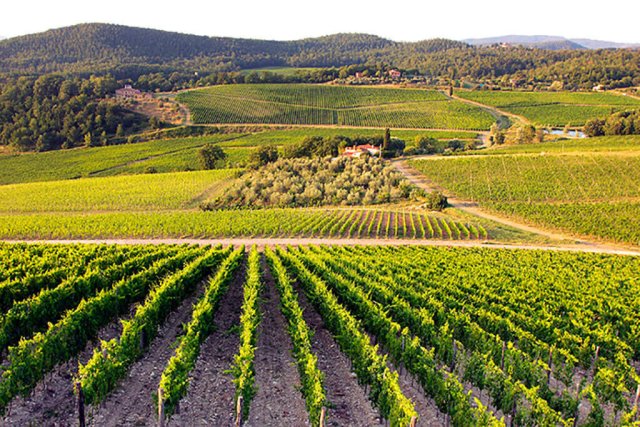
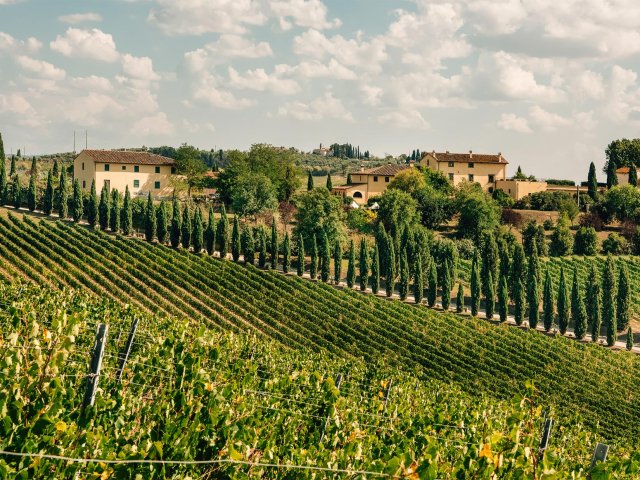
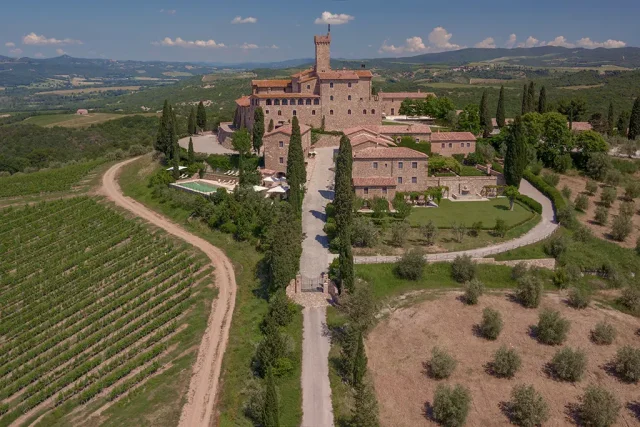
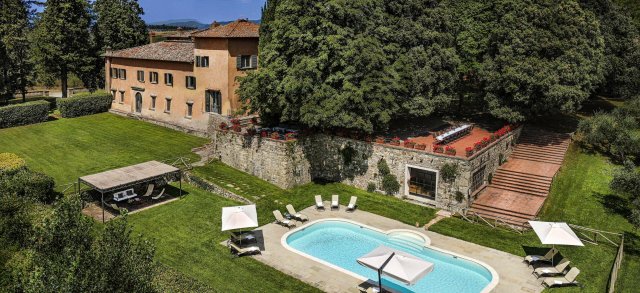
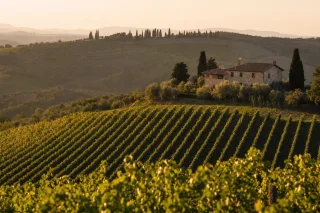
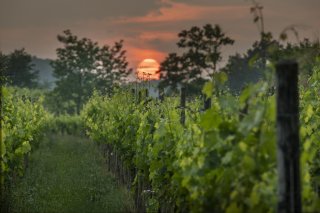
The estate lies in the south-western part of the Montalcino zone, roughly 400 metres up. Macchia thick with holm oak rings it, and the scrub is home to wild boar, deer, pheasant and hare. Olive trees and vineyards share the slope. The soils are rich in iron and drain freely. Warm, well-aired ground like this lets Sangiovese ripen slowly and keep its acidity. That is exactly what a serious Brunello needs.
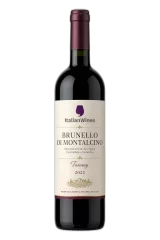
Campaperi, the name on the flagship wines, is a worn-down Tuscan form of Campo dei peri, the field of the pear trees. It was the first specialised vineyard the family planted, back in the 1960s. The ground there is reddish and gravelly, with wild pears at its margins. The Campaperi Brunello di Montalcino is made entirely from Sangiovese Grosso. It rests around two years in small French oak barriques before release. Production is tiny: roughly 400 cases in a typical vintage.
Alongside the annata Brunello, the estate bottles a Campaperi Brunello di Montalcino Riserva in its stronger years. A Rosso di Montalcino covers earlier drinking. The wines reach drinkers abroad through merchants and importers, including Quigley Fine Wines in the United States and Svinando in Europe. The Brunello has drawn steady notice from international critics, Wine Enthusiast among them. For all that reach, this stays a hands-on farm run by one family, not a large commercial cellar.
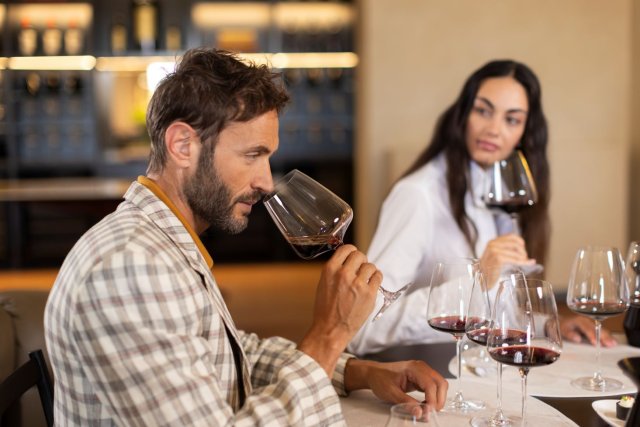
Il Valentiano receives visitors by appointment. The estate takes small groups, up to about twenty people, and hosts in Italian or English. Weekend visits can be arranged on request. A reservation is essential. It is best to contact the winery directly ahead of a visit, rather than going through an online booking desk.
Editorial · ItalianWines.co.uk







 Tuscany
 Est. 1925
  2 wines
  Tastings
 Tours
Tours
 Booking required