


Estate 1
Azienda Agricola Serracavallo
Visit →Bisignano
Tastings available
Your cellar, your trips, and the wines you've been tracking are right where you left them.
New here?
Free, always. Education first, we'll never sell you anything you didn't ask to see.
Already have an account?
Enter the email you signed up with and we'll send a link to choose a new password.
Calabria · DOC
One DOC that covers a whole province: Terre di Cosenza takes in every vineyard in Cosenza, from the Pollino mountains to two coasts. Created in 2011, it folded seven older wine zones into one name. Magliocco, the province's own dark grape, leads the reds; Greco Bianco and Montonico shape the whites.
Decode the label
One denomination, 4 things it can say on the front. Colour first, then the qualifier.
On the label
Terre di Cosenza Rosso
the province's table red
Full, dry and harmonious by law: the everyday face of Cosenza's flagship grape.
No bottles in stock right now
On the label
Terre di Cosenza Magliocco
the prestige tier
The DOC's showcase: lower yields and higher natural strength than any other type.
No bottles in stock right now
On the label
Bianco & the native whites
lemon and almond
Four native whites share the pool, each also bottled alone at 85%.
No bottles in stock right now
On the label
Sub-zone bottlings
the old names, stricter rules
Pollino, Donnici, Verbicaro and friends: the pre-2011 DOCs living on inside this one.
No bottles in stock right now
The boundary
Everything on this page, the estates, the bottles, the sub-zones, sits inside this line.
Estate 1
Bisignano
Tastings available
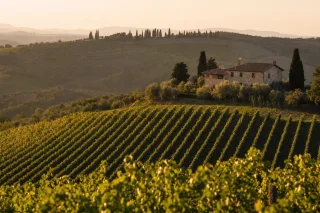
The whole province of Cosenza, Calabria's biggest. The Pollino massif walls off the north, the Crati valley runs its vineyard spine past the city, and the vines reach both the Tyrrhenian and the Ionian coasts. Seven named zones mark the historic corners, from Verbicaro under the Pollino's west flank to Donnici in the hills above Cosenza itself.
Inside the zone
Click or tap a pin for its estate. The numbered pins match the estate cards below.
Towns worth knowing
Cosenza sits mid-province, with the Crati valley running north toward the Pollino wall and the old zone villages scattered either side.
In the glass
One profile at a time, never blended into a single set of bars.
Plum
Cherry
Blackberry
Spicy
Strawberry
Cherry
Spicy
Lemon
Almond
Apricot
Lemon
Apricot
Raisin
Honey
The disciplinare
The same table on every denomination page, one row group per style here, because Terre di Cosenza writes its rules per colour.
Solid means the rules demand it. Striped means optional, up to that amount. The words on the right say the same rule.
Magliocco rules the reds at least 60% of every Rosso; locals call it Guarnaccia Nera, Arvino or Lacrima.
Seventeen single-grape labels from Magliocco to Pecorello and Chardonnay, each at 85% minimum.
Riserva waits 24 months counted from 1 November of the harvest; wood is optional.
The zone is the whole province and every step, vine to bottle, must happen inside Cosenza.
Old names print big a zone's name may appear at twice the size of the words Terre di Cosenza.
Ageing and alcohol minimums per tier are in the label guide above.
Cellar doors · inside the zone
One estate inside the zone opens its doors today. A small list, honestly kept: only working cellars with confirmed visits appear here.
No estates match these filters. Clear a filter to see more.
7 names, one family
High vineyards under the Pollino massif around Castrovillari; reds blend Magliocco and Gaglioppo, whites need an 80% native pool.
Hills along the Esaro river in the DOC's north-west; its rosso pushes Magliocco to at least 70%.
The Crati river valley north of Cosenza; Magliocco leads its reds, with a dedicated single-grape tier at a tighter yield.
A pocket zone around Luzzi in the Crati valley; its Magliocco is farmed to the DOC's tightest yield, 7 tonnes per hectare.
Cosenza's own historic vineyard hills, a former standalone DOC; whites lean on Montonico at 50% minimum.
The one corner of the DOC that leads with Greco Nero: its rosso needs 60% minimum, and a named Greco Nero wine reaches 85%.
Five Tyrrhenian communes below the Pollino; Magliocco and Greco Nero share 60-80% of its reds, and the Riserva waits three years.
Vintage provenance
No denomination-wide vintage chart is published for Terre di Cosenza DOC. The producers' consortium, founded in December 2014, keeps no annata table, and quality moves producer by producer across a province of very different microclimates.
A province of microclimates: follow the producer, not the year, and drink most bottles inside five years.
What to check instead
The sub-zone: where a wine comes from inside the zone changes what is in the glass. See them above.
The producer: quality here is tracked estate by estate rather than year by year.
The rules run on percentages and place. A Terre di Cosenza Rosso needs at least 60% Magliocco, the grape locals also call Guarnaccia Nera or Arvino. Rosato and Bianco each draw at least 60% from small pools of native grapes. Seventeen wines can carry a single grape's name, from Magliocco to Pecorello, and each needs 85% of that grape. Yields sit at 11 tonnes per hectare, but single-grape Magliocco is farmed tighter, at 9. Riserva means 24 months of ageing, counted from 1 November of the harvest. Every step, from vine to bottle, must happen inside Cosenza province. The seven sub-zones, Pollino, Esaro, Colline del Crati, San Vito di Luzzi, Donnici, Condoleo and Verbicaro, keep their own stricter recipes.
On the table
Magliocco's full, dry reds were built for Calabrian pork, aubergines and aged pecorino; the native whites take the coastal table.
In-depth guide
A Calabrian DOC created in 2011 that covers the entire province of Cosenza. It gathered seven older denominations, including Donnici, Pollino and Verbicaro, into sub-zones under one name, with Magliocco as its flagship red grape.
The Rosso needs at least 60% Magliocco. The Bianco draws at least 60% from Greco Bianco, Guarnaccia Bianca, Pecorello and Montonico. Seventeen single-grape labels exist too, each at 85% minimum, from Magliocco and Greco Nero to Pecorello and Chardonnay.
They became sub-zones of Terre di Cosenza in 2011. Their names live on inside the bigger DOC, each with its own stricter recipe. On labels, the old name may even print at twice the size of the DOC's.
The rules themselves ask for a full, dry, harmonious red, ruby in colour and darkening to garnet in the Riserva. In the glass that means dark plum and cherry fruit with a herbal streak and a round southern grip.
The Rosso Riserva needs 24 months of ageing, counted from 1 November of the harvest year. No wood is mandated, so the choice of barrel or tank stays with the producer.
Explore more Calabria
Same region only: the denominations Terre di Cosenza drinkers reach for next.