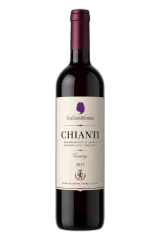
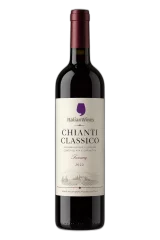


- Grapes
- Sangiovese, Merlot
- Denomination
- Chianti DOCG
- Region
- Tuscany
- ABV
- 13%
An everyday Tuscan red from the Cantine Leonardo da Vinci co-operative in Vinci: 85% Sangiovese with 10% Merlot, cherry and fresh red fruit lifted by black pepper over soft, round tannins. A friendly, well-priced Chianti DOCG for the table.
Prices read daily from 4 UK retailers. We earn a commission on some links; it never changes the order.
Where to buy Cantine Leonardo Da Vinci Chianti
Stock is shown where the retailer publishes it, offers are sorted by price, and unavailable offers can’t be clicked.
No current retailer offer matches that combination.
Unavailable (1)
Stock status is read from each retailer’s page once a day and may lag. Case and magnum listings show a per-bottle or per-litre equivalent and sit outside the best-price figure.
How Cantine Leonardo da Vinci Chianti tastes
Cherry, fresh red fruit and a peppery lift over soft tannins. That is the profile the Vinci co-operative leads with, and what this 13% Tuscan Sangiovese and Merlot blend shows in the glass.
- Tasted by
- ItalianWines editorial
- Tasted on
- 12 June 2026
- Source
- Drinker consensus · confidence Medium
- Typical of Sangiovese
The Cantine Leonardo da Vinci Chianti opens on cherry and fresh red fruit, the note its producer leads with and the one that defines the wine. A peppery lift sits behind the fruit, with a touch of violet, the Tuscan Sangiovese signature here rounded by the 10% Merlot in the blend.
Medium-bodied and dry at 13%, it stays light and smooth rather than heavy. Bright Tuscan acidity carries red cherry and plum while the tannins read soft and round, as the Vinci co-operative intends for an everyday Chianti. The Merlot fleshes out the mid-palate so the Sangiovese grip never turns austere.
The close is medium-length and savoury. It leaves cherry and a faint black-pepper warmth rather than oak, in keeping with this wine's few months of ageing.
A reliable, friendly Chianti DOCG built for the table, not the cellar, and a well-liked everyday red. This is the Vinci co-operative's high-volume flagship, best drunk young with Tuscan food.
Buying this Vinci Chianti in the UK
A handful of UK merchants stock the 2021 and 2022 vintages, both 750ml at around 10 to 15 pounds. This is the high-volume standard Chianti DOCG, so supply is steady and the price stays friendly.
Other vintages and formats: 2 price lines
75cl · 2022: £13.67, 1 UK retailer
Magnum 150cl · 2022: £22.00, 1 UK retailer
Where this Vinci Chianti fits
An everyday, beginner-friendly Tuscan red that scores high for value and weeknight drinking and low for cellaring and occasion, exactly as a 10-pound standard Chianti DOCG should.
Sub-15-pound, light and food-friendly, it is built to open on a weeknight rather than save for an occasion.
Classic, approachable Sangiovese with cherry fruit, gentle tannin and a low price: an easy first Italian red.
A DOCG Chianti near 10 pounds that drinkers like well is strong value for an everyday Italian red.
Bright Sangiovese acidity and soft tannins make this a versatile table red for tomato sauces, grilled meat and roast poultry.
A high-volume everyday bottling rather than a prestige cuvee, so it carries little occasion or gift weight.
Made with only a few months of ageing for young drinking, this entry Chianti has little structure to reward the cellar.
Scoring is rule-based and deterministic. The model and weightings are documented in our Wine Fit Score methodology.
Chianti in five fields
A compact view of what the Chianti denomination actually requires, and how this bottle sits inside it. Pulled from the official Italian disciplinare.
The 2021 and 2022 vintages compared
Two recent vintages sit side by side here: the balanced, classic 2021 and the warmer, riper 2022 from a hot, dry Tuscan year. Both are entry-level Chianti for young drinking rather than cellaring.
- Best price
- £12.20
- Retailers
- 2 in stock
- Best price
- not listed
- Retailers
- 0 in stock
- Best price
- £13.67
- Retailers
- 2 in stock
- ABV
- 13.0%
- Window
- Drink now through 2028
2022 brought a hot, dry summer across Tuscany, so this Chianti leans riper and rounder with slightly softer acidity than 2021. Enjoy it in its fruit-forward youth.
- Best price
- not listed
- Retailers
- 0 in stock
- ABV
- 13.0%
- Window
- Drink now through 2027
Tuscany's 2021 was a balanced, classic growing season for Sangiovese, giving this entry Chianti fresh cherry fruit and lively acidity. Drink it young, within a few years of the vintage.
Drink-now / hold guidance reflects general style cues for this wine, not a forecast for a specific bottle. Where vintage-level editorial notes exist, they appear above.
Perfect Pairings
Dishes that go with this wine
Tomato, pepper and Tuscan acidity: dishes that fit
Bright acidity and soft tannin point to tomato-led pasta and pizza, grilled beef, veal and roast chicken. Beef, veal and poultry are the plates it sits beside most often.
Tomato-led pasta and pizza
Sangiovese's bright acidity, the backbone of this Chianti, mirrors the acidity in tomato sauce so neither tastes flat. The soft tannins stay clear of cheese and dough, which is why young Chianti is the default red for a Margherita or lasagne.
Try with: Lasagna · Pizza Margherita · Pizza Marinara · More pairings →
Grilled steak and braised beef
The acidity and fine tannin cut through the fat and char of grilled red meat, refreshing the palate between bites. At 13% alcohol with soft tannins it sits beside a steak without overwhelming it, the role a Tuscan red plays next to bistecca.
Try with: Ribeye steak · Sirloin steak · Beef stew · More pairings →
Veal cutlets and roast poultry
Soft, round tannins, rounded further by the 10% Merlot, make this Chianti gentle enough for lighter meats. Veal and poultry are its natural plates, where a firmer Sangiovese would dominate.
Try with: Cotoletta alla bolognese · Roast chicken · Roast pork · More pairings →
Peppery salami and spicy pizza
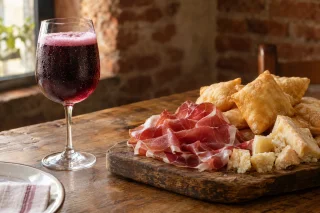
The black-pepper note the producer highlights bridges to cured, peppered salami and a spicy diavola. The wine's acidity also resets the palate against the salt and chilli of the topping.
Try with: Pizza Diavola · Pizza Romana · Sfincione, Sicilian Pizza · More pairings →
Pecorino and hard Tuscan cheese
Sangiovese acidity offsets the salt and fat of a hard sheep's cheese such as pecorino, while the gentle tannin keeps the pairing fresh rather than drying. It is the simplest Tuscan match of all, cheese and a young Chianti.
Try with: Pecorino sardo e pan carasau · More pairings →
Skip fiery heat and sugary desserts
Chilli heat sharpens this Chianti's tannin and makes the 13% alcohol burn, so very spicy curries and Sichuan dishes clash. Sweet desserts leave the dry, savoury fruit tasting thin and sour.
Skip with: Vindaloo · Sweet and sour pork · Chocolate cake · Pairing guide →
Why this Chianti is for drinking, not cellaring
With only the denomination's short minimum ageing and a fresh, fruit-led style, this is an everyday bottle to enjoy young. The Riserva, not this standard Chianti, is the Vinci label built to cellar.
A short splash decant softens the first-pour edge and opens the aromatics.
Aim for the cooler end on a warm day; warmer end opens up more aromatics.
Made with only a few months of ageing for young drinking, this entry Chianti has little structure to reward the cellar.
£12.20 for a 75cl bottle of the 2024, at XtraWine, is the best price we track, and we have no signal of further discounting.
Sources behind this Chianti page
Read directly from each retailer’s public product page once a day. Last refresh: 25 Oct 2026, 02:42 BST. We do not hold stock and we do not accept payment for placement.
Confidence · HighDrawn from published drinker ratings, summarised in our own words. A crowd read across many tasters, not a single critic.
Confidence · MediumFrom the official Italian disciplinare for this denomination, cross-checked against the Ministry of Agriculture register.
Confidence · HighOur reading of the price, drawn from the disciplinare, public UK duty rates, and typical landed-cost benchmarks. Not a quote from the producer or a retailer.
Confidence · MediumStyle guidance for this kind of wine at this price point. Treat it as advice, not a forecast for the bottle in your hand.
Confidence · MediumSangiovese, Chianti and Tuscany connections
Common Questions
It is a Chianti DOCG blend of 85% Sangiovese, 10% Merlot and 5% other red grapes, grown on the Tuscan hills around Vinci in the province of Florence.
Cherry and fresh red fruit lead, lifted by a black-pepper note, over soft, round tannins and the bright acidity that keeps this 13% Tuscan red lively. A well-liked everyday red.
Its acidity and gentle tannin suit tomato-led pasta and pizza, grilled and roast beef, veal cutlets and roast chicken. The classic Tuscan match is a plate of ragu or bistecca.
Drink it young. This is the standard Chianti DOCG with only a few months of ageing. It is made for fresh, fruit-forward drinking within about three to four years of the vintage, not for the cellar.
It is made by Cantine Leonardo da Vinci, a co-operative founded in Vinci in 1961 that produces around 450,000 bottles of this Chianti a year. At roughly 10 to 15 pounds in the UK it is a reliable everyday buy.
You May Also Appreciate
6 retailers
Frescobaldi Nipozzano Chianti Rufina Riserva
Chianti
6 retailers
£17.90
+ delivery
6 retailers
Frescobaldi Montesodi Chianti Rufina Riserva
Chianti
6 retailers
£38.02
+ delivery
6 retailers
Frescobaldi Nipozzano Vecchie Viti
Chianti
6 retailers
£24.00
+ delivery
5 retailers
Frescobaldi Castiglioni Chianti
Chianti
5 retailers
£12.00
+ delivery
Affiliate disclosure. Some links above are affiliate links. If you buy through them we may earn a small commission at no extra cost to you. Editorial coverage, ratings and tasting notes are written independently and a retailer cannot pay to be listed or to be ranked higher.
How retailer prices are sourced.
Prices and stock are read from each retailer’s public product page once a day. Outbound buy links carry rel="nofollow sponsored noopener". The list is sorted by price; we do not accept payment for placement.
What we will never do. Imply we tasted a bottle when we didn’t. Imply stock when a retailer is out. Imply independence on links that are paid affiliate links.