







Wine route
Strada del Vino Nobile
2 days · 7 stops
Open the driveYour cellar, your trips, and the wines you've been tracking are right where you left them.
New here?
Free, always. Education first, we'll never sell you anything you didn't ask to see.
Already have an account?
Enter the email you signed up with and we'll send a link to choose a new password.
Tuscany · DOC
Montepulciano's early-drinking red comes from the same Sangiovese slopes as Vino Nobile. Rosso di Montepulciano DOC covers the vineyards inside the town's own boundary, in south-eastern Tuscany. The wine reaches the market from the March after harvest. Expect bright cherry, supple tannin and a fraction of Vino Nobile's price.
Decode the label
One word on the front changes the ageing, the strength and the price.
On the label
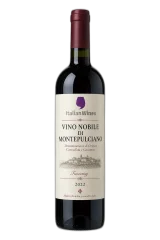
Rosso di Montepulciano
the town's early-drinking red
The same Prugnolo Gentile as Vino Nobile with none of the waiting: fresh cherry and violet, made for the year it appears.
In stock from £11.90
The boundary
Everything on this page, the estates, the bottles, the sub-zones, sits inside this line.
Wine route
2 days · 7 stops
Open the drive
Estate 1
Montepulciano · Valiano side
Tastings available
Estate 2
Montepulciano
Tastings available
Estate 3
Montepulciano
Book online
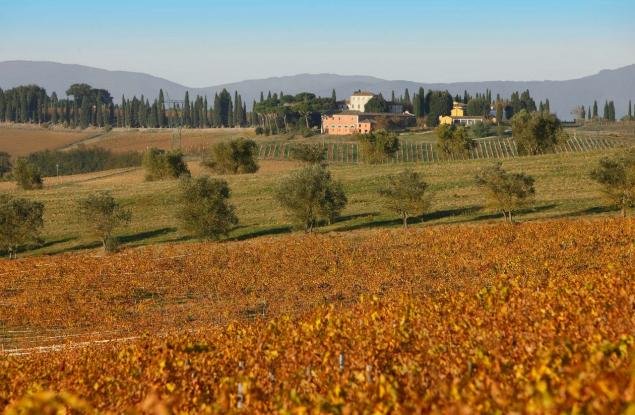
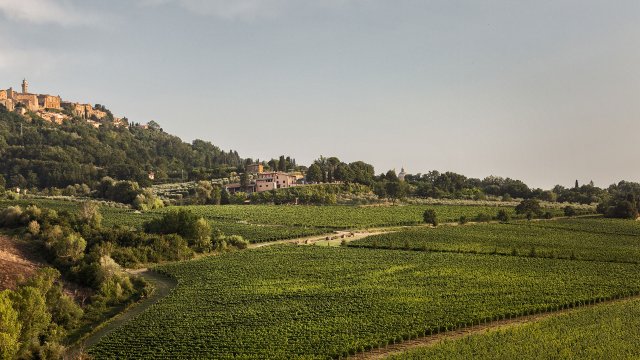
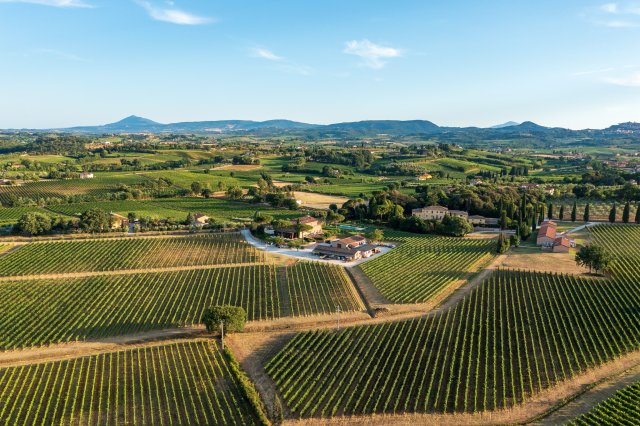
The identical map to Vino Nobile: the hills of the Montepulciano commune between the Val di Chiana and the Val d'Orcia, with vineyards on well-exposed slopes between 250 and 600 metres. The difference is not where but when: this is the wine the town releases in the spring after harvest, from younger vines, higher-yielding parcels and lots a cellar chooses not to hold for two years.
Inside the zone
Click or tap a pin for its estate. The numbered pins match the estate cards below.
Towns worth knowing
The same parishes that name the Nobile's twelve pievi grow this wine; the Rosso simply skips the cellar years.
In the glass
Black cherry
Forest berries

Liquorice

Violet
The disciplinare
The same table on every denomination page, straight from the production rules.
 Sangiovese (Prugnolo Gentile)The lead, as in Vino Nobileat least 70%Other Tuscan varietiesThe same register as the senior wineup to 30%
Solid means the rules demand it. Striped means optional, up to that amount. The words on the right say the same rule.
On sale from 1 March after the harvest no wood, no waiting: the point of the wine is its youth.
The same hills as Vino Nobile one commune, with vineyards allowed only between 250 and 600 metres.
A Nobile may step down into this bottle cellars can reclassify young Vino Nobile lots to Rosso by the 16th month.
Yields are looser than the senior wine's 10 tonnes per hectare against Nobile's 8.
Only 70% of the grapes may become wine the pressing cap that keeps the style bright rather than extracted.
Ageing and alcohol minimums per tier are in the label guide above.
Editor's cellar
By style, today
Live prices, compared across 9 UK retailers.
Cellar doors · inside the zone
Three estates inside the zone open their doors today. A small list, honestly kept: only working cellars with confirmed visits appear here.
No estates match these filters. Clear a filter to see more.
Experiences in the Rosso di Montepulciano zone
Cellar experiences here average around €74. These are the strongest fits for this page.
Fattoria Svetoni
After the tour of the company in which you will get to know the winemaking reality of Fattoria Svetoni up close, you will have the opportuni…
Fattoria Svetoni
Stop and savor Tuscany! Explore our centuries-old cellar and taste our wines paired with a light lunch and the typical flavors of this regio…
Fattoria Svetoni
The world of wine is fascinating, complex and immense. This guided tasting of 3 wines provides the basis for better understanding what is in…
The years
Chart ratings come from the Consorzio del Vino Nobile di Montepulciano's Vino Nobile annata stars, the only per-vintage rating published for the Montepulciano territory. Rosso di Montepulciano follows the same hills and Sangiovese each year, but it is released young without Vino Nobile's mandatory ageing, so quality can diverge in vintages where cellar time mattered most.
Reading the years
Eccezionale on consorzio Vino Nobile chart
The short version: Made to drink young: buy the newest year on the shelf and save the chart for the Nobile.
Tap a year for its note.
The recipe copies its senior sibling at a gentler setting. Sangiovese, known here as Prugnolo Gentile, makes up at least 70%. Complementary Tuscan grapes are allowed up to 30%. Yields may reach 10 tonnes per hectare, against 8 for Vino Nobile, and there is no wood-ageing requirement. The wine may be released from 1 March in the year after harvest, at a minimum of 11.5% alcohol. Producers usually send younger vines and earlier-drinking parcels here, and they keep extraction light, so the cherry fruit leads. Many estates make both wines from the same land. The Rosso funds the wait while Vino Nobile completes its two or three years in the cellar.
On the table
The home country leads; global pairings that genuinely work follow.
In-depth guide
No. Rosso di Montepulciano is a Sangiovese DOC from the Tuscan town of Montepulciano. Montepulciano d'Abruzzo is a different grape, grown in Abruzzo. The shared word is the town's name in one case and the grape's in the other. Our two-Montepulcianos guide covers how to tell every version apart on the shelf.
Same slopes, same Sangiovese, different patience. Vino Nobile is the DOCG: yields capped at 8 tonnes per hectare, and at least two years of ageing before release. The Rosso is the DOC: yields to 10 tonnes, no wood requirement, and release from the March after harvest. The price follows. Think of it as the town's early-drinking expression rather than a lesser copy.
At least 70% Sangiovese, called Prugnolo Gentile in Montepulciano, with complementary Tuscan grapes allowed up to 30%. That is the same base rule as Vino Nobile. It is why the family resemblance in the glass is so clear.
Young. It is built for its first one to four years, when the sour-cherry fruit and supple tannin are at their freshest. There is no wood-ageing requirement to wait out, so buy the current vintage and open it without ceremony.
Weeknight Italian cooking: pizza, midweek ragu, salumi and young pecorino. The acidity handles tomato better than most reds at the price. The modest tannin means it does not need a roast to make sense.
Explore more Tuscany
Same region only: the denominations Rosso di Montepulciano drinkers reach for next.