




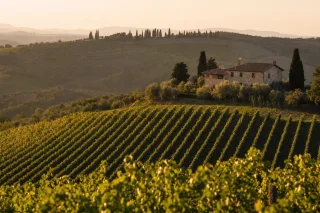


Tannins in Wine, Explained: From Chianti to Sagrantino
TL;DR
- Tannins are natural compounds from grape skins, seeds, and oak that give red wine its drying grip, its structure, and its ability to age.
- You feel them rather than taste them, as a firming sensation on the gums, and food rich in protein or fat tames them at the table.
- Italy spans the full range, from gentle Schiava in the Alps to Sagrantino di Montefalco, widely regarded as the most tannic wine grape in the world.
Pour a young Barolo, take a sip, and notice what happens after you swallow. The fruit fades and your gums feel as though they have been wiped dry, your tongue reaching for moisture that is not there. That firming, faintly grippy sensation is tannin at work, and it is the trait that most separates a serious Italian red from an easy weeknight glass. Tannin builds structure, carries flavour, and lets a wine age for decades. It also explains why a tough young red can soften into something graceful after years in the cellar.

What tannins actually are
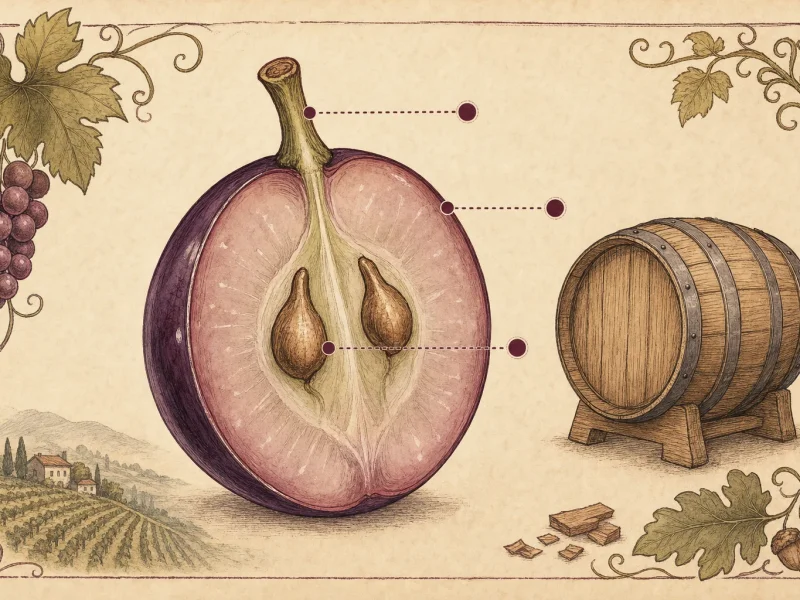
Tannins are polyphenols, a large family of plant compounds that grapevines produce in their skins, seeds, and stems. Oak barrels add more. In the glass, individual tannin molecules bind to one another and grow into longer chains, a process called polymerisation that shapes how a wine feels and how it ages. Plants make these compounds as a natural defence, which is why you also meet them in strong black tea, walnut skins, and dark chocolate. Wine simply borrows the same chemistry.
The tannins drawn from grape skins tend to form the largest, most supple chains, while those from the seeds stay shorter and harsher. Stems sit somewhere between. This is structure you can almost chew, and it is the backbone red wine is built on. The same compounds lock in colour and act as antioxidants, helping a wine survive years in bottle long after its fresher, fruitier notes have faded. Understanding tannin is really the first step to understanding why red wine behaves so differently from white, and why some bottles are built to drink tonight while others ask you to wait.
Why you feel tannin rather than taste it
Tannin is not one of the basic tastes. You register it as touch, not flavour. Your saliva is full of slippery proteins that keep the mouth lubricated, and tannins grab those proteins and pull them out of solution. For a few seconds your mouth loses its natural slip, and you read that as dryness, grip, or astringency. Stronger still, the sensation turns chalky or grainy, like cold, over-stewed tea or the skin of a walnut.
People often confuse this with bitterness, and the two can travel together, but they are different things. Bitterness is a taste, sensed mostly at the back of the tongue. Astringency is a physical drying felt across the whole mouth. Smaller tannin molecules tend to taste more bitter, while larger, polymerised ones feel smoother and rounder even when there are plenty of them. That is why a well-made, deeply structured red can carry a great deal of tannin and still feel polished rather than punishing. Once you learn to separate the firming touch of tannin from the flavours around it, every red wine you drink becomes easier to read.
Where tannins come from
Three things decide how much tannin ends up in your glass: the grape, the winemaking, and the oak. Thick-skinned varieties carry far more than thin-skinned ones, which is why a robust southern red and a pale alpine one can feel worlds apart before a winemaker does anything at all.
During fermentation, red wines soak on their skins and seeds, and the longer that contact lasts, the more tannin is drawn out. This skin contact is the whole difference between red and white. White wine is usually pressed off its skins straight away, so it carries very little tannin, which is why a glass of it feels soft where a red feels firm. The clear exception is skin-contact orange wine, a white made like a red and left on its skins, which can show genuine, red-wine-like grip. You can see the mechanics of both in our guide to how red wine is made.
After fermentation, time in oak adds a finer, silkier tannin of its own. Traditional Italian cellars often favour large old casks that lend structure gently, while small new barriques push firmer, more obvious tannin along with a note of sweet spice.
Italian grapes, from gentlest to grippiest
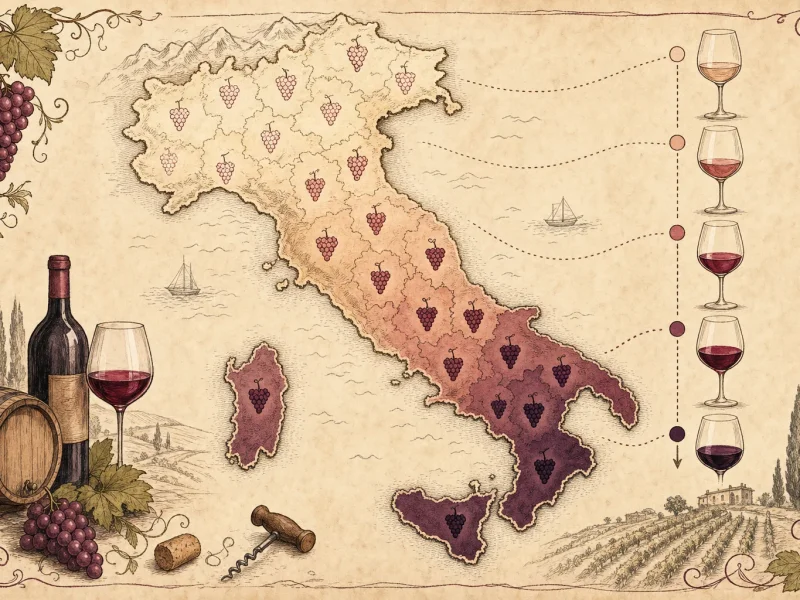
Italy grows the full tannin spectrum, which makes it the ideal place to learn the trait. Few countries let you taste from feather-light to ferociously structured within the same week. Roughly from gentlest to grippiest:
- Soft and juicy: Schiava from Alto Adige, Sicilian Frappato, and sparkling Lambrusco, reds you can lightly chill and drink without a second thought.
- Easygoing middle: Dolcetto and Barbera from Piedmont, where ripe fruit and fresh acidity lead and tannin stays in the background.
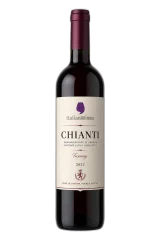
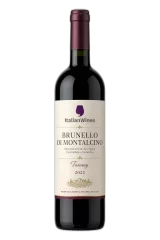
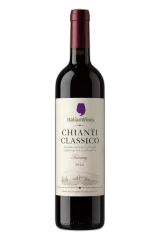
- Firm but friendly: Sangiovese, the grape of Chianti Classico and Brunello di Montalcino, with real grip wrapped around savoury cherry and built for the table.
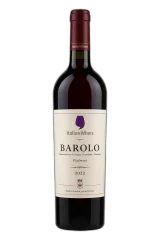
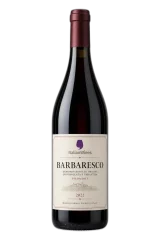
- Serious structure: Nebbiolo, behind Barolo and Barbaresco, pale in colour yet fierce in tannin, alongside southern Aglianico from Campania.
- The most tannic of all: Sagrantino from Umbria, widely regarded as the most tannic wine grape in the world, its tiny thick-skinned berries packed with more tannin than any other Italian variety.
Colour is a poor guide here. Nebbiolo and Sangiovese are both relatively pale yet grip hard, while a darker, riper Primitivo from the south can feel rounder and softer in the mouth.
How tannin softens as a wine ages
Tannin is the main reason certain Italian reds reward patience. In a young wine the chains are still relatively small and reactive, so they clamp onto your saliva and feel harsh. Over years in bottle they keep linking together into ever larger structures, until eventually they grow too big to stay dissolved and drop out as the fine sediment you find in an old Barolo.
What is left in the glass tastes softer, sweeter in feel, and more harmonious. This is why a tightly wound Brunello di Montalcino or a young Sagrantino can seem austere on release and turn beautiful a decade later, while a low-tannin red is usually best enjoyed young and fresh. It is also why these wines throw a deposit, and why an older bottle deserves a careful, upright rest before serving so the sediment settles. Tannin does not vanish as a wine matures. It trades raw grip for texture, which is exactly what collectors are paying for when they cellar a serious red. If patience is not on the menu tonight, the next section offers a faster route.
Tannin at the Italian table
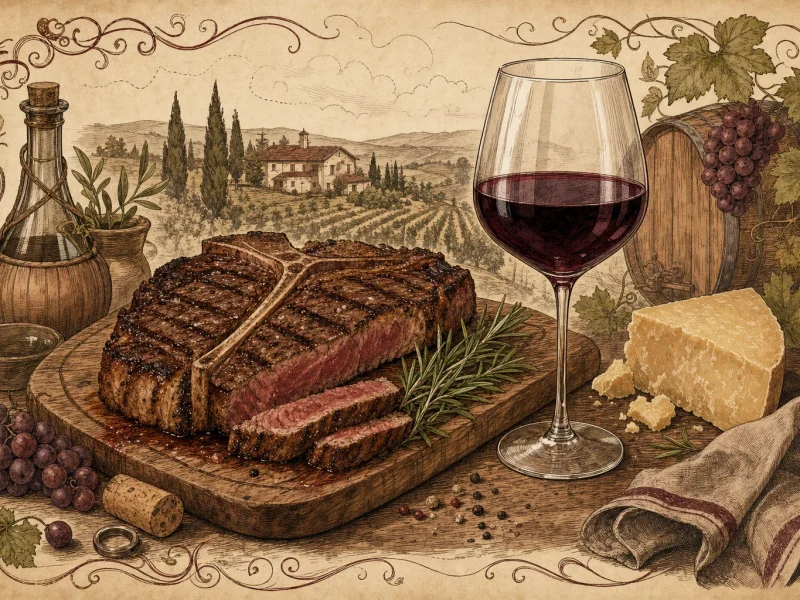
Tannin and food were made for each other, which is no accident on a peninsula that drinks with nearly every meal. Protein and fat are tannin's natural partners. They coat the mouth and give those grippy molecules something to bind to other than your saliva, so the wine immediately feels smoother and the food tastes richer in return.
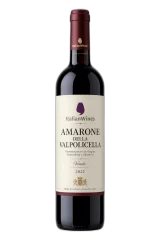
This is the logic behind one of Italy's great pairings: a charred Sangiovese-based red from Tuscany with a rare bistecca alla fiorentina, the steak's fat and juices melting the wine's grip into something plush. The same rule sends a structured Amarone della Valpolicella toward braised beef and hard, aged cheese such as Parmigiano Reggiano.
Run the rule the other way and you see why tannic reds bully delicate dishes. With plain white fish or a fresh salad there is no fat to bind the tannin, so the wine can taste metallic, bitter, and harsh. When in doubt, match firm tannin with firm, savoury, fatty food, and keep your lightest reds and your whites for the lighter plates. Get this right and tannin stops being a hurdle and becomes the reason the meal works.
How to taste for tannin
Once you know what to look for, tannin is easy to find. Take a sip, swallow, then pay attention to the ten seconds that follow rather than to the flavour itself. Notice whether your gums and the sides of your tongue feel dried and firmed, how far back the sensation reaches, and how long it lasts. A short, soft grip means low tannin. A mouth-coating pull that runs into a long finish means high.
Ask whether the texture is fine and dusty or coarse and green. Under-ripe tannin tastes stalky and bitter, while ripe tannin feels rounder even when there is a lot of it. If a young red feels clenched and severe, give it air. Decanting an hour ahead, or simply swirling hard in the glass, exposes the tannin to oxygen and takes the hard edge off, a small trick that flatters almost any tannic young Italian red. Our guide to decanting wine walks through the method.
The fastest way to fix the sensation in your memory is to compare. Pour a firm Nebbiolo next to a soft Dolcetto, taste them side by side, and the whole spectrum from gentle to grippy clicks into place.
Tannin, the other traits, and a few myths
Tannin never works alone. It is one of the five core wine characteristics, balanced against acidity, sweetness, alcohol, and body, and the interplay between them is what makes a wine feel whole. High acidity makes tannin seem firmer, a little sweetness softens it, and generous ripe fruit can cushion even a wall of grip. That balance matters far more than the raw quantity of tannin on its own.
A few stubborn myths are worth retiring. Tannin is not the same as bitterness, even though the two often appear together. It is not a reliable badge of quality, since a great light red can carry very little and still be wonderful. And despite a persistent rumour, there is little solid evidence that tannin causes headaches, which are more likely down to alcohol, dehydration, or simply how much was poured. Whites and most sparkling wines, made with little or no skin contact, sidestep the question almost entirely.
Tannin is not something to fear or to chase. It is a structural tool, and learning to read it is one of the quickest ways to understand why Italy's reds, from a gentle alpine red to a towering Sagrantino, taste the way they do.
Frequently asked questions
Strictly speaking, tannins are not a taste at all. You feel them as a dry, grippy, faintly chalky sensation that firms up your gums and the sides of your tongue a few seconds after you swallow, much like cold, over-stewed tea or the skin of a walnut. They are often confused with bitterness, but bitterness is a flavour sensed on the tongue, while tannic astringency is a physical drying felt across the whole mouth. In Italian reds, that grip ranges from barely there to mouth-coating.
That title goes to Sagrantino from Montefalco in Umbria, widely regarded as the most tannic wine grape in the world. Its small berries have unusually thick skins, rich in more tannin and colour-giving polyphenols than any other Italian variety. Nebbiolo, the grape of Barolo, and southern Aglianico are close behind. All three usually need a few years in bottle, or a good decant, before their tannin settles into balance.
For a red with very little grip, look to Schiava from Alto Adige, pale and gentle enough to serve lightly chilled, or Sicilian Frappato, full of red flowers and crunchy fruit. Sparkling Lambrusco is softer still. Dolcetto and Barbera from Piedmont sit just above them, fruit-forward and easygoing. These are the Italian reds to reach for when firm tannin is not to your taste.
Yes, but usually very little. White grapes have tannin in their skins too, but white wine is normally pressed off those skins before fermentation, so almost none is extracted. The clear exception is skin-contact orange wine, a white made like a red by leaving the juice on its skins, which can show real, red-wine-like grip. Time in oak can also lend a white a little fine tannin. For most everyday whites, though, tannin simply is not a factor.
Three easy levers. Give it air: decanting a young red an hour ahead, or swirling hard in the glass, exposes the tannin to oxygen and rounds it off, as covered in our guide to decanting. Serve it with the right food, since protein and fat bind the tannin and make the wine taste smoother. Or simply wait, because years in bottle naturally knit tannin into something gentler. Serving a tannic red a touch warmer rather than fridge-cold helps too.
Probably not. Tannin is often blamed for red-wine headaches, but there is little solid scientific evidence linking the two. The more likely culprits are alcohol and the dehydration it brings, plus the simple quantity poured. Tannins are polyphenols, the same broad family of antioxidants found in tea and dark chocolate, and in moderation they are not considered harmful. If darker, more tannic reds reliably affect you, drinking water alongside and pacing yourself tends to help more than avoiding tannin itself.
Both give a wine structure, but they feel completely different. Acidity is a taste, the fresh, mouth-watering tartness you also get from a lemon or a ripe tomato, and it makes your mouth water. Tannin is a texture, a drying, firming grip that does the opposite and pulls moisture away. A wine can be high in one and low in the other: many Italian whites are crisp with no tannin at all, while a young Nebbiolo is high in both. Together they form the savoury, age-worthy frame of Italy's finest reds.
That drying feeling is tannin doing its job. Your saliva is rich in slippery proteins, and tannins bind to them and pull them out, so for a few seconds your mouth loses its natural lubrication and reads as dry. The more tannin a wine has, and the younger and less evolved it is, the stronger the effect. It fades quickly between sips, and food, especially something rich or fatty, restores the slip almost at once. A firm young Barolo shows this better than almost any wine.