


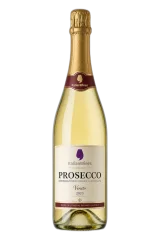
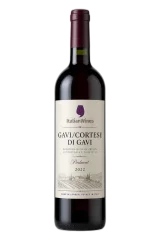
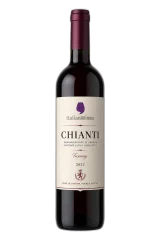
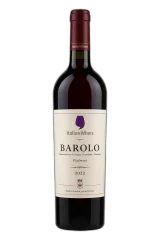












Chardonnay is a white grape with a clear Italian role.
Wines
635
Acidity
Body
White Grape · Trentino-Alto Adige
Gewurztraminer is Italy's most exotically perfumed white: a pink-skinned Alto Adige grape from the village of Tramin that erupts with lychee, rose petal and Turkish delight, full-bodied and low in acidity, and made dry far more often than its sweet reputation suggests.
Gewürztraminer is Alto Adige's lychee-scented aromatic white. Italians call it Traminer Aromatico. It was born in the village of Termeno (Tramin) on the Bassa Atesina. It anchors Alto Adige DOC, Trentino DOC and Friuli denominations such as Collio and Colli Orientali del Friuli.
Your cellar, your trips, and the wines you've been tracking are right where you left them.
New here?
Free, always. Education first, we'll never sell you anything you didn't ask to see.
Already have an account?
Enter the email you signed up with and we'll send a link to choose a new password.
Before you buy
The anchor fact: One grape, several names. Gewurztraminer and Traminer Aromatico are the exact same intensely perfumed variety, and despite a lychee-and-rose nose that reads as sweet, the great majority of Italian bottlings are dry.
Taste · Where it sits
Forget scores out of five. Here’s Gewürztraminer described against grapes you already know.
One of the fullest, most viscous dry whites in Italy: rich, broad and almost oily in the mouth, closer in weight to a light red than to a crisp northern white. Alto Adige's altitude is what stops all that weight from turning heavy.
Pressed off its skins, so effectively tannin-free, but the deeply pigmented pink berries can leave a faint, almost bitter phenolic grip on the finish that most white grapes never show.
The grape's defining weakness and its signature both: naturally one of the lowest-acid noble whites, which is why it tastes soft and broad rather than zippy. Alto Adige's cool alpine nights lend just enough freshness to keep it in balance.
A trap for the nose: the lychee-and-rose perfume screams sweet, yet most Italian Gewurztraminer is dry to just off-dry. Genuine sweetness turns up only in late-harvest Vendemmia Tardiva bottlings.
Key flavours



The map
Gewürztraminer is full-bodied, soft, low acidity, mapped against other white grapes you can buy. The closer a grape sits, the more its weight and freshness resemble Gewürztraminer.
Is this for you?
Reach for it when…
Maybe skip it if…
Serving guide
Serve at
10-12°C
Serve it cool but not icy, around 10 to 12 C: chill it too hard and you mute the lychee-and-rose perfume that is the whole point, while a touch of warmth lets the aromatics and oily texture open out.
Glass
Tulip Glass
Reach for a tulip glass, whose tapered bowl funnels the heady rose, lychee and spice up to the nose; a narrow flute or a tumbler simply throws that perfume away.
Drink within
2-3 days
Drink most bottles within two to three years of the vintage, while the exotic aromatics are at their most vivid; with so little acid to hold the line, everyday Gewurztraminer softens rather than sharpens with age.
Cellar
-10 years
Only serious dry Alto Adige bottlings and sweet Vendemmia Tardiva reward five to ten years, turning to honey, beeswax and a smoky, almost petrol-like depth; ordinary examples gain nothing from the rack.
On the table
Start with the home-table matches that made the grape, then browse the full cuisine library.

Its own alpine table
In the German-speaking valleys around Tramin this is the traditional wine for the local table: buttery spinach spatzle and speck-and-cheese dumplings are rich rather than delicate, so Gewurztraminer's weight, exotic perfume and whisper of off-dryness ride over them where its low acid never matters.

Perfume against pungent blue
Gorgonzola and Gewurztraminer is a classic for a reason: the wine's honeyed weight and lychee-rose scent tame the salty, pungent blue the way a drizzle of honey does, while the dish's pear and walnut echo the grape's own orchard-fruit and marzipan notes.

A cushion for fragrant spice
A mild, creamy korma scented with cardamom and almond meets its match in a low-acid, faintly off-dry Gewurztraminer: the soft sweetness cools the spice while the wine's own clove-and-marzipan perfume amplifies the dish's fragrance rather than fighting it.

Mirror to Thai aromatics
The galangal, lemongrass and lime of this coconut soup chime almost note for note with Gewurztraminer's ginger, rose and lychee, so the pairing works by mirroring aromatics; the touch of residual sugar also takes the edge off any chilli heat.
Browse every pairing
Buy it · three to start with
A curated trio across the price range, then every Gewürztraminer on sale in the UK right now.
Entry · everyday
 3 retailers
Friuli/Friuli Venezia Giulia
3 retailers
£14.30
Why this one: Bottled under the grape's Italian name, Traminer Aromatico, this is a Friulian house's clean, dry, unoaked take: all lychee, rose and orchard fruit with no sweetness, and an easy, inexpensive way to meet the perfume even though the grape's spiritual home lies west in Alto Adige.
12 of 74 bottles
 4 retailers
Trentino
4 retailers
£14.95
 4 retailers
Alto Adige/Südtirol
4 retailers
£29.90
 4 retailers
Alto Adige/Südtirol
4 retailers
£30.60
 3 retailers
Toscana
3 retailers
£14.10
3 retailers
Friuli/Friuli Venezia Giulia
3 retailers
£14.30
 3 retailers
Alto Adige/Südtirol
3 retailers
£17.70
£20.82
 3 retailers
Alto Adige/Südtirol
3 retailers
£18.00
 3 retailers
Alto Adige/Südtirol
3 retailers
£20.00
 3 retailers
Vigneti delle Dolomiti / Weinberg Dolomiten
3 retailers
£23.47
 3 retailers
Alto Adige/Südtirol
3 retailers
£26.20
 2 retailers
Trentino
2 retailers
£15.00
 2 retailers
Alto Adige/Südtirol
2 retailers
£17.00
Denominations
The appellations where Gewürztraminer plays a starring role.
Where it grows
Italy's alpine wine country: Teroldego from the Piana Rotaliana, Trento DOC sparklers raised on dolomitic limestone, and Alto Adige whites perfumed by glacial Read more

Italy's white-wine heartland, where Friulano, Ribolla Gialla and skin-contact orange wines meet alpine air, Adriatic light and the cooking of San Daniele and Read more
The terroir
Gewurztraminer barely strays beyond Italy's alpine north-east, and for good reason: only cool nights keep its naturally low acidity in check and its perfume precise, so it clusters in the German- and Ladin-speaking valleys where the Traminer story began.
Alto Adige (Sudtirol)
The steep, German-speaking valleys of the far north, gathered around Tramin (Termeno) on the South Tyrolean Wine Road.
The benchmark: mostly bone-dry, intensely perfumed and full-bodied, with alpine altitude lending the freshness that keeps a low-acid grape in balance. This is Gewurztraminer's spiritual home and the village that named the whole family.
Trentino
The valleys immediately south of Alto Adige, sharing the same region but a warmer, more Italian-speaking heart.
Grown here as Traminer Aromatico, it tends to a slightly softer, rounder style, and also lends its perfume to local blends and sparkling bases.
Friuli Venezia Giulia
The hills of Italy's far north-east, on the border with Slovenia.
The home of the Traminer Aromatico name on the label, where Friuli's white-wine tradition turns out dry, aromatic, precisely made bottlings like Puiatti's.
Editorial
Traminer Aromatico is a colour mutation of the Savagnin family. It is named for the Alto Adige village of Termeno, known in German as Tramin. The village sits on the slopes of the Bassa Atesina, between Bolzano and Salorno. The German prefix Gewürz means spice. That captures the variety's hallmark perfume of rose, lychee, ginger and Asian five-spice. The berries turn pink to copper as they ripen, yet they ferment to a golden-yellow wine. The Italian DOC system files it as a vino bianco all the same.
What makes Gewurztraminer smell so unmistakably of lychee and rose is not winemaking but chemistry: the grape carries an unusually high concentration of a single terpene, cis-rose oxide, the very same compound that scents fresh lychees and rose petals. It is why a glass of Alto Adige Gewurztraminer can be picked out blind faster than almost any other white in the world.
The aromatic chemistry of GewurztraminerThe grape is fussy. It demands cool nights, chalky volcanic soils and a long hang to keep its low natural acidity in balance. That is why Italian production sits almost entirely in Trentino-Alto Adige and Friuli Venezia Giulia. Trentino-Alto Adige holds around 150 hectares (about 370 acres), clustered around Termeno and Cortaccia. In Friuli Venezia Giulia the grape grows in Collio, Colli Orientali del Friuli and Carso. Outside this Alpine band, the wine flattens.
Three styles dominate. Dry Alto Adige Gewürztraminer DOC carries 13.5 to 14.5 per cent alcohol, with a textured, almost waxy palate. Producers such as Tramin, Hofstätter and Sanct Valentin set the benchmark. Vendemmia Tardiva late-harvest cuvees show apricot jam, marmalade and saffron, at around 50 grams per litre of residual sugar. Passito or Spätlese wines from noble-rot fruit fetch top scores for ageing potential of a decade or more.
The pairing logic flows from low acid plus high aromatics. It tames chilli, fish sauce and wasabi where most Italian whites surrender. It also wraps around washed-rind cheeses, foie gras and Tyrolean cured meats with no friction.
Good to know
Italian Traminer Aromatico is most often dry. That is true above all of Alto Adige DOC and Trentino DOC bottlings. The grape's heady aromatics can still taste off-dry on first sip. Late-harvest Vendemmia Tardiva and Passito versions are meant to be sweet.
The nose gives lychee, rose petal, ginger, candied citrus and a touch of warm spice. The wine is full bodied, with soft acidity, a slightly oily texture and a long, perfumed finish. The lychee note is so consistent because both share the rose-oxide aroma compound.
Try Alto Adige speck, smoked trout, canederli with bacon, and washed-rind cheeses such as Stilfser. Foie gras suits it too, as do spice-driven Asian dishes from Thai green curry to Sichuan mapo tofu. For dessert, a Vendemmia Tardiva works with apricot tarts and Gorgonzola Dolce.
Almost exclusively in the north. The heart is Alto Adige, above all Termeno and Cortaccia. Trentino follows, then the Friuli Venezia Giulia denominations Collio, Colli Orientali del Friuli and Carso. Outside this Alpine belt, the wine loses its perfume.
It is German: ge-VURTS-trah-mee-ner, with the stress on the second syllable. Italians say it almost the same way. The Italian synonym Traminer Aromatico often appears on local back labels alongside the German name.
Dry Alto Adige bottlings drink best within five years. Top Sanct Valentin and Hofstätter cuvees, though, hold for a decade. Vendemmia Tardiva and Passito versions can age fifteen to twenty years, deepening into preserved-apricot and saffron territory.
Explore by style
Jump to the editorial guide for each style this grape turns up in.
Keep exploring