









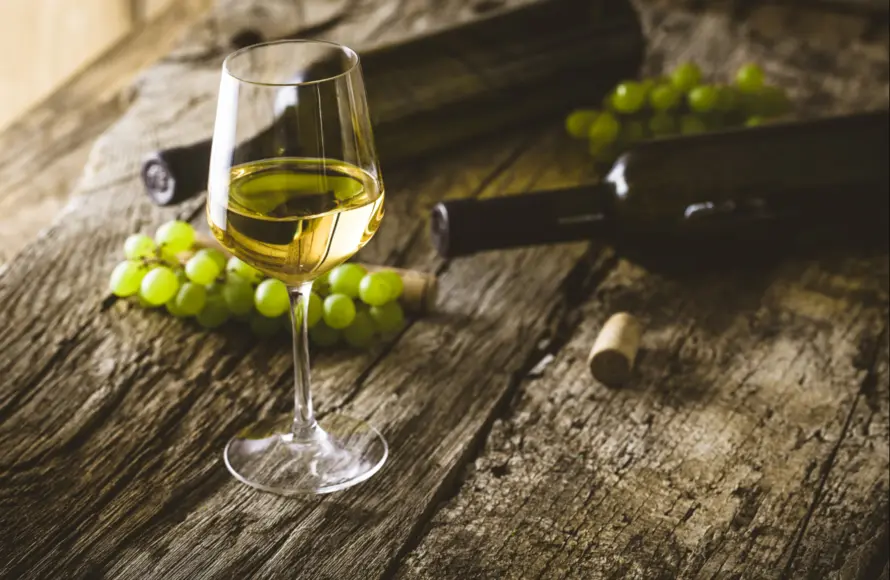





Chardonnay is a white grape with a clear Italian role.
Wines
626
Acidity
Body
White Grape · Trentino-Alto Adige
Muller-Thurgau is the Alps' featherweight aromatic white: a 19th-century Riesling crossing that traded its German bulk-wine past for the terraced heights of Trentino's Val di Cembra and Alto Adige, all elderflower, green apple and brisk mountain acidity.
Müller-Thurgau is a white grape that found its truest Italian home among the high-altitude vineyards of Trentino-Alto Adige. Hermann Müller crossed it in 1882 from Riesling and Madeleine Royale. It ripens early and gives bright, floral wines under Trentino DOC, Alto Adige DOC and the Vigneti delle Dolomiti IGT.
Your cellar, your trips, and the wines you've been tracking are right where you left them.
New here?
Free, always. Education first, we'll never sell you anything you didn't ask to see.
Already have an account?
Enter the email you signed up with and we'll send a link to choose a new password.
Setting it straight
The anchor fact: No: DNA profiling around the year 2000 revealed Muller-Thurgau to be a cross of Riesling and Madeleine Royale, an obscure early table grape, overturning the Riesling and Silvaner parentage that its own breeder had assumed and the wine world had repeated for a century.
Taste · Where it sits
Forget scores out of five. Here’s Müller-Thurgau described against grapes you already know.
A featherweight: light, modest in alcohol and made to refresh, the very definition of a vino di montagna. There is no oak and little flesh here, just delicacy, which is precisely why it works so well as a warm-afternoon alpine aperitivo.
Pressed straight off pale skins, so there is nothing to grip: none of the faint phenolic tug that its pink-skinned Alto Adige neighbour Gewurztraminer can leave on the finish. That total absence of grip is part of what keeps it so weightless.
Brisk and mountain-fresh, sharpened by the cold nights of the high terraces where it grows. Yet it never reaches the racy, nervy extreme of its Riesling parent: Muller-Thurgau was bred to be the gentler, earlier-ripening child, and it drinks that way.
Almost always finished dry, with only a whisper of fruit-sweetness in the ripest bottlings. The character is an orchard in bloom rather than a fruit bowl: elderflower and green apple that smell fresh and floral, a world away from any dessert style.
Key flavours


The map
Müller-Thurgau is light to medium, crisp, fresh acidity, mapped against other white grapes you can buy. The closer a grape sits, the more its weight and freshness resemble Müller-Thurgau.
Is this for you?
Reach for it when…
Maybe skip it if…
Serving guide
Serve at
10-12°C
Serve it properly cold, around 10 to 12 C: cold enough to sharpen the green-apple bite, but not so icy that you lock away the elderflower perfume that is the whole point.
Decant
Not needed
No decanting: there is nothing here to soften or unwind, and a delicate aromatic mountain white only surrenders its fragrance to the air.
Glass
Riesling Glass
A slender aromatic-white or Riesling glass suits it best, the tapered rim gathering up the elderflower and blossom, a fitting nod to the Riesling in its parentage.
Drink within
2-3 days
Drink it young, inside two or three years of the vintage, while the acidity is crisp and the floral aromatics are still singing; waiting does it no favours.
Cellar
1-3 years
As a rule it is not one for the cellar, though the exception proves the point: a rare high-altitude bottling like Tiefenbrunner's Feldmarschall von Fenner can hold and deepen for a decade, gaining a smoky, almost Riesling-like complexity.
Buy it · three to start with
A curated trio across the price range, then every Müller-Thurgau on sale in the UK right now.
12 of 17 bottles
 2 retailers
Vigneti delle Dolomiti / Weinberg Dolomiten
2 retailers
£10.20
 2 retailers
Trevenezie
2 retailers
£13.50
 2 retailers
Vigneti delle Dolomiti / Weinberg Dolomiten
2 retailers
£13.80
£16.00
 2 retailers
Alto Adige/Südtirol
2 retailers
£14.00
 2 retailers
Vigneti delle Dolomiti / Weinberg Dolomiten
2 retailers
£15.00
 2 retailers
Vigneti delle Dolomiti / Weinberg Dolomiten
2 retailers
£16.00
 2 retailers
Alto Adige/Südtirol
2 retailers
£16.10
 2 retailers
Alto Adige/Südtirol
2 retailers
£16.50
 1 retailer
Alto Adige/Südtirol
1 retailer
£13.90
 1 retailer
Vigneti delle Dolomiti / Weinberg Dolomiten
1 retailer
£15.00
£17.00
 1 retailer
Trentino
1 retailer
£15.00
 1 retailer
Trentino
1 retailer
£15.60
Denominations
The appellations where Müller-Thurgau plays a starring role.
Where it grows
Italy's alpine wine country: Teroldego from the Piana Rotaliana, Trento DOC sparklers raised on dolomitic limestone, and Alto Adige whites perfumed by glacial Read more
Italy's white-wine heartland, where Friulano, Ribolla Gialla and skin-contact orange wines meet alpine air, Adriatic light and the cooking of San Daniele and Read more
The terroir
Muller-Thurgau's Italian story is one of altitude. A grape bred for cool, flat northern Europe found its finest voice not on any valley floor but clinging to Italy's highest terraces, where thin mountain air and cold nights lock in the elderflower perfume and brisk acidity that warmer sites blur away.
Val di Cembra
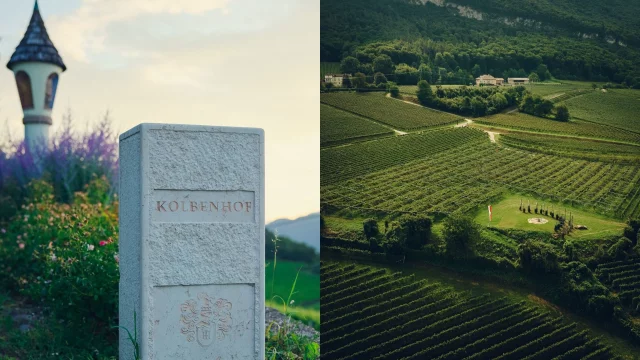
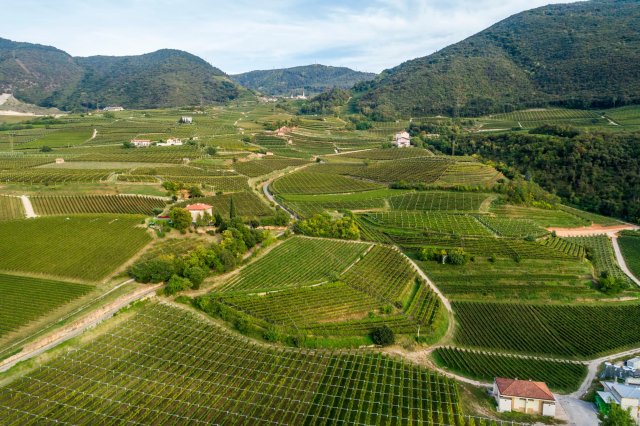
The steep, terraced porphyry slopes of the Cembra valley northeast of Trento, climbing high above the river Adige on some of Trentino's most vertiginous vineyards.
Its spiritual home: a taut, elderflower-and-green-apple mountain white celebrated each summer at Cembra's international Muller Thurgau: Vino di Montagna review. This is where Italy decided the grape was a terroir wine, not a bulk one.
Alto Adige (Sudtirol)
The high plateaux of the South Tyrol, most famously the Fennberg above Margreid, where Tiefenbrunner's Feldmarschall von Fenner vineyard sits at around 1,000 metres.
Home to what is reckoned the highest Muller-Thurgau vineyard in Europe: precise, mineral, structured wines that prove the grape can carry real depth, and even age, when it is pushed to the very limit of where vines will ripen.
Friuli Venezia Giulia
The cooler hills of Italy's far northeast, where it plays a smaller supporting part among the region's many white grapes.
A leaner, more straightforward take: crisp, high-acid and floral, made as an easy everyday aperitivo rather than a statement of altitude.
Producers
Every estate on the site that works with Müller-Thurgau.
Editorial
The Swiss botanist Hermann Müller created Müller-Thurgau in 1882. He was born in the canton of Thurgau, and he was working at the Geisenheim Grape Breeding Institute in Germany. He set out to combine the aromatic finesse of Riesling with the early ripening of an old French table grape. For most of the twentieth century the cross was thought to be Riesling and Sylvaner. That is why the grape is sometimes still called Rivaner. Modern DNA fingerprinting corrected the record: the second parent is Madeleine Royale, not Sylvaner.
There is a delicious irony in Muller-Thurgau's Italian success. For much of the twentieth century it was the most planted grape in Germany, valued only for cropping heavily and ripening early, the anonymous workhorse behind oceans of cheap, sweetish Liebfraumilch. Carried south into the Alps, that same easy-ripening crossing was stood on its head: planted high, cropped low and taken seriously, it became one of Italy's proudest expressions of heroic mountain viticulture.
Muller-Thurgau, from German bulk wine to Alpine vino di montagnaIn Italy the variety took root in Trentino and Alto Adige, registered there from 1970. It climbed to altitudes where most other vines struggle. Val di Cembra has glacial porphyry terraces and vineyards at 500 to 900 metres. It produces some of the country's most sculpted examples. Valle Isarco, further north towards the Brenner pass, gives leaner, more mineral wines. The single most cited bottling is Tiefenbrunner's Feldmarschall von Fenner. It comes from the Fennberg plateau at around 1000 metres.
In style, Italian Müller-Thurgau lands well shy of its sometimes-flabby German reputation. Producers such as Tiefenbrunner, Cantina Toblino, Cantina Kurtatsch, Manni Nössing and Abbazia di Novacella turn out dry wines. Expect peach, green apple, sage and elderflower lift, moderate alcohol around 11.5 percent and clean acidity from the day-night swing. The wines are made for the year of release, not the cellar. They read like the wider Trentino-Alto Adige wine identity in miniature: alpine, precise, food-focused.
Good to know
Italian Müller-Thurgau tastes of white peach, green apple, elderflower and a touch of sage. It has bright acidity and moderate alcohol, around 11.5 percent. Trentino-Alto Adige bottlings are drier and more mineral than the German style. The high-altitude vineyards of Val di Cembra and Valle Isarco add an alpine cut on the finish.
Müller-Thurgau is grown almost only in northeast Italy. Trentino and Alto Adige carry the denomination. The benchmark zones are Val di Cembra at 500 to 900 metres and Valle Isarco around Bressanone. Both fall under Trentino DOC, Alto Adige DOC and the Vigneti delle Dolomiti IGT.
Italian Müller-Thurgau is almost always dry. The grape can keep some sugar in some German versions. Trentino and Alto Adige producers ferment it right through, so the wine drinks crisp, with light fruit sweetness rather than sugar.
Reach for alpine and lake-country dishes. Try trout from Lake Garda, speck Alto Adige IGP, asparagus risotto and fresh sheep cheeses such as Casolet della Val di Sole. Lighter antipasti with cured fish or vegetables work too. The wine's acidity also handles delicate pasta with courgettes or zucchini flowers.
The Swiss botanist Hermann Müller bred the variety in 1882. He was born in the canton of Thurgau, and he worked at the Geisenheim Grape Breeding Institute in Germany. DNA fingerprinting later confirmed the cross is Riesling with Madeleine Royale. It is not Riesling with Sylvaner, as Müller himself first believed.
Most Italian Müller-Thurgau is built for the year of release and the one after. That is when its peach and floral lift is brightest. The exception is high-altitude single-vineyard wines such as Tiefenbrunner Feldmarschall von Fenner. They can hold five to eight years in the cellar.
Explore by style
Jump to the editorial guide for each style this grape turns up in.
Keep exploring