






Wine route
Strada del Vino Marsala e Pantelleria
3 days · 4 stops
Open the driveYour cellar, your trips, and the wines you've been tracking are right where you left them.
New here?
Free, always. Education first, we'll never sell you anything you didn't ask to see.
Already have an account?
Enter the email you signed up with and we'll send a link to choose a new password.
Sicily · DOC
Sicily's great fortified wine. It was born when John Woodhouse shipped the 1773 vintage to Liverpool, and Britain fell for it. Marsala DOC covers the warm flatlands of Trapani province. There Grillo and Catarratto become oro, ambra and rubino wines, aged from one to ten years in oak.
Decode the label
One denomination, 5 things it can say on the front. Colour first, then the qualifier.
On the label
Fine
The entry tier, one year in cask
Most cooking Marsala lives here; drinkable Fine exists but the ladder starts above it.
In stock from £14.30 See the 1 bottle ↓On the label
Superiore
Two years in wood, the classic amber glass
Garibaldi Dolce and its siblings: the tier that pairs with pasticceria and blue cheese.
In stock from £12 See the 4 bottles ↓On the label
Superiore Riserva
Four years, where Marsala turns serious
Double Superiore's cask time; dried fruit deepens into walnut and candied peel.
In stock from £19 See the 5 bottles ↓On the label
Vergine
Spirit-only, always dry, five years minimum
The connoisseur tier, and the style De Bartoli's unfortified Vecchio Samperi descends from.
In stock from £18 See the 1 bottle ↓On the label
Vergine Stravecchio
Ten years in cask
Rare, rancio-edged and built for hard cheese or a slow evening.
No bottles in stock right now
The boundary
Everything on this page, the estates, the bottles, the sub-zones, sits inside this line.
Wine route
3 days · 4 stops
Open the drive
Estate 1
Marsala
Book online
Estate 2
Gibellina
Tastings available
Estate 3
Marsala
Tastings available
Estate 4
Paceco
Tastings available
Estate 5
Marsala
Tastings available
Estate 6
Mazara del Vallo
Tastings available
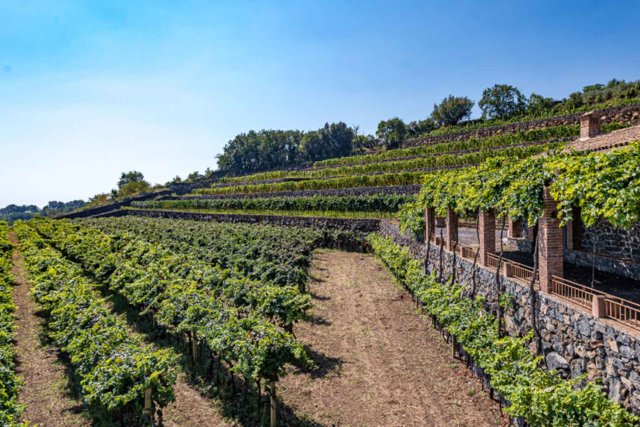
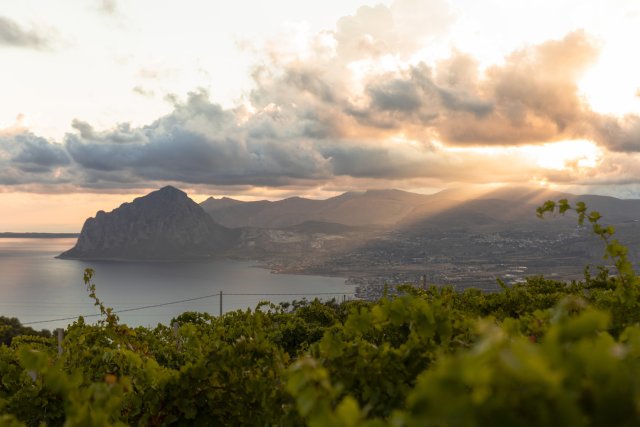
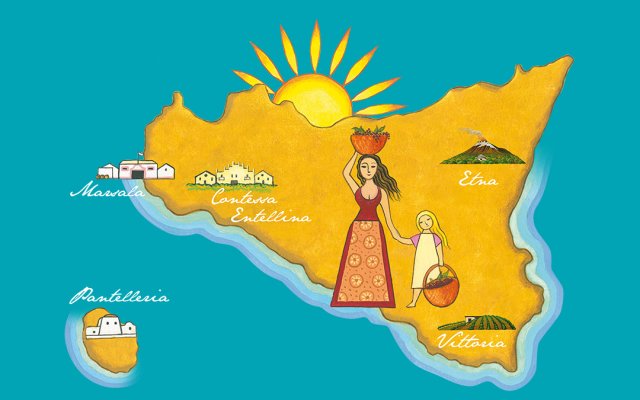
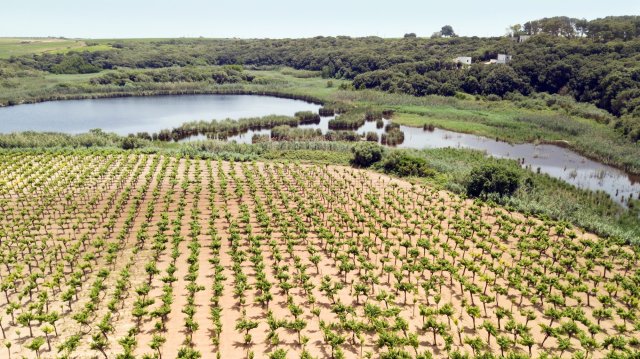
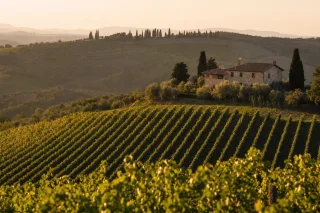
The zone is the whole of Trapani province at Sicily's western tip, minus three carve-outs: Pantelleria and Favignana keep their own island identities and Alcamo its own DOC. This is flat, hot, African-facing country: low alberello and spalliera vines on terra rossa over limestone, salted by wind off the Stagnone lagoon and dried by 300 days of sun, which is why the must reaches 12 percent natural alcohol before the concia adds a drop.
Inside the zone
Click or tap a pin for its estate. The numbered pins match the estate cards below.
Towns worth knowing
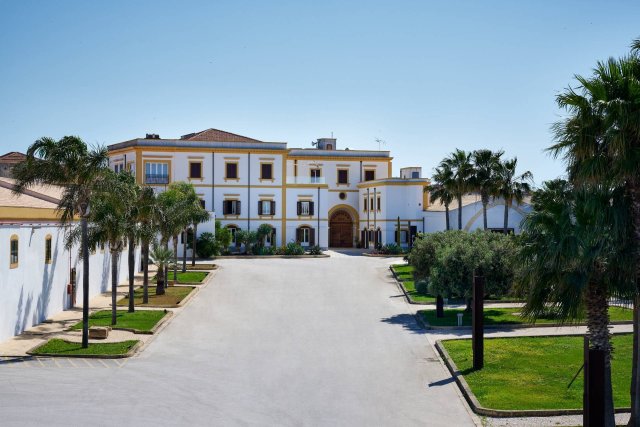
Production concentrates around Marsala town itself, where the historic baglios of Florio, Pellegrino and Martinez line the seafront road.
In the glass
One profile at a time, never blended into a single set of bars.
Caramel

Fig

Raisin
Almond

Hazelnuts

Apricot

Orange peel

Tobacco
The disciplinare
The same table on every denomination page, straight from the production rules.
Solid means the rules demand it. Striped means optional, up to that amount. The words on the right say the same rule.
Aged in wood, every tier oak or cherry casks are mandatory; only Fine's first four months may sit elsewhere.
Vergine is the purist tier no cooked must, no concentrated must, no sifone: fortifying spirit alone, and always dry.
Ambra requires mosto cotto at least 1 percent cooked must gives the amber type its colour and bitter-caramel edge.
The clock starts at the concia minimum ageing counts from the day fortification and sweetening finish, not the harvest.
Protected since 1931 a royal decree shielded the Marsala name thirty-five years before Italy's DOC system existed.
Ageing and alcohol minimums per tier are in the label guide above.
Editor's cellar
Live prices, compared across 4 UK retailers.
Cellar doors · inside the zone
6 working estates with their gates open, numbered to match their pins on the map above.
No estates match these filters. Clear a filter to see more.
Experiences in the Marsala zone
Cellar experiences here average around €46. These are the strongest fits for this page.
Cantine Florio
Since 1833, the Florio Cellars have housed the oak barrels where Florio Marsala wines age in seemingly immobile motion. These aisles capture…
Cantine Florio
Since 1833, the Florio Winery has been a symbol of the high-quality Marsala production chain. A winery steeped in Italian history and the Fl…
Cantine Florio
Since 1833, the Florio Winery has been a symbol of the high-quality Marsala production chain. A winery steeped in Italian history and the Fl…
Vintage provenance
No denomination-wide vintage chart is published for Marsala: the wine is blended across harvests and released by ageing tier, Fine to Vergine Stravecchio, so quality tracks the house and the tier rather than the year.
What to check instead
The producer: quality here is tracked estate by estate rather than year by year.
The base is a natural must of at least 12 percent. Oro and ambra come from Grillo, Catarratto, Ansonica or Damaschino. Rubino needs at least 70 percent Perricone, Nero d'Avola or Nerello Mascalese. The concia is the step that turns it into Marsala. Grape spirit lifts the wine to 17.5 percent for Fine, or 18 percent for Superiore and Vergine. Ambra must also take at least 1 percent mosto cotto, the cooked must that gives it colour and a bitter-caramel edge. Vergine is the purist tier: no cooked must, no sifone, spirit alone. Sweetness is declared on the label. Secco stays under 40 grams of sugar per litre, semisecco runs to 100, and dolce sits above. Ageing runs in oak or cherry casks: one year for Fine, two for Superiore, four for Superiore Riserva, five for Vergine and ten for Vergine Stravecchio. The clock starts on the day the concia ends.
On the table
The home country leads; global pairings that genuinely work follow.
In-depth guide
No. The supermarket cooking bottle is the cheapest expression of the Fine tier. Superiore Riserva ages four years, and Vergine five to ten. Those are dry and oxidative, like fine sherry. Marco De Bartoli's wines and Florio's aged Vergine are the proof.
They are legal ageing tiers, all in wood. Fine ages one year minimum, Superiore two, Superiore Riserva four, Vergine five and Vergine Stravecchio ten. Vergine must also be made with fortifying spirit alone, with no cooked must, and it is always dry.
The sugar left in the wine, declared on the label. Secco stays under 40 grams per litre, semisecco runs 40 to 100, and dolce is above 100. Colour is a separate axis: oro and ambra come from white grapes, rubino from red.
Oro and ambra Marsala come from Grillo, Catarratto, Ansonica (Inzolia) and Damaschino. Rubino needs at least 70 percent Perricone, Nero d'Avola or Nerello Mascalese. White grapes are allowed up to 30 percent.
Weeks rather than hours. Marsala is fortified, and it is aged in contact with air. A stoppered bottle in the fridge holds its shape for a month or more. Dry Vergine fades faster than dolce.
Explore more Sicily
Same region only: the denominations Marsala drinkers reach for next.