






Sicily · DOC
Noto DOC Baroque Sicily, and the Likely Birthplace of Nero d'Avola
Noto is the denomination of Sicily's Baroque south-east corner. It is very probably the birthplace of Nero d'Avola. The town of Avola sits inside its boundaries. The DOC covers four towns in the province of Siracusa. It makes two quite different things: a serious red and a historic Moscato.


Decode the label
What the label tells you
One denomination, 4 things it can say on the front. Colour first, then the qualifier.
On the label
Noto Rosso
Nero d'Avola's baroque south-east


Warm cherry and carob from the white limestone around the baroque city: the gentler face of Sicily's great red grape.
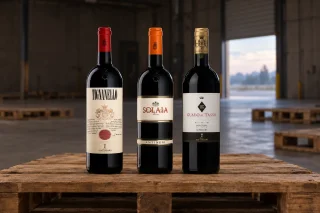
In stock from £12.67 See the 4 bottles ↓On the label
Noto Nero d'Avola
the varietal tier
The grape's name on the label raises the bar: more Nero d'Avola, riper fruit, lower yields.
In stock from £28 See the 1 bottle ↓On the label
Moscato di Noto
the white, from bone dry to gently sweet
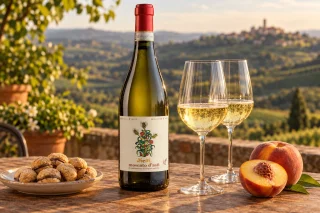
All Moscato Bianco: orange blossom and grape skin, made dry by the modern estates and softly sweet by the old school.
In stock from £16.50 See the 1 bottle ↓On the label
Passito di Noto
the dried-grape original
Sun-dried Moscato in the old Val di Noto manner: apricot, honey and candied orange with real acidity underneath.
In stock from £33.60 See the 1 bottle ↓The boundary
Where it is
Everything on this page, the estates, the bottles, the sub-zones, sits inside this line.
The south-eastern corner of Sicily around the baroque city of Noto, in the free-draining white limestone of the Val di Noto. The vineyards sit between the city and the sea at Pachino country's northern edge, where Nero d'Avola has always ripened earliest and sweetest; the Moscato has clung to the same hills since the Greek settlements at Eloro.
Inside the zone
Towns worth knowing
Avola lent the grape its name; Noto's baroque centre is a UNESCO site and the cellar door of the zone.
In the glass
What it tastes like, by style
One profile at a time, never blended into a single set of bars.
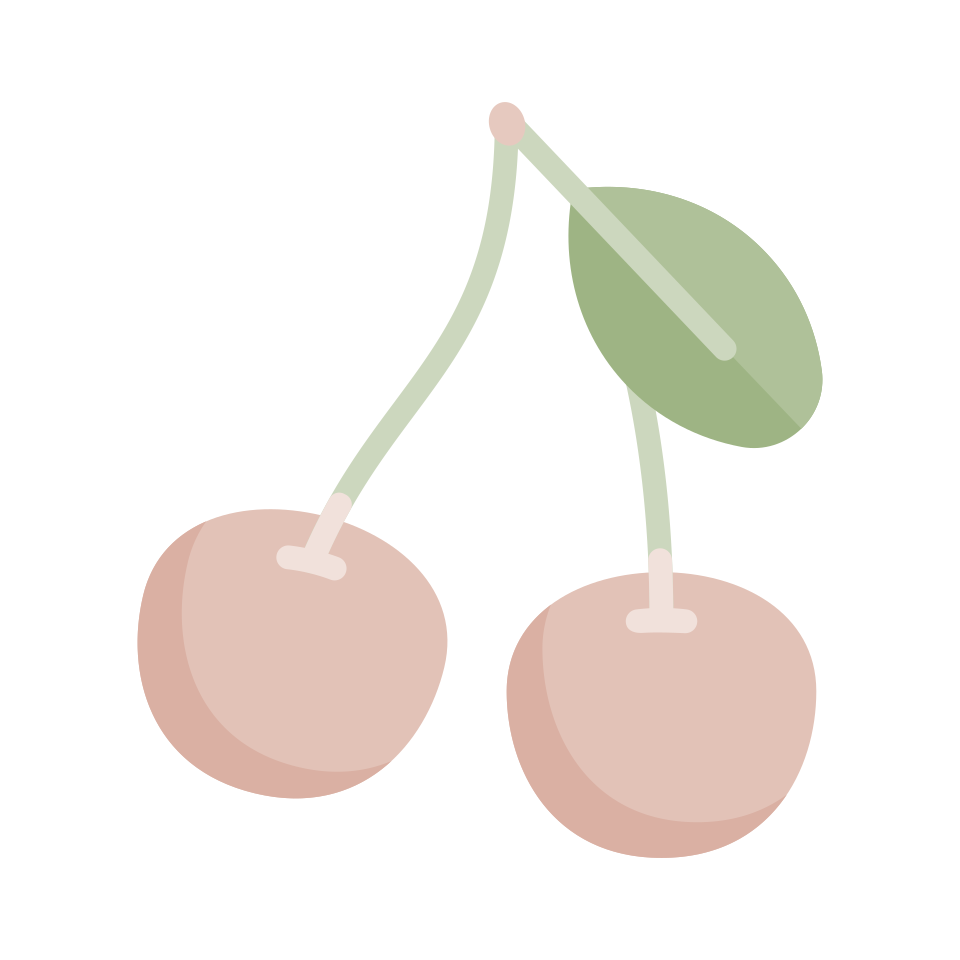
Cherry

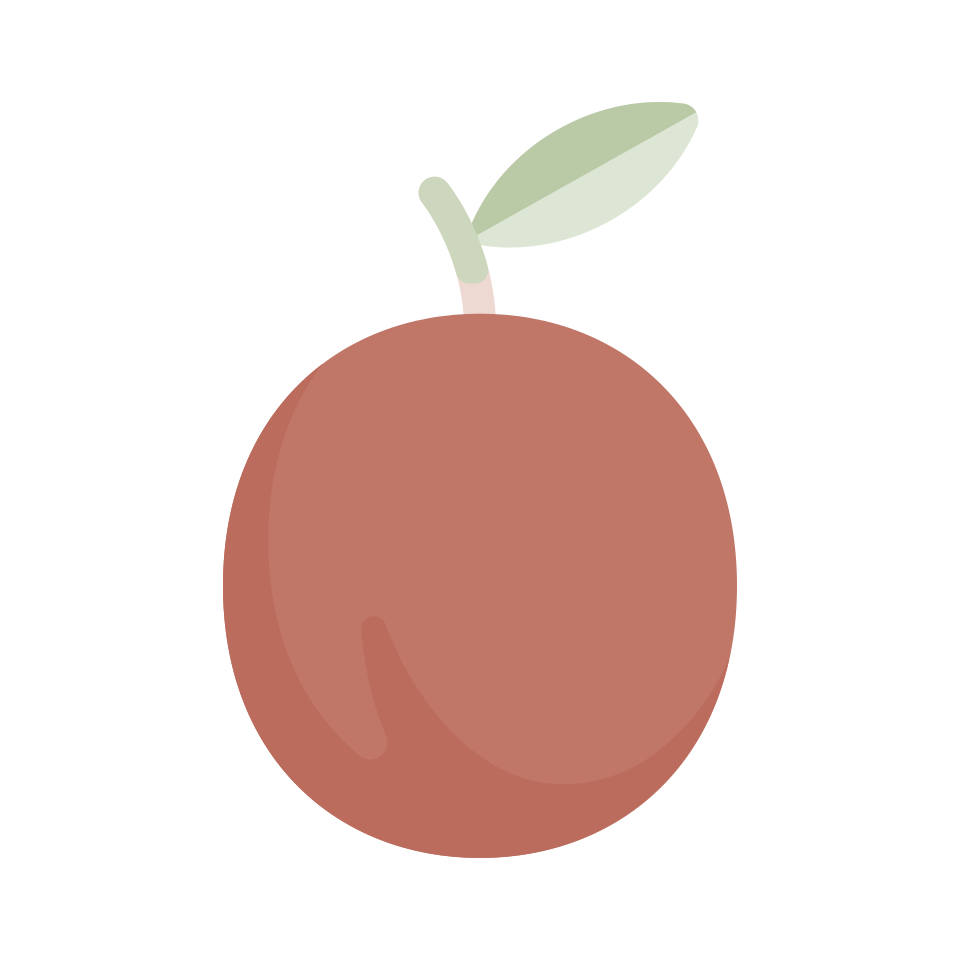
Plum
Liquorice

Tobacco

Orange blossom
White peach
Citrusy fruit

Apricot

Honey
Raisin
The disciplinare
The rules that define it
The same table on every denomination page, one row group per style here, because Noto writes its rules per colour.
 Nero d'AvolaThe lead; 85% when the grape is namedat least 65%Other local redsThe blending window on the plain Rossoup to 35%
 Moscato BiancoAlone, fresh or sun-dried100%
Solid means the rules demand it. Striped means optional, up to that amount. The words on the right say the same rule.

Two grapes carry five wines Nero d'Avola for the reds, Moscato Bianco for everything white, sweet or sparkling.

Naming the grape raises the bar Noto Nero d'Avola demands 85% and a lower 11-tonne yield.
The Passito is the historic wine 18% total strength with part left unfermented as sweetness.
Bush vines are written into the rules alberello or low trellis, at 4,000 plants per hectare for the reds.
Eloro is the neighbour, not a tier the coastal strip below Noto answers to its own DOC.
Ageing and alcohol minimums per tier are in the label guide above.
Editor's cellar
Bottles to try, and what Noto costs in the UK
By style, today
Live prices, compared across 9 UK retailers.


Vintage provenance
Why there is no vintage chart
No denomination-wide vintage chart is published for Noto. Sources for this corner of Sicily review individual producers rather than rating the appellation year by year, so quality is tracked bottle by bottle.
Heat keeps the reds steady year to year; drink the Moscato young and give the Passito a decade if you can wait.
What to check instead
The producer: quality here is tracked estate by estate rather than year by year.
How Noto is made
Noto splits into a red family and a Moscato family. Noto Rosso requires a minimum of 65 per cent Nero d'Avola. A bottle labelled Noto Nero d'Avola must contain at least 85 per cent of the variety. Everything on the Moscato side is made entirely from Moscato Bianco, with no blending permitted. That covers still Moscato di Noto, spumante, liquoroso and the sun-dried Passito di Noto. The delimited zone covers the communes of Noto, Rosolini, Pachino and Avola. Vineyards run from sea level to about 300 metres, across plain and low hills. It is warm here even by Sicilian standards.
In depth
On the table
What to eat with Noto
The home country leads; global pairings that genuinely work follow.


In-depth guide
Noto, answered
Very probably. The grape takes its name from Avola, one of the four towns inside the Noto DOC, alongside Noto itself, Rosolini and Pachino. The DOC rulebook identifies this corner of Sicily as the likely zone of origin for the variety. Nero d'Avola is now planted across the island and beyond. Even so, this is the closest thing it has to a home address.
It depends which name is on the label. Noto Rosso requires a minimum of 65 per cent Nero d'Avola, which leaves room for other permitted varieties. A bottle labelled Noto Nero d'Avola must contain at least 85 per cent of the grape. That is the standard Italian threshold for naming a single variety on a label. Both come from the same four towns in the province of Siracusa.
A historic sweet wine made entirely from Moscato Bianco, with no blending permitted. The denomination allows several versions: still Moscato di Noto, a sparkling spumante, a fortified liquoroso, and Passito di Noto made from grapes dried in the sun. It very nearly died out during the twentieth century. It is still made in small quantities, so it is much harder to find than the zone's reds.
In the far south-east of Sicily, in the province of Siracusa. The delimited zone covers four communes: Noto, Rosolini, Pachino and Avola. Vineyards run from sea level up to around 300 metres, across plain and low hills. Pachino, at the island's southern tip, is also well known for its tomatoes. That gives some sense of how warm and sun-exposed this corner is.
Both sit in south-eastern Sicily and both lean on Nero d'Avola, but they are built differently. Cerasuolo di Vittoria is a DOCG that requires a fixed blend of 50 to 70 per cent Nero d'Avola with 30 to 50 per cent Frappato, which makes it pale and perfumed. Noto is a DOC and allows a far higher proportion of Nero d'Avola, up to the 85 per cent that puts the grape's name on the label. So its reds are darker and more structured.
Explore more Sicily
Same region only: the denominations Noto drinkers reach for next.


