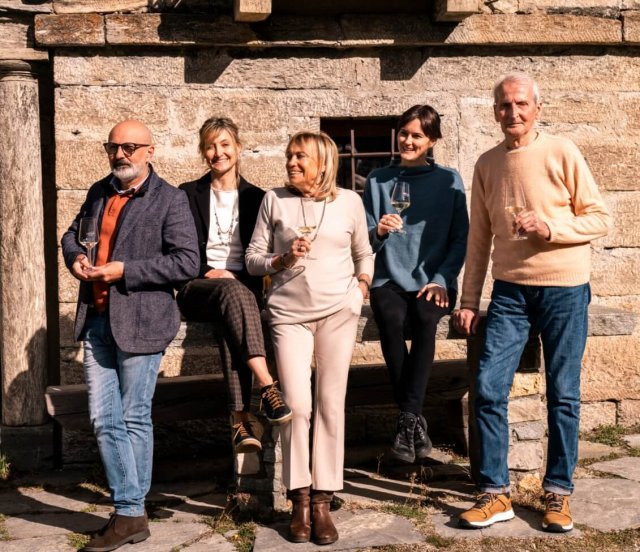
The Grosjean name appears in Valle d'Aosta records as far back as the seventeenth century. Families from Burgundy and Savoie had been invited to repopulate the valley after the plague of 1630. The modern winery dates to 1969, when Dauphin Grosjean bottled his first wines for the Exposition des Vins du Val d'Aoste, the valley's wine fair. His five sons, Vincent, Giorgio, Marco, Fernando and Eraldo, turned a small family farm into a working estate. Today the third generation leads the day-to-day winemaking: Herve, Didier, Simon and Marco.
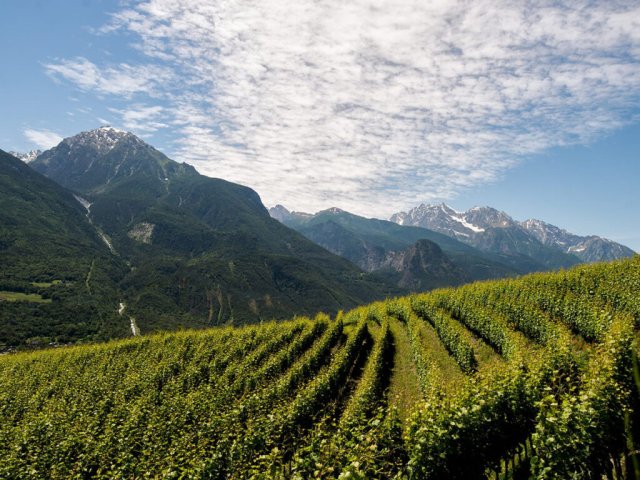
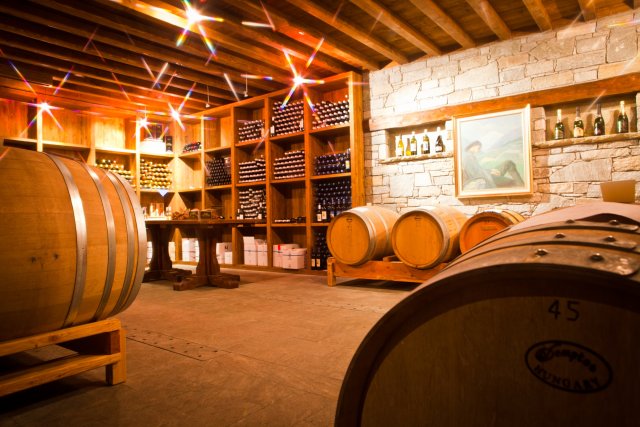
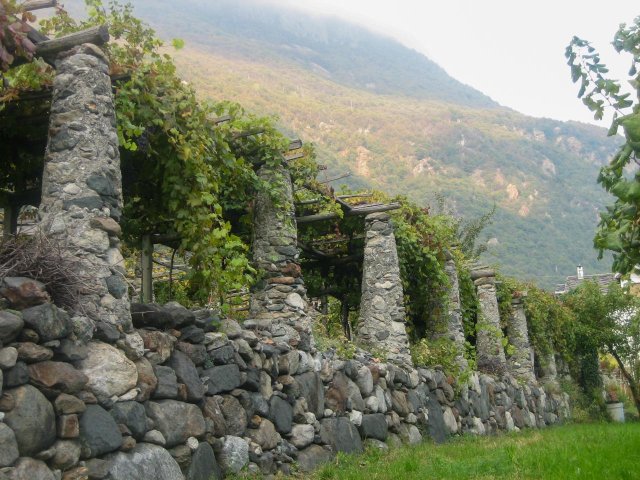
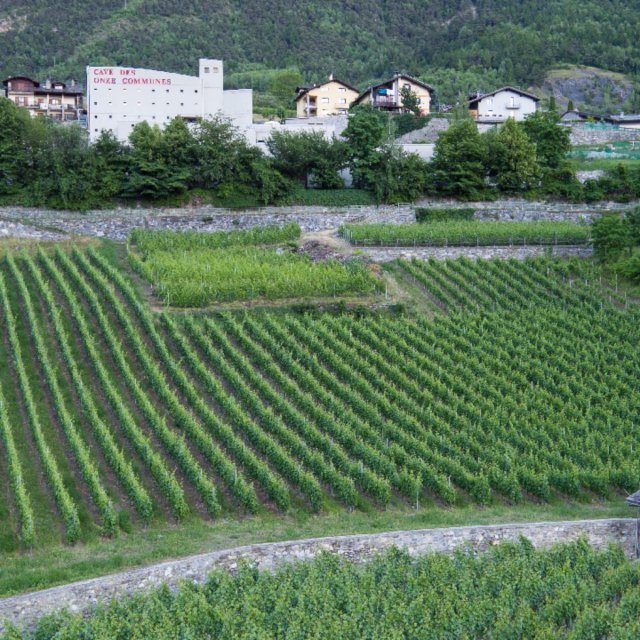
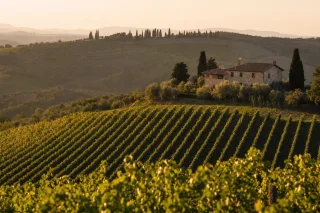
The cellar sits at Ollignan, on the right bank of the Dora Baltea river. The vineyards climb the slopes around it. Tzeriat, Rovettaz, Creton and Touren lie in Quart; Tzante de Bagnere, Merletta and Castello di Pleod in Saint-Christophe. Plots sit between 500 and 900 metres, on slopes that approach 80 percent. Everything is worked by hand, from pruning to harvest. The vines yield roughly 140,000 bottles a year, modest for Italy but substantial for a winery in Valle d'Aosta.
Clean farming came long before the paperwork. Insecticides and herbicides went in 1975. Organic certification followed in 2011, the first granted to a winery in Valle d'Aosta, and the only one in the region for the next decade. The same thinking runs through the work: wild yeasts, low sulphur additions, and traditional Guyot training in the vines.
The range reads like a tour of the valley's native grapes. Petite Arvine, a white the valley shares with the Swiss Valais, comes in two versions. The Vigne Rovettaz is partly aged in oak; a fresher version comes from the higher Chatel Argent vineyard. Cornalin Vigne Rovettaz and Fumin Vigne Rovettaz show two of the region's most age-worthy native reds. Torrette Superieur, a blend led by Petit Rouge, is the everyday red of the central valley and anchors the range.
The line stretches beyond the native palette too. There is a Pinot Noir from the Tzeriat vineyard, the Montmary Metodo Classico Extra Brut Rose, and a Donnas made from Picotendro, the lower valley's form of Nebbiolo.
At the table, Torrette is a natural match for the region's mountain charcuterie: jambon de Bosses DOP, motzetta, lard d'Arnad DOP. It also suits Fontina dishes like polenta concia or seupa a la valpellinentse. The whites sit well beside lake fish and alpine cheeses, while Cornalin and Fumin reach toward braised game and beef carbonade. Drinking Grosjean is the most direct way to taste how Valle d'Aosta thinks about wine.





 Aosta Valley
 Est. 1969
  3 wines
  Tastings
 Tours
Tours
 Booking required