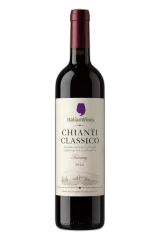
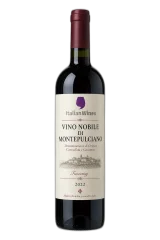
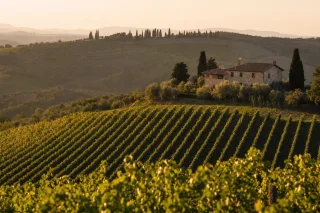
Sangiovese (san-jo-vay-zeh) is the undisputed king of red wines in central Italy, virtually present in every area of the country Thanks to its many clones and surprising versatility, Sangiovese can create a wide range of wines: from young and fresh Chiantis to complex and full-bodied Brunellos.
Red Grape · Sicily
Nerello Mascalese
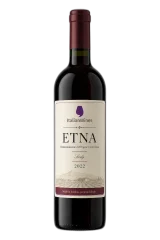
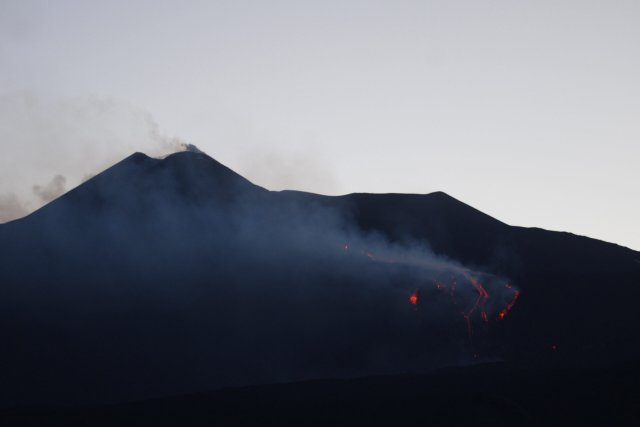
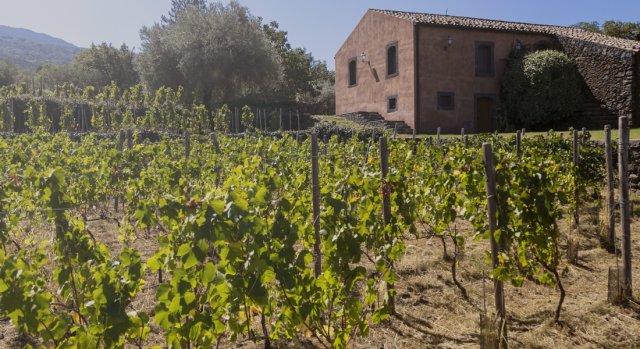
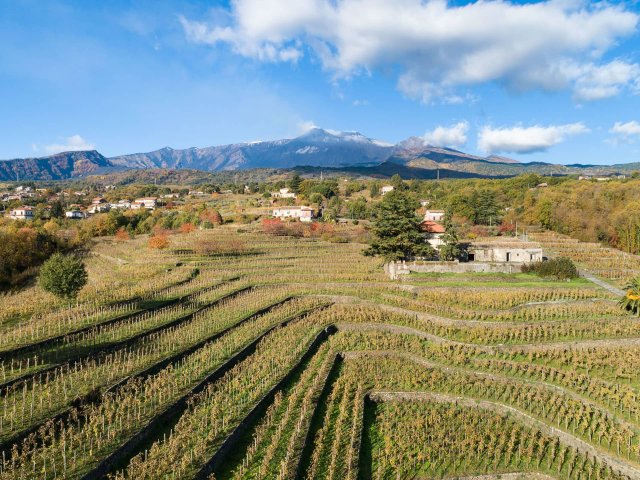
For wine enthusiasts and connoisseurs in the UK seeking a unique sip that epitomises Mediterranean flair, the Nerello Mascalese [Neh-rel-loh Mas-ka-leh-seh] grape is a must-try. This indigenous Sicilian variety, predominantly grown on the volcanic slopes of Mount Etna, has Greek roots dating back to ancient times. Boasting a complex profile that dances between fruity and spicy, mineral-rich and tannic, Nerello Mascalese wines pair impeccably with quintessentially British dishes like a hearty meat pie or a sumptuous mushroom risotto. Welcome to the alluring world of Nerello Mascalese.
Taste · Where it sits
What it’s actually like in the glass
Forget scores out of five. Here’s Nerello Mascalese described against grapes you already know.
Key flavours
The map
Nerello Mascalese is medium-bodied, firm tannin, mapped against other red grapes you can buy. The closer a grape sits, the more its weight and grip resemble Nerello Mascalese.
Serving guide
Pour it at its best
Serve at
16-18°C
Decant
1 hours
Glass
Tulip Glass
Drink within
3-5 days
Cellar
5-10 years
On the table
What to eat with Nerello Mascalese
Start with the home-table matches that made the grape, then browse the full cuisine library.
Browse every pairing
Buy it · three to start with
Not sure which bottle? Start here
A curated trio across the price range, then every Nerello Mascalese on sale in the UK right now.
12 of 36 bottles
2 retailers
Nerello Mascalese
Sicilia
2 retailers
£11.74
2 retailers
Tenuta delle Terre Nere Etna Rosso
Etna
2 retailers
£18.33
2 retailers
Al-Cantara A Nutturna
Sicilia
2 retailers
£19.60
2 retailers
Tornatore Etna Rosso
Etna
2 retailers
£19.35
£21.19
2 retailers
Azienda Agricola Girolamo Russo a Rina
Etna
2 retailers
£21.35
2 retailers
Pietrarizzo Etna Rosso - Tornatore
Etna
2 retailers
£25.24
2 retailers
Etna Rosso - Planeta
Etna
2 retailers
£24.41
£29.52
2 retailers
Etna Rosso Contrada Feudo di Mezzo
Etna
2 retailers
£26.63
1 retailer
Pietradolce Etna Rosso
Etna
1 retailer
£15.56
1 retailer
Etna DOC Rosso
Etna
1 retailer
£20.03
1 retailer
I Custodi delle Vigne dell'Etna Pistus
Etna
1 retailer
£18.77
£20.68
1 retailer
Girolamo Russo Etna Rosato
Etna
1 retailer
£21.34
£26.09
Denominations
Where it earns a name on the label
The appellations where Nerello Mascalese plays a starring role.
Where it grows
Where Nerello Mascalese grows in Sicily
Sicily
Volcanic Nerello on Etna's black terraces, sun-baked Nero d'Avola on the south-east coast, fortified Marsala in Trapani and UNESCO Zibibbo on Pantelleria: Sicily holds Italy's widest single-region wine map.
Editorial
About Nerello Mascalese
When it comes to serving Nerello Mascalese, attention to detail can elevate your drinking experience. For starters, aim for a serving temperature between 16 and 18 degrees Celsius. A large, tulip-shaped glass will allow the wine's nuanced aromas to fully express themselves. If the wine is particularly young or tannic, consider decanting it for at least 45 minutes to an hour before serving. Once opened, a bottle of Nerello Mascalese can last for up to 3-5 days if re-corked and stored in a cool, dark place. For those who wish to age this wine, a well-maintained cellar can keep Nerello Mascalese in optimal conditions for 5-10 years.
The grape's history is as rich as its flavour profile. Some scholars believe Nerello Mascalese made its way to Italy during the Greek colonization in the 8th and 7th centuries BC. Although originally passed through Calabria, it found its permanent home in Sicily during Roman times, specifically in the volcanic soils of Mount Etna. This unique terroir imbues the grape with its distinctive mineral notes, making it a point of fascination for wine lovers, British or otherwise.
The grape's name is another captivating element. "Nerello" reflects the dark hue of the grape skins, whereas "Mascalese" pays homage to Mascali, a region in Catania where the grape thrives. Mascali's fertile, volcanic soil and strong agricultural tradition offer ideal conditions for the grape, sealing its status as a beloved local variety.
Nerello Mascalese is highly adaptable, capable of reflecting the characteristics of its terroir, which includes volcanic-lava-rich soil, and a unique climate marked by dramatic temperature shifts. It matures late in the season, usually around the second decade of October, adding a layer of complexity to its harvest. Despite the dark implication in its name, the grape has a light-blue skin, making it easily distinguishable from other varieties.
Nerello Mascalese goes by another name among the local Sicilian viticulturists - "Niuriddu Mascalisi." So if you ever hear this term, rest assured that it’s our grape in question.
Good to know
Frequently asked
No, while Nerello Mascalese is predominantly grown in Sicily - especially around the Etna volcano in the province of Catania - it has also started to make its presence felt in other regions of Italy. In particular, there's growing interest in Calabria. However, its deep-rooted connection with Sicilian terroir makes it a signature grape of the region.
No, Nerello Mascalese is not cultivated in Greece. Though some scholars believe the grape was introduced to Italy during the period of Greek colonization around the 8th-7th century B.C., it has primarily grown in Italy, specifically in Sicily.
Nerello Mascalese is often blended with Nerello Cappuccio, another indigenous Sicilian grape, especially in the Etna Rosso wines. The typical blend comprises at least 80% Nerello Mascalese and up to 20% Nerello Cappuccio.
While Nerello Mascalese wines are increasingly available in specialised wine shops, you can also find them online. If you're keen on trying a tipple, you don't have to fly to Sicily to get a bottle. Above, you will find our curated selection.
Yes, Nerello Mascalese is a late-ripening grape, usually harvested around the second week of October. Its late ripening allows for a long growing season, which contributes to its complex flavor profile.
The grape's ability to adapt to its local environment, especially the volcanic soils of Etna, makes it truly unique. Its wines express a strong sense of place, capturing the essence of the terroir they come from.
Explore by style
Wine styles made from Nerello Mascalese
Jump to the editorial guide for each style this grape turns up in.
Keep exploring