








 Sicily
 Est. 2005
  10 wines
  Tastings
 Tours
Tours
 Walk-ins welcome



Wine area
Etna
Black volcanic terraces on Europe's highest active volcano, the home of Nerello Mascalese and Carricante.
Your cellar, your trips, and the wines you've been tracking are right where you left them.
New here?
Free, always. Education first, we'll never sell you anything you didn't ask to see.
Already have an account?
Enter the email you signed up with and we'll send a link to choose a new password.
Pietradolce sits high on the northern slopes of Mount Etna, at Solicchiata, a hamlet of Castiglione di Sicilia. It works around 42 football pitches of bush-trained vines between 650 and 950 metres. The Faro family planted the estate in 2005 around plots of pre-phylloxera Nerello Mascalese and Carricante. Many parcels are between ninety and 150 years old. The range is bottled parcel by parcel, like an atlas of high-altitude Etna. At the top sits Vigna Barbagalli, a single-vineyard red the family makes only in the years it judges worthy.
See the wines
Pietradolce was founded in 2005 by Michele Faro and his brother Mario, sons of Venerando Faro. Their family has run the Piante Faro plant nursery group in eastern Sicily for decades. The brothers spent their first vintages buying neglected plots of pre-phylloxera Nerello Mascalese and Carricante around Solicchiata. They then pulled the holdings together into a single estate, built plot by plot.
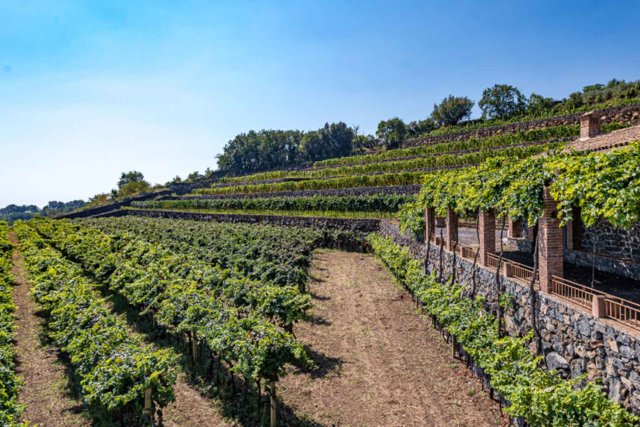
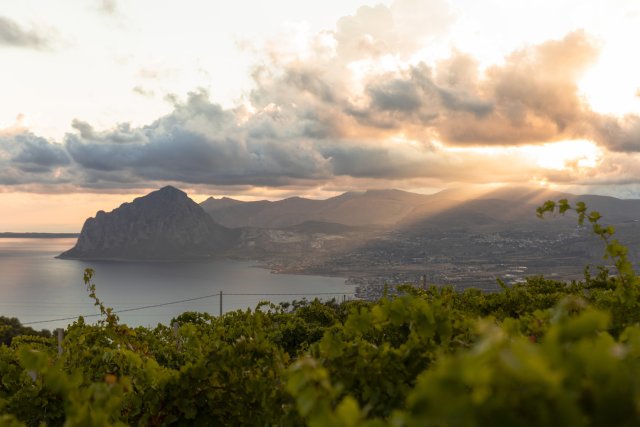
The vineyards stretch across Etna's northern slopes, between Rampante, Zottorinoto, Santo Spirito and Feudo di Mezzo. They sit at 650 to 950 metres above sea level. A further two hectares lie on the eastern flank, at Caselle in the territory of Milo, at 850 metres. There Carricante reaches its most chiselled, salty form. The vines are trained in the traditional alberello sapling shape. Many parcels are between ninety and a hundred and fifty years old, untouched by phylloxera thanks to the volcano's sandy soils.
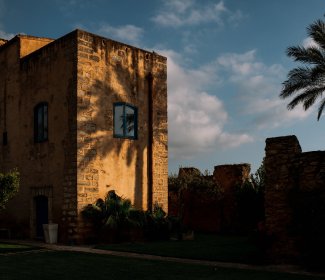
The cellar in Solicchiata sits in the shadow of the volcano, and it was designed as a piece of territorial architecture in its own right. Fermentation happens in tulip-shaped raw concrete tanks of forty hectolitres, about 5,300 bottles' worth each. Thick lava-stone walls insulate the tanks and hold a steady temperature without forced cooling. The reds then move to an underground barrel room to age in oak. A vault next door holds the estate's collection of older vintages. Works by the glass and metal artist Giorgio Vigna and the land-art sculptor Alfio Bonanno frame the tasting room. The message is deliberate: the house treats its labels and its space as part of the same story.
The range is laid out by parcel rather than by tier. The estate wines, Pietradolce Etna Bianco DOC, Etna Rosato DOC and Etna Rosso DOC, define the house style. That means bright, stony whites built on Carricante, an unusually serious rosato from Nerello Mascalese, and a red that leans on altitude and acidity rather than extraction. Above them sit the bottlings from Rampante, Santo Spirito and Feudo di Mezzo, as Etna Rosso DOC, plus the Sant'Andrea Carricante IGT. Each speaks for one site rather than a blend. The Archineri Etna Bianco and Etna Rosso stand a step above those. At the top sits Vigna Barbagalli, a single-vineyard Etna Rosso from the highest Rampante parcel, made only in vintages the family considers worthy.
The Faros are vocal about working only with the two native Etna varieties, Carricante and Nerello Mascalese. The estate describes its farming as organic and rooted in the territory, even though no certification body is publicly named. Within the wider Etna revival, Pietradolce sits at the purist end of the spectrum. It is a producer that uses single-vineyard transparency, rather than oak or technique, to make the case for high-altitude volcanic Sicily.
Plate I · SICILY
Wine area
Black volcanic terraces on Europe's highest active volcano, the home of Nerello Mascalese and Carricante.

Winery
Solicchiata, Catania · Etna
Nothing here can be booked online yet. The experiences below are documented by our editors. The estate's contact details are in Practical info.
Tasting & Tour
Guided cellar visit at Pietradolce's Solicchiata estate covering the lava-stone vat cellar and the underground barrel room, followed by a tasting of the house range and, where stock allows, the contrada and Archineri cru bottlings. The estate runs visits by appointment and books directly via its own contacts channel.
Not bookable online yet
Not seeing the estate you want? Estates without an online listing are reachable directly, and their phone and email are in Plan your visit.
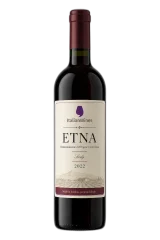
Pietradolce's current bottle selection is led by Etna DOC. The clearest grape signal comes from Nerello Mascalese and Carricante.
Tell us what you need and we'll help you reach Pietradolce and arrange a visit or tour. We reply within two working days.