
















Chardonnay is a white grape with a clear Italian role.
Wines
635
Acidity
Body
White Grape · Lombardy
Turbiana is the textured white of Lugana, grown on heavy white clay on the southern shore of Lake Garda: long mislabelled a cheap Trebbiano, it is really Verdicchio's close cousin, and its best Riservas age a decade into almond, honey and salt.
Turbiana is the white grape of Lugana DOC. It grows on the clay-rich morainic shores south of Lake Garda, across Lombardy and Veneto. DNA work confirms that it is the same variety as Trebbiano di Soave and Verdicchio. Even so, the Consorzio Tutela Lugana now prefers the historic name Turbiana to the older Trebbiano di Lugana label.
Your cellar, your trips, and the wines you've been tracking are right where you left them.
New here?
Free, always. Education first, we'll never sell you anything you didn't ask to see.
Already have an account?
Enter the email you signed up with and we'll send a link to choose a new password.
Setting it straight
The anchor fact: No. DNA has shown Lugana's grape is not a true Trebbiano at all, but a close cousin of Verdicchio, the ageworthy white of the Marche. Growers dropped the old name Trebbiano di Lugana and now call it Turbiana.
Taste · Where it sits
Forget scores out of five. Here’s Turbiana described against grapes you already know.
Real mid-weight for a white: the heavy Garda clay and time on the lees give Lugana a broad, mouth-filling body that carries flavour almost like a light red, well clear of a wispy summer white.
Not true tannin, but more phenolic grip than almost any Italian white: a chewy, faintly salty texture off the skins and clay, and exactly why Turbiana can stand up both to rich food and to years in bottle.
A high, tartaric-acid backbone is the engine of its ageing: bright and lemony in youth, it is the spine that holds a decade-old Riserva together long after softer whites have collapsed.
Always dry and firmly savoury: what fruit there is runs to yellow apple, white peach and lemon, framed by salt, flint and almond rather than by any sweetness.
Key flavours




The map
Turbiana is medium-bodied, crisp, fresh acidity, mapped against other white grapes you can buy. The closer a grape sits, the more its weight and freshness resemble Turbiana.
Is this for you?
Reach for it when…
Maybe skip it if…
Serving guide
Serve at
10-12°C
Serve it cool but not ice-cold, around 10 to 12C: chill it any harder and you mute the almond, texture and salt that set Turbiana apart from a simple crisp white.
Glass
Riesling Glass
A tall Riesling glass, aroma-focused, gathers the lemon, flint and blossom while giving the wine's texture room to show.
Drink within
3-5 d days
An opened bottle holds three to five days in the fridge; the phenolic texture and tartaric acidity keep it going far longer than a fragile white would.
Cellar
-10 y years
This is the ageworthy exception among Italian whites: the best Riservas rest five to ten years, trading fresh citrus for toasted almond, honey and a waxy, saline depth.
On the table
Start with the home-table matches that made the grape, then browse the full cuisine library.

Weight for the whipped cod
Whipped Venetian salt cod is rich, salty and creamy, and where a light lagoon white gets swamped, Turbiana's clay-built body and almond-skin grip settle right into it while the saline citrus slices the cream.

The Garda-Veneto home plate
Sweet grey lake shrimp on soft polenta is delicate, faintly briny food from Turbiana's own corner of the Veneto; the wine's own salinity and blanched-almond finish echo the shrimp while its texture meets the soft polenta head on.

Saffron on Lombardy's doorstep
Lugana is a Lombardy wine, and Milan's saffron-and-marrow risotto is its regional neighbour; Turbiana has the body to match the buttery rice while its lemon and salt stop every spoonful from turning heavy.
Browse every pairing
Buy it · three to start with
A curated trio across the price range, then every Turbiana on sale in the UK right now.
Special occasion
 2 retailers
Lugana
2 retailers
£33.48
Why this one: Molceo is Ottella's benchmark Lugana Riserva from Peschiera del Garda, rested eighteen months on the lees with a fifth in oak: golden, textured and built to age, it has taken Gambero Rosso's Tre Bicchieri almost every year since 2009. This is Turbiana proving it is Verdicchio's ageworthy cousin, not a Trebbiano.
12 of 61 bottles
 4 retailers
Lugana
4 retailers
£10.10
 4 retailers
Lugana
4 retailers
£16.00
 4 retailers
Lugana
4 retailers
£16.50
 4 retailers
Lugana
4 retailers
£30.00
£34.00
 3 retailers
Lugana
3 retailers
£15.50
 3 retailers
Lugana
3 retailers
£16.90
 3 retailers
Lugana
3 retailers
£19.70
£21.18
 3 retailers
Lugana
3 retailers
£21.00
 3 retailers
Lugana
3 retailers
£22.81
 2 retailers
Lugana
2 retailers
£15.00
 2 retailers
Lugana
2 retailers
£15.90
 2 retailers
Lugana
2 retailers
£16.50
Denominations
The appellations where Turbiana plays a starring role.
Where it grows

From Franciacorta classic-method bubbles to Valtellina mountain Nebbiolo and Lugana lake-cool whites, Lombardy spans 5 DOCGs across roughly 25,000 hectares of Read more

Italy's largest wine region by volume, where Prosecco hills, Valpolicella ridges, and Soave's volcanic plain shape three different Italian classics. Read more
The terroir
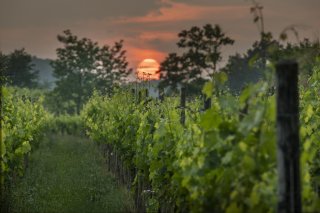
Lugana is one of the very few fine white wines grown on heavy clay. The flat land on the southern shore of Lake Garda is deep white morainic clay, ground out by an ancient glacier, and it is this dense, cool, water-holding soil, tempered by the lake, that gives Turbiana its texture, salinity and rare ability to age. The single appellation straddles two regions.
The Lombardy heartland
The clay flats and low moraine around Sirmione, Desenzano, Pozzolengo and Lonato del Garda, south and west of the lake.
The bulk of Lugana and its deepest white clay: broad, saline, textured Turbiana that runs from easy vintage bottlings to serious single-vineyard wines.
The Veneto edge
The eastern strip around Peschiera del Garda, where the Mincio river drains out of the lake.
The smaller Veronese slice of the zone, home to benchmark estates such as Ottella, where the same grape leans towards mineral, oak-touched, ageworthy Riserva.
Editorial
Turbiana is the historic name for the white grape that defines Lugana DOC. The zone straddles the southern bank of Lake Garda, between Brescia and Verona. For most of the twentieth century the variety travelled under the name Trebbiano di Lugana. Producers long suspected that their structured, age-worthy wines bore little relation to the workhorse Trebbiano family. DNA studies in the early 2000s settled the question. Turbiana is genetically identical to Trebbiano di Soave and to Verdicchio. Verdicchio is the Marche grape behind Verdicchio dei Castelli di Jesi DOC and Verdicchio di Matelica DOC. The Consorzio Tutela Lugana has since adopted Turbiana as the preferred name, and it discourages both older synonyms.
Almost every great white wine is grown on light, free-draining soil. Lugana breaks the rule: Turbiana digs into heavy white morainic clay on the floor of Lake Garda's old glacial basin, and it is that cool, water-holding clay, not extra sun, that builds the wine's texture and lets it age.
Lugana DOC, southern shore of Lake GardaThe Lugana zone covers the whole municipality of Sirmione. It also takes in parts of Peschiera del Garda, Desenzano del Garda, Lonato del Garda and Pozzolengo. Heavy clay soils of glacial origin tame the grape's vigour. The lake holds heat, so ripening runs on into cool autumn nights that build aromatic intensity. Five regulated styles share a 90 percent Turbiana minimum: Lugana, Lugana Superiore, Lugana Riserva, Lugana Spumante and Lugana Vendemmia Tardiva. The consortium recently registered three new clones, CTL1, CTL3 and CTL5. They were selected from historic piante madri after ten years of small-batch trials, and all were chosen for later ripening and brighter acidity.
In the glass Turbiana shows ripe apple, white peach and citrus pith. Behind that fruit come white flowers and crushed chalk. The finish is bitter and almondy, and it thickens when the juice spends longer on the skins. Its tartaric acidity carries the wine. The thicker-than-average skins deliver a grip that is rare among Italian whites. Standard Lugana drinks well at one to three years. Superiore and Riserva develop flinty stone, mandarin peel and toasted nut tones that can hold for ten years or more.
Good to know
Yes. DNA studies have confirmed that Turbiana is genetically identical to Trebbiano di Soave and to Verdicchio. Verdicchio is the Marche grape of Castelli di Jesi and Matelica. The three names describe one variety with its own regional traditions. The Consorzio Tutela Lugana now favours Turbiana over the historic Trebbiano di Lugana label.
Turbiana is concentrated on the southern shore of Lake Garda, inside the Lugana DOC. That zone covers the whole municipality of Sirmione. It also takes in parts of Peschiera del Garda, Desenzano del Garda, Lonato del Garda and Pozzolengo, across Lombardy and Veneto. As Trebbiano di Soave it appears in Soave DOC, Soave Superiore DOCG, Recioto di Soave DOCG and Gambellara DOC. As Verdicchio it dominates Verdicchio dei Castelli di Jesi DOC and Verdicchio di Matelica DOC in the Marche.
Turbiana wines lead with ripe apple, white peach and citrus pith. White flowers, crushed chalk and a salty, almondy finish frame that fruit. The signature is a tartaric backbone that keeps even ripe vintages fresh. A subtle grip from thicker-than-average skins gives the wine more texture than most Italian whites.
Standard Lugana drinks well within one to three years of harvest. Lugana Superiore must age a year before release, and it rewards three to five more in bottle. Lugana Riserva is released after twenty-four months, six of them in bottle. It can hold for ten years or more, developing flinty stone, mandarin peel and toasted almond tones.
The acidity, salty edge and almondy bite suit the cooking of Lake Garda and the Po plain. Standard Lugana works with antipasti misti, prosciutto crudo, lake fish such as lavarello al burro, and risotto al pesce di lago. Riserva and Superiore stand up to baccala mantecato, capesante grigliate and the saffron weight of risotto alla Milanese.
The Lugana DOC regulates five styles, all built on at least 90 percent Turbiana. They are still Lugana, then the longer-aged Lugana Superiore and Lugana Riserva. Next comes Lugana Spumante, made by the traditional method or the Charmat method. Last is the late-harvested Lugana Vendemmia Tardiva. In Veneto the same grape goes into dry Soave and into the dried-grape sweet wine Recioto di Soave.
Explore by style
Jump to the editorial guide for each style this grape turns up in.
Keep exploring