Red Grape · Basilicata

Malvasia Nera di Basilicata

Malvasia Nera di Basilicata is an indigenous black grape grown almost exclusively in inland Basilicata, with around 114 hectares planted nationwide.

Sitting in the IGT Basilicata, Grottino di Roccanova DOC and Terre dell'Alta Val d'Agri DOC blends, it is most often used to soften and perfume Aglianico-led reds across the southern Apennines.

1

Denominations

Taste & Pairing

Taste Profile

Body 3/5
Tannin 2/5
Acidity 3/5
Sugar 1/5

Key Flavours

Cherry Cherry
Strawberry Strawberry
Violet Violet
Plum Plum
Spicy Spicy
Red forest berries Red forest berries

Serving Guide

Serve

16–18°C

Decant

30 minutes

Glass

Standard Balloon Glass

Drink Within

2–3 days

Cellar

1–3 years

Explore Malvasia Nera di Basilicata Denominations

Discover the Italian wine denominations where Malvasia Nera di Basilicata plays a starring role.

Editorial

About Malvasia Nera di Basilicata

Malvasia Nera di Basilicata is one of the rarer threads in the tangled Malvasia family, a black-berried vitigno autoctono recorded in the National Catalogue of Vine Varieties since 1970. The Italian Ministry of Agriculture's ampelographic profile groups it with Malvasia Nera di Brindisi and Malvasia Nera di Lecce on cluster shape and leaf morphology, but separates it on aroma: the Basilicata cultivar carries a delicate aromatic lift the Lecce sibling lacks. Local oral history places the grape in Basilicata since at least the eighteenth century, often having travelled inland from neighbouring Puglia.

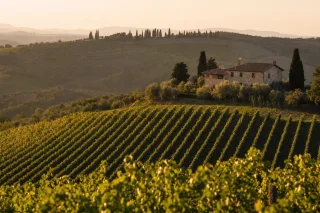
Plantings sit at roughly 114 hectares nationwide, almost all of it in the inland Potentino around Acerenza, Tolve, Oppido Lucano, Vaglio and Maschito, the cooler Materano hills, and pockets of Val d'Agri pushing down towards the Pollino. Calcareous-clay soils, hot dry summers, and sharp day-night temperature swings preserve fruit aromatics and acidity. The vine takes drought well, finds oidium pressure manageable, but reacts badly to humid vintages because the cluster is fairly compact.

Vinification is overwhelmingly in stainless steel; brief small-cask passes appear at a handful of estates. The grape is rarely bottled in purezza. It earns most of its keep as the rounding voice in Aglianico-led blends and as the soft, perfumed backbone of regional rosati. Authorised plantings extend across IGT Basilicata, Grottino di Roccanova DOC, Terre dell'Alta Val d'Agri DOC, IGT Colli di Salerno in Campania, Sant'Anna di Isola Capo Rizzuto DOC in Calabria, and several Pugliese IGTs from Salento up to Daunia.
Frequently Asked Questions

Ruby-red with violet reflections in youth, the wine leans on ripe cherry, strawberry and crushed violet with a touch of sweet spice. Tannins are gentle, acidity moderate, body sits in the medium register. It drinks easily young rather than rewarding long ageing.

Almost all of the 114 hectares planted in Italy sit inside Basilicata's inland hills: the Potentino around Acerenza, Tolve, Oppido Lucano and Maschito, the cooler Materano, and the Val d'Agri reaching towards the Pollino. Smaller authorised plantings appear across Puglia, Calabria and Campania for blending use.

No, but they are close ampelographic relatives. The Italian Ministry of Agriculture's varietal study groups Basilicata with Brindisi and Lecce on cluster shape and leaf morphology, then separates Basilicata as the slightly more aromatic of the three. Lecce is the most neutral; Basilicata sits between Brindisi and Lecce on aromatic intensity.

Pair it with the rustic cooking of southern Italy. Slow-cooked lamb dishes such as agnello alla lucana, wild boar ragu dressing orecchiette, grilled lucanica sausage, peposo-style beef stews, and aged Pecorino di Filiano or caciocavallo podolico cheeses all work well with its soft tannins and ripe-fruit register.

It appears as a complementary variety in IGT Basilicata, Grottino di Roccanova DOC and Terre dell'Alta Val d'Agri DOC inside its home region, and crosses regional borders into IGT Colli di Salerno in Campania, Sant'Anna di Isola Capo Rizzuto DOC in Calabria, and a string of Pugliese IGTs including Salento, Daunia and Tarantino.

Serve at 16 to 18 degrees Celsius in a standard balloon or large red glass. Most bottlings show their fruit best young; light decanting of around thirty minutes is enough for older or barrel-aged versions. Once opened, the bottle holds for two to three days resealed in the fridge.

Keep Exploring

Wine styles made from Malvasia Nera di Basilicata

Jump from Malvasia Nera di Basilicata to the matching editorial wine-style guides.

Explore More Red Grapes

Sangiovese

Sangiovese (san-jo-vay-zeh) is the undisputed king of red wines in central Italy, virtually present in every area of the country Thanks to its many clones and surprising versatility, Sangiovese can create a wide range of wines: from young and fresh Chiantis to complex and full-bodied Brunellos.

Wines 286
Tannin
Body

Explore Sangiovese

Nebbiolo

Nebbiolo (Nay-bee-OH-lo) is a native Italian variety cultivated in the northern regions, whose name derives from the word “Nebbia” which is Italian for fog.

Wines 240
Tannin
Body

Explore Nebbiolo

Merlot

Merlot is a red grape with a serious Italian footprint: Bolgheri DOC, Bolgheri Rosso, Cortona DOC, Suvereto DOCG, Rubicone IGT and Montello Rosso DOCG form its Italian map.

Wines 115
Tannin
Body

Explore Merlot

Corvina

Corvina is the principal red grape of Verona's wine country, forming the backbone of Valpolicella DOC, Amarone della Valpolicella DOCG, and Recioto della Valpolicella DOCG.

Wines 69
Tannin
Body

Explore Corvina