Red Grape · Apulia

Negroamaro

Puglia's great dark red, the muscle behind Salice Salentino. Negroamaro means 'black bitter', and it delivers exactly that: deep, sun-ripened black fruit closing on an earthy, almond-bitter twist that no other southern red quite matches.

Negroamaro is the dark, warming red of Puglia's Salento, the sun-baked heel of Italy. Its name doubles up on the word black, Latin niger and Greek mavros, and the wine follows suit: deep purple, full-bodied and ripe, closing on a signature bitter twist. This is the backbone of Salice Salentino.

28
Bottles live now
10
UK retailers
5
Denominations

Setting it straight

More than meets the eye

vs
The reality
  • Bitter, not sweetThe amaro in the name is real: the finish turns on bitter almond and scorched earth, not ripe jam.
  • Built to blend and to rosatoTraditionally softened with Malvasia Nera and made bone-dry, even in its famous Salento rose.
  • Salento's own structureIt anchors Salice Salentino, Copertino and Brindisi, wines with savoury grip, not just alcohol.
The myth
  • The Primitivo shadowPrimitivo's sweet, high-alcohol style gets pinned on all Puglian red, including its opposite.
  • Sun equals sugarThe Salento heat is assumed to mean sweetness, when Negroamaro answers it with grip and bitterness.

The anchor fact: Negroamaro and Primitivo are different Puglian grapes. Negroamaro is the savoury, bitter-edged one; Primitivo is the sweet, jammy one.

Taste · Where it sits

What it’s actually like in the glass

Forget scores out of five. Here’s Negroamaro described against grapes you already know.

BodyFull
LightFull

One of southern Italy's fuller reds, weightier than Sangiovese and close to Primitivo, though it carries the alcohol with more savoury restraint.

TanninFirm
SoftGrippy

Firm, dusty tannin from thick Salento skins, rounder than a young Aglianico but with far more grip than a soft Merlot.

AcidityBalanced
SoftRacy

Moderate acidity, just enough to keep the ripe fruit fresh under the Puglian sun without ever feeling sharp.

Fruit-sweetnessDry
DrySweet

Ripe black fruit that stays resolutely dry, its sweetness cut short by the trademark bitter-almond finish, the opposite of jammy Primitivo.

Key flavours

Black cherry
Dark, macerated black cherry is Negroamaro's fruit core, riper and more brooding than the bright red cherry of a northern Italian red, built by the relentless Salento sun.
Plum
Stewed dark plum, soft and warming, the kind of ripe fruit only a late harvest under Puglian heat produces.
Fig
Dried fig and date, a sun-baked southern sweetness that sits behind the fruit and marks the grape's warm-climate home.
Tobacco
Cured pipe tobacco and dried herbs, a savoury, almost medicinal layer that separates Negroamaro from simpler jammy southern reds.
Leather
Worn leather and scorched earth with age, the rustic, gamey side that makes Negroamaro taste of Salento rather than of oak.
Almond
The amaro made flavour: a faintly bitter almond and burnt-sugar note on the finish that gives the grape half its name and all of its signature.
Structured · Tannic Soft · Approachable Light-bodied Bold · Full Sangiovese Nebbiolo Merlot Corvina Primitivo Barbera
Negroamaro

The map

Negroamaro is full-bodied, firm tannin, mapped against other red grapes you can buy. The closer a grape sits, the more its weight and grip resemble Negroamaro.

Negroamarofull-bodied, firm tannin
Sangiovesea close match
Nebbioloa close match
Merlota close match
Corvinalighter, softer
Primitivosofter
Barberafar softer

Is this for you?

An honest gut-check

Reach for it when…

A bold red that just works

  • You want a full, warming red for grilled and barbecued meats
  • You like a savoury, bitter-edged finish rather than sweet, jammy fruit
  • You are exploring southern Italy beyond Primitivo
  • You want serious value from Puglia, in red or dry rosato

Maybe skip it if…

You’re after something else tonight

  • You want a light, high-acid red to sip on its own
  • You prefer polished, oak-driven international styles
  • You dislike any bitterness on the finish
  • You are after a delicate, perfumed red like a village Pinot Nero

Serving guide

Pour it at its best

Serve at

16-18°C

Serve at 16 to 18C. Too cold and the bitter, earthy notes take over; too warm and the ripe alcohol turns hot.

Decant

1 hours

An hour in a decanter softens the firm Salento tannin and lets the brooding dark fruit open.

Glass

Large Balloon Glass

A large bowl gives the ripe fruit and warm alcohol room, taming the grape's rustic edges.

Drink within

3-5 days

Most Negroamaro drinks well from release to about five years, at its best with a little bottle age.

Cellar

Up to 5 years

A top Salice Salentino Riserva can hold a decade, trading primary fruit for leather, tobacco and dried fig.

Buy it · three to start with

Not sure which bottle? Start here

A curated trio across the price range, then every Negroamaro on sale in the UK right now.

Entry · everyday

Negroamaro - Caleo

Negroamaro - Caleo

Appellation TBD

1 retailer

£10.27

View Wine

Why this one: An easy everyday Salento Negroamaro: soft dark cherry and a gentle bitter edge, the cheapest way to meet the grape.

The sweet spot

San Marzano Il Pumo, Salento, Negroamaro

San Marzano Il Pumo, Salento, Negroamaro

Salento

1 retailer

£12.80

View Wine

Why this one: San Marzano's Il Pumo is a modern Salento benchmark, riper and rounder, showing Negroamaro at its polished, food-friendly best.

Special occasion

Salice Salentino

Salice Salentino

Salice Salentino

1 retailer

£26.00

View Wine

Why this one: A proper Salice Salentino, the grape's flagship appellation, with the structure and dried-fig depth that reward a few years in bottle.

12 of 28 bottles

Denominations

Where it earns a name on the label

The appellations where Negroamaro plays a starring role.

BrindisiDOC CopertinoDOC Negramaro di Terra d'OtrantoDOC Salice SalentinoDOC SquinzanoDOC

Where it grows

Where Negroamaro grows in Apulia

Apulia wine region

Apulia

From Manduria's Primitivo bottlings to Salento's Negroamaro estates and Castel del Monte's Nero di Troia DOCG hills, Puglia offers Italy's deepest catalogue of warm-climate native reds.

245 wines · 41 denominations
Explore the Apulia guide

The terroir

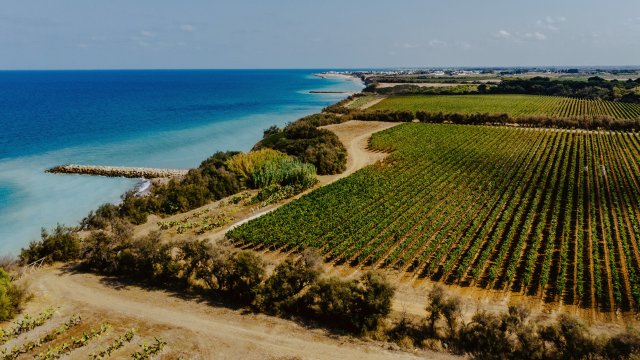
Negroamaro is a creature of the Salento, the flat, hot peninsula where two seas and calcareous soil shape the wine.

Salice Salentino

The heart of the Salento plain

The benchmark: full, structured red and serious dry rosato, Negroamaro at its most complete.

Copertino and Brindisi

The coastal Salento around Lecce and Brindisi

Softer, sea-cooled reds with a saline, gently bitter edge.

Salento IGT

Across the wider peninsula

Everyday Negroamaro, often blended with Primitivo or Malvasia Nera for approachable dark fruit.

Editorial

About Negroamaro

Negroamaro has grown in the Salento peninsula for well over a thousand years, and may descend from the vines that Roman writers such as Pliny praised in ancient Apulia. The name is an etymological doubling, niger in Latin and mavros in Greek, both meaning black, a fitting label for a grape whose thick, black-violet skins give one of Italy's deepest-coloured reds.

Where Primitivo brings the sweetness, Negroamaro brings the bitterness. Salento needs both to tell its story.

Negroamaro, the savoury heart of Puglia

Vigorous, drought-resistant and at home on the calcareous soils of the [Apulian](/regions/apulia) heel, it ripens late under a relentless sun, building ripe fruit and warming alcohol. In the glass that becomes macerated black cherry, plum and dried fig, wrapped in tobacco, leather and the earthy, faintly bitter almond note that gives the grape its name. Tannins are firm but rounded rather than sharp.

Its heartland is Salice Salentino, where Negroamaro leads the blend, traditionally softened with a little Malvasia Nera. It also anchors Copertino, Brindisi and Squinzano, and much of the everyday red sold as Salento IGT. Just as important is rosato: Salento has made serious dry rose from Negroamaro for generations, pale to deep pink, saline and gastronomic. Alongside [Primitivo](/grapes/primitivo), it is the grape that defines southern Puglian red.

Good to know

Frequently asked

Negroamaro tastes full-bodied and dark, with ripe black cherry, plum and dried fig over tobacco, leather and a signature bitter-almond finish. Grown in Puglia's Salento, it is warming and firm-tannined, rustic in the best sense.

Negroamaro means 'black bitter'. The name doubles two old words for black, Latin niger and Greek mavros, and nods to the faintly bitter almond note on the wine's finish.

No. Negroamaro and Primitivo are two different Puglian grapes, often grown side by side in Salento. Negroamaro is firmer and more savoury with a bitter edge, while Primitivo is riper, sweeter-fruited and higher in alcohol.

Negroamaro pairs with hearty Puglian cooking: orecchiette con cime di rapa, slow-cooked octopus, grilled lamb and aged caciocavallo. Its tannin and bitter finish also suit chargrilled and barbecued meats.

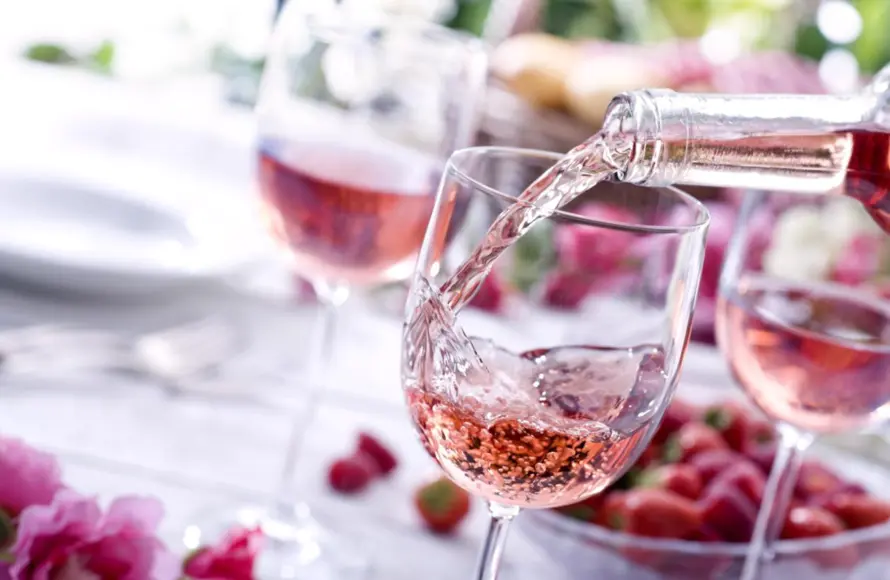
Yes. Salento has a long tradition of dry rosato from Negroamaro, ranging from pale to deep pink. These roses are saline, structured and among southern Italy's best wines with food.

Negroamaro is grown almost entirely in Puglia, concentrated in the Salento peninsula at the heel of Italy. Its key appellations are Salice Salentino, Copertino, Brindisi and Squinzano.

Explore by style

Wine styles made from Negroamaro

Jump to the editorial guide for each style this grape turns up in.

Keep exploring

More red grapes

Sangiovese

Sangiovese (san-jo-vay-zeh) is the undisputed king of red wines in central Italy, virtually present in every area of the country Thanks to its many clones and surprising versatility, Sangiovese can create a wide range of wines: from young and fresh Chiantis to complex and full-bodied Brunellos.

Wines 312
Tannin
Body

Explore Sangiovese

Nebbiolo

Nebbiolo (Nay-bee-OH-lo) is a native Italian variety cultivated in the northern regions, whose name derives from the word “Nebbia” which is Italian for fog.

Wines 254
Tannin
Body

Explore Nebbiolo

Merlot

Merlot is a red grape with a serious Italian footprint: Bolgheri DOC, Bolgheri Rosso, Cortona DOC, Suvereto DOCG, Rubicone IGT and Montello Rosso DOCG form its Italian map.

Wines 126
Tannin
Body

Explore Merlot

Corvina

Corvina is the principal red grape of Verona's wine country, forming the backbone of Valpolicella DOC, Amarone della Valpolicella DOCG, and Recioto della Valpolicella DOCG.

Wines 75
Tannin
Body

Explore Corvina