







 29 wines
 6 denominations





Chardonnay is a white grape with a clear Italian role.
Wines
626
Acidity
Body
White Grape · Basilicata
One of Basilicata's few native whites, Malvasia Bianca trades the Malvasia family's famous perfume and sweetness for something fresher: light, floral, high-acid wines, most at home leading the blend in the southern appellation of Grottino di Roccanova.
Malvasia Bianca di Basilicata is the native white grape of Lucania. It is the backbone of Matera DOC Bianco and Spumante, where it must make up at least 70%. It is also a steady presence in Basilicata IGT, Grottino di Roccanova DOC and Terre dell'Alta Val d'Agri DOC. It is not the same as the aromatic Malvasias of Candia and Lipari. On volcanic and limestone soils it gives delicate citrus and orchard fruit.
Your cellar, your trips, and the wines you've been tracking are right where you left them.
New here?
Free, always. Education first, we'll never sell you anything you didn't ask to see.
Already have an account?
Enter the email you signed up with and we'll send a link to choose a new password.
Clearing it up
White grape of Basilicata
Black grape of Basilicata
The anchor fact: They share a region, a name and even the Grottino di Roccanova DOC, yet Malvasia Bianca and Malvasia Nera di Basilicata are two separate varieties, one white and one black, not a pale and dark version of the same grape.
Taste · Where it sits
Forget scores out of five. Here’s Malvasia Bianca di Basilicata described against grapes you already know.
A slim, unoaked white, one of the lightest things grown in red-dominated Basilicata.
Its calling card, and why growers reach for it in blends: a lemon-sharp lift that stops warm-climate whites turning flabby.
Almost always vinified dry despite the Malvasia name, though a few lightly sweet versions still turn up.
Key flavours




The map
Malvasia Bianca di Basilicata is light to medium, crisp, fresh acidity, mapped against other white grapes you can buy. The closer a grape sits, the more its weight and freshness resemble Malvasia Bianca di Basilicata.
Is this for you?
Reach for it when…
Maybe skip it if…
Serving guide
Serve at
8-10°C
Serve it fridge-cold, 8 to 10C, to keep the florals crisp and the acidity refreshing rather than tart.
Decant
Not needed
No need; there is no sediment and no tannin to soften, and air only scatters its light aromatics.
Glass
Standard White Wine Glass
A standard white glass is plenty; this is not a wine that needs a big bowl to coax it open.
Drink within
2-3 days
Once open it holds a couple of days in the fridge, but there is nothing to gain by waiting; drink it fresh.
Cellar
1-3 years
Built for drinking inside a year or two of the vintage; only the best examples stretch to three.
Denominations
The appellations where Malvasia Bianca di Basilicata plays a starring role.
Where it grows

Italy's smallest southern producer, where Aglianico ripens late on the volcanic cones of Mount Vulture and Matera's tufa cellars age the country's most under-priced age-worthy reds.
The terroir
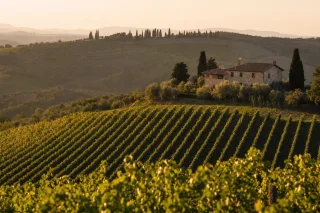
Basilicata is red-wine country, defined by Aglianico on the volcanic slopes of Monte Vulture. Malvasia Bianca is the exception here, a native white kept in the cooler inland hills, and it finds its clearest identity in the far south, around the tuff-cave town of Roccanova.
Grottino di Roccanova
Southern Basilicata, Lucano Apennines
Leads the white at a minimum of 80 percent of the blend in a tiny hill appellation named for the tuff caves where the wine was once aged.
Wider Basilicata
Matera hills and the inland south
Grown as a minor native white across the region, usually blended with other local grapes and valued for the freshness and acidity it brings.
Editorial
Malvasia Bianca di Basilicata is a native Lucanian white. Records place it in the region from the eighteenth century. Greek and Byzantine settlers almost certainly carried it south, along with the wider Malvasia family. Nobody knows its parentage. Genetically it stands apart from the aromatic Malvasias of Candia and Lipari. It is also distinct from the Malvasia Bianca Lunga of central Italy, with which it has often been confused. Plantings have collapsed. In 2000 there were roughly 900 hectares; by 2016 the designated vineyard was down to about 32.
Its home appellation, Grottino di Roccanova, takes its name from the grottini, the tuff cellars cut into the rock where wine was once aged; Malvasia Bianca is the grape behind its whites.
Grottino di Roccanova, BasilicataThe vine does best between 300 and 600 metres. It sits on the limestone-clay and marly soils of the Potentino foothills, around Acerenza, Maschito, Oppido Lucano and Genzano di Lucania. It also sits on the limestone benches of the eastern Materano. Bunches are conical and fairly tight. The berries are golden yellow, with juicy pulp. Ripening falls between mid-September and early October. Beyond Basilicata IGT, it is the principal grape of Matera Bianco DOC and Matera Spumante DOC. In both it must make up at least 70%. It is also allowed in Grottino di Roccanova DOC and Terre dell'Alta Val d'Agri DOC.
Most producers make it as a dry still wine in stainless steel. Where they want more texture, they leave it a short while on the spent yeast. The wine comes out pale straw, with green glints. The nose is delicate: citrus, pear, apple and white flowers brushed by wild herbs. The palate is straight and medium-light, and the finish is salty, with a light stony edge. Cantina di Venosa's Verbo Malvasia Bianca is the most widely sold example. Some growers around Matera also turn the grape into spumante Charmat, for an aperitivo style.
Good to know
No. The two vines look alike, and that has caused confusion over the years. Malvasia Bianca di Basilicata is genetically distinct, and native to Lucania. Its profile is gentler and more savoury than the perfumed Malvasia di Candia, or the dessert-style Malvasia di Lipari. It is grown almost only in Basilicata.
It is pale straw with green glints. The nose is delicate: citrus, pear, apple and white flowers tinged with wild herbs. The palate is medium-light and brisk, and it finishes dry, with a salty, stony lift. It is fresh rather than aromatic in the way other Malvasias are.
Lucanian cucina povera. Try it with peperoni cruschi pasta, baccalà arracanato, fave e cicoria, fried courgette flowers and the local Pecorino di Filiano DOP. Its salty finish also takes on seafood from the Ionian coast, and the freshwater fish of Lago di Monticchio.
Almost only in Basilicata. The historic vineyards sit between 300 and 600 metres. They are on the limestone-clay and marly hills of the Potentino district, around Acerenza, Maschito, Oppido Lucano and Genzano di Lucania. They are also on the limestone benches of the eastern Materano. The total designated area dropped from about 900 hectares in 2000 to roughly 32 by 2016.
It is the principal white grape of Matera Bianco DOC and Matera Spumante DOC. In both it must make up at least 70% of the blend. It is also allowed in Basilicata IGT, Grottino di Roccanova DOC and Terre dell'Alta Val d'Agri DOC. Cantina di Venosa's Verbo Malvasia Bianca is the most widely distributed example.
No. It is almost always made dry, in stainless steel, for fresh, savoury whites. It also goes into dry Matera Spumante DOC, made by the Charmat method. Sweet or passito styles are unusual. For those, look to Malvasia di Lipari instead.
Explore by style
Jump to the editorial guide for each style this grape turns up in.
Keep exploring