








 569 wines
 20 denominations





Chardonnay is a white grape with a clear Italian role.
Wines
626
Acidity
Body
White Grape · Friuli Venezia Giulia
The saline, non-aromatic Malvasia of the Trieste Karst and the Istrian peninsula: an almond-and-stone-fruit food white grown seamlessly across the Italy, Slovenia and Croatia border, and the grape most often behind a skin-contact orange wine from the Carso.
Malvasia Istriana is the native white grape of Friuli Venezia Giulia. Its home is the Carso plateau outside Trieste, and the Collio hills along the Slovenian border. Despite the name, it has no genetic link to the wider Malvasia family. It stands alone, and it is one of the grapes behind Collio DOC, Carso DOC and Friuli Colli Orientali DOC.
Your cellar, your trips, and the wines you've been tracking are right where you left them.
New here?
Free, always. Education first, we'll never sell you anything you didn't ask to see.
Already have an account?
Enter the email you signed up with and we'll send a link to choose a new password.
Setting it straight
The anchor fact: Malvasia names a whole family of unrelated grapes from the Greek port of Monemvasia; the Istrian one is the odd cousin, fermented bone-dry and non-aromatic while the famous Malvasias of Lazio and Emilia stay floral, grapey or frankly sweet.
Taste · Where it sits
Forget scores out of five. Here’s Malvasia Istriana described against grapes you already know.
Real mid-palate weight and a waxy, almost oily feel, fuller than a crisp Collio white; the warm Isonzo gravels push it fuller and more alcoholic still, and Carso skin-contact bottlings gain more density again.
A white, so tannin is minimal in the fresh steel style; but on the Carso, where the grape is macerated on its skins for days or weeks, it takes on a genuine amber grip that lets it pair like a light red.
A vibrant, mouth-watering freshness that reads almost as salinity rather than sharp citrus, the tidal lift that keeps its stone fruit and almond taut and makes it such an insistent food wine.
Fermented bone-dry, with fruit that stays savoury: white peach and apricot shaded by almond skin, dried hay and green olive rather than anything sweet or grapey.
Key flavours



The map
Malvasia Istriana is medium-bodied, crisp, fresh acidity, mapped against other white grapes you can buy. The closer a grape sits, the more its weight and freshness resemble Malvasia Istriana.
Is this for you?
Reach for it when…
Maybe skip it if…
Serving guide
Serve at
10-12°C
Serve at 10 to 12C: cool enough to keep the salinity and almond crisp, but not so cold that the waxy texture and stone fruit lock up; the skin-contact versions want the warmer end.
Decant
Not needed
No decanting for the fresh styles; a tight young Carso skin-contact bottle prefers a slow swirl in the glass to a decanter.
Glass
Tulip Glass
A tulip glass gathers the almond, hay and saline mineral notes and funnels them upward, where a wide bowl would let its understated aromatics scatter.
Drink within
3-4 days
The bright, steel-made Collio and coastal bottlings are at their best inside their first 3 to 4 years, while the salinity and white-peach lift stay taut.
Cellar
3-7 years
It outlasts the aromatic Malvasias: structured Carso and skin-contact versions gain waxy, dried-apricot depth over five years and more, rewarding a patience the fizzy styles never ask for.
Buy it · three to start with
A curated trio across the price range, then every Malvasia Istriana on sale in the UK right now.
6 bottles
 4 retailers
Venezia Giulia
4 retailers
£40.28
 4 retailers
Venezia Giulia
4 retailers
£48.89
£61.10
 1 retailer
Collio Goriziano/Collio
1 retailer
£19.70
 1 retailer
Venezia Giulia
1 retailer
£19.90
 1 retailer
Collio Goriziano/Collio
1 retailer
£26.90
 1 retailer
Venezia Giulia
1 retailer
£37.00
Denominations
The appellations where Malvasia Istriana plays a starring role.
Where it grows


Italy's white-wine heartland, where Friulano, Ribolla Gialla and skin-contact orange wines meet alpine air, Adriatic light and the cooking of San Daniele and Carnia.
The terroir
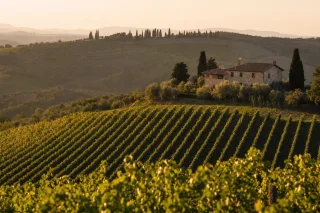
Malvasia Istriana belongs to the top of the Adriatic, the borderland where Friuli Venezia Giulia runs into Slovenia and down the Istrian peninsula. The Venetian Republic carried it here from Greece centuries ago, and the same vine now ripens across three countries; on the Italian side its character splits cleanly across three zones of the Trieste hinterland.
The Carso (Trieste Karst)
The stony limestone plateau above Trieste, hard against the Slovenian border in Friuli Venezia Giulia.
Iron-red terra rossa over white rock and a battering sea wind give the austere, intensely mineral, saline benchmark, and the home of skin-contact amber Malvasia from rock-cut cellars like Zidarich.
Collio Goriziano
The marl-and-sandstone hills around Gorizia, again on the Slovenian line.
Cooler, gentler ponca soils give the most refined and perfumed face of the grape: floral, chalky and precise, usually raised fresh in steel.
Friuli Isonzo
The warm gravel plain of the Isonzo river between the Collio hills and the Adriatic.
Deep alluvial gravels and more heat yield the fullest, roundest and most alcoholic Malvasia, riper stone fruit stacked over the saline core.
Editorial
Malvasia Istriana takes its name from the Istrian peninsula. That is the strip of land where Italy, Slovenia and Croatia meet, at the head of the Adriatic. Vivai Rauscedo records the variety in Friuli Venezia Giulia since time immemorial, and earlier in Istria itself. Despite the shared family name, studies of the vine and of its genes treat it as an unrelated outlier. It stands alone, with no known parents among the wider Malvasia clan. Italian sommelier sources sometimes list it under the synonyms Malvasia Friulana or Malvasia del Carso.
Cross the border and it simply changes passport: this is the same vine as Malvazija Istarska, the flagship white of Croatian Istria and the second most-planted grape in the whole country, and as Slovenia's Istrska Malvazija, one grape holding a single identity across three languages.
One grape, three countriesThe grape ripens late and grows very strongly. It likes compact, lightly chalky soils with good drainage and airflow. Italian plantings have shrunk sharply, from 4,420 hectares in 1970 to roughly 300 by 2010. That retreat mirrors the way the Friulian wine map has closed in around Friulano and Pinot Grigio. Where it survives, it survives with intent. Collio DOC, Friuli Colli Orientali DOC, Carso DOC, Friuli Isonzo DOC and Friuli Grave DOC carry most of Italy's production. The Carso plateau outside Trieste is home to the most distinctive wines.
In style, Malvasia Istriana runs from fresh whites to wines with real time on the skins. Younger bottlings give white peach, apricot, mimosa, broom and citrus. They close salty, with a herbal, balsamic edge. Older bottlings, or ones from low yields, build into structured, glycerinated whites. Those drink well at five to ten years. Producers such as Maurizio Buzzinelli, Fiegl, Pighin, Ronco dei Tassi and Sturm anchor the Collio benchmark. Carso producers commonly extend the skin contact to make orange Malvasia, an ancient style championed on the Karst plateau.
Good to know
Malvasia Istriana shows white peach, apricot, mimosa and citrus zest in fresh styles. The finish is herbal and balsamic, with laurel and marjoram. Older bottlings, or ones made with time on the skins, turn nutty and honeyed. They pick up dried apricot and chamomile.
Almost all Italian Malvasia Istriana is planted in Friuli Venezia Giulia. Collio DOC, Carso DOC, Friuli Colli Orientali DOC, Friuli Isonzo DOC and Friuli Grave DOC carry most of the production. The Carso plateau outside Trieste is prized for its most cut-glass examples.
No. Genetic studies show Malvasia Istriana is unrelated to Malvasia Bianca, and to the wider Malvasia family. It is sometimes called Malvasia Friulana or Malvasia del Carso. Even so, it stands alone, with no known parents.
Reach for Friulian and Triestine cooking. Prosciutto di San Daniele, frico friabile, granseola alla busara and grilled scampi all fit. Bottlings made with time on the skins stretch into baccalà mantecato, brodetto alla gradese and aged Montasio.
Yes, when yields are kept low and the wine has the structure to carry it. Top Collio and Carso bottlings drink confidently at five to ten years. They gain honey, dried apricot and savoury balsamic notes.
Orange Malvasia Istriana is the skin-contact style most linked with the Carso plateau. Long contact with the grape skins gives the wine deeper colour and gentle tannin. It also gives a textured, savoury palate that handles charcuterie and cured fish.
Explore by style
Jump to the editorial guide for each style this grape turns up in.
Keep exploring