






Italian Dessert Wines: A Guide to Italy's Sweet Wine Tradition
TL;DR
- Italian dessert wines are not just sweet bottles: they balance sugar with acidity, texture, aroma and regional tradition.
- For UK drinkers, match the wine to dessert weight, from Moscato d'Asti with fruit to Vin Santo with almond biscuits.
- Passito styles, Recioto and Marsala show how dried grapes, fortification or slow ageing can create very different sweet-wine experiences.

Four traditions, one shelf: what makes a dessert wine Italian
The shelf labelled vini dolci in an Italian enoteca holds wines made by four very different routes. Knowing which route a bottle came from tells you more about how it will taste than the colour of the wine or the region it came from.
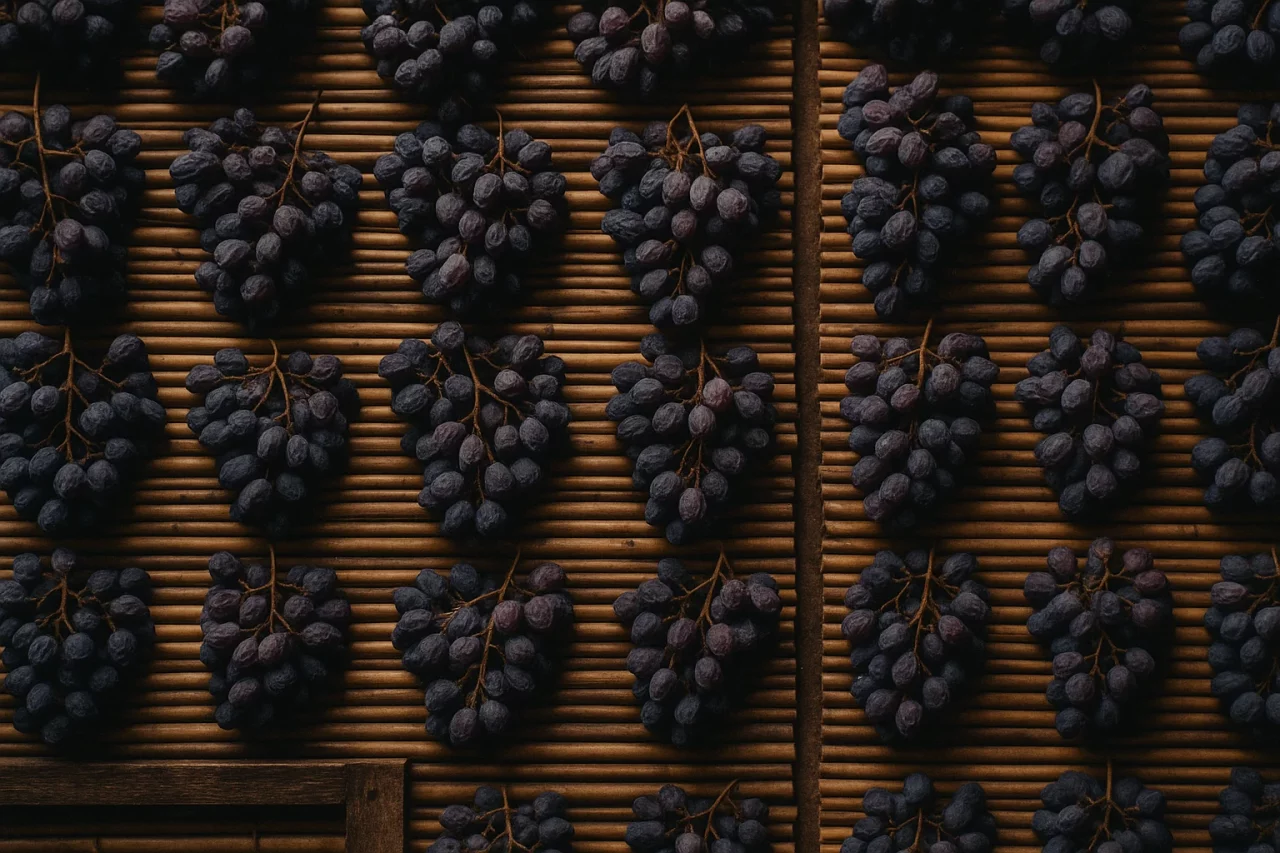
The first route is appassimento. Italian Wikipedia's definition is precise: l'appassimento è un processo di disidratazione che concentra gli zuccheri e i composti aromatici nell'uva. Grapes are picked at full ripeness then laid on bamboo mats called graticci, hung from rafters, or left in temperature-controlled drying lofts (fruttai) for weeks or months. They lose 30 to 50 percent of their water weight. What is left is a concentrated berry whose juice ferments slowly to a high-alcohol, high-residual-sugar wine. Most named passiti come this way: Recioto della Valpolicella, Sagrantino Passito di Montefalco, Vin Santo, Sciacchetra.
The second route is late harvest, called vendemmia tardiva when the grapes dry on the vine itself. The Apulian Moscato di Trani DOC is the classic example: grapes are left on the plant past full ripeness so the autumn sun does the drying. The Sicilian Passito di Pantelleria DOCG combines both routes, using Zibibbo grapes that partially raisin in the wind on the volcanic island before finishing the dry on mats.
The third route is noble rot (muffa nobile, Botrytis cinerea). The fungus pierces ripe grape skins in damp morning fog, lets the water evaporate, and concentrates sugar and acid without rot taking over. France's Sauternes is the global reference. Italy uses noble rot only in pockets, mostly in Friuli-Venezia Giulia with Picolit DOCG and a handful of experimental producers in Tuscany. The botrytis style is a small slice of the Italian shelf.
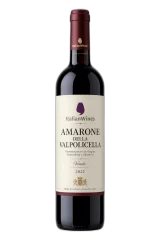
The fourth route is fortification. Grape spirit is added during or after fermentation to halt the yeast and keep residual sugar high. Marsala DOC in Sicily and Vernaccia di Oristano DOC Liquoroso in Sardinia are the two living Italian fortified traditions. Worth flagging the surprise: not every passito is sweet. Amarone is the most famous example of a passito wine that ferments to dryness, ending up at 16 to 17 percent alcohol with minimal residual sugar. Sforzato di Valtellina from Lombardy is another. Appassimento is a technique, not a sweetness guarantee.
Passito reds: from Recioto della Valpolicella to Sagrantino
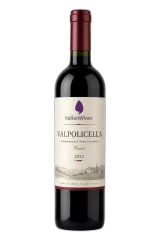
Veneto built the modern passito-red tradition. Recioto della Valpolicella DOCG comes from the same Corvina, Corvinone and Rondinella grapes as Amarone, dried for around 100 days in the fruttaio. The split between the two wines happens at fermentation. Recioto stops the yeast early and leaves residual sugar in the bottle, ending around 13.5 to 14 percent alcohol with the cherry and dried-fig sweetness intact. Amarone ferments to the end and becomes a dry red. Same grapes, same drying, two different glasses. For the wider Valpolicella context including the dry Valpolicella DOC entry tier, see our Valpolicella 101.
Umbria's headline passito red is Sagrantino di Montefalco Passito DOCG, made from the deeply tannic Sagrantino grape. Where the Valpolicella style leans towards dried red fruit and chocolate, Sagrantino Passito leans towards prune, leather and bitter-almond finish, with tannin firm enough to need decades in the cellar before it relaxes. The companion dry style, Montefalco Sagrantino DOCG, is one of the most tannic wines in the country.
Apulia contributes Aleatico di Puglia DOC and Aleatico di Gradoli DOC (Lazio), two appassimento reds made from the rare Aleatico grape. Both wines spend less time drying than Recioto, ending lighter on alcohol but vivid in rose-petal and Mediterranean-herb aromatics. Aleatico is also produced in a fortified style (Liquoroso) on the Tuscan island of Elba.
Lombardy's Sforzato di Valtellina DOCG is worth the side-trip even though it is bone-dry. Made from Nebbiolo grown on terraced Alpine slopes and dried for two months on graticci, it is one of the few examples of Nebbiolo treated by appassimento and proves that the technique works on grapes well outside the usual Valpolicella vocabulary. The dry counter-reference for Nebbiolo lovers is Barolo in Piedmont, where the same grape is fermented from fresh fruit.
Sweet whites: Vin Santo, Picolit, Moscadello, Malvasia delle Lipari
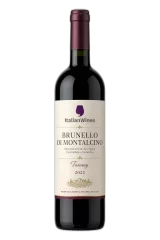
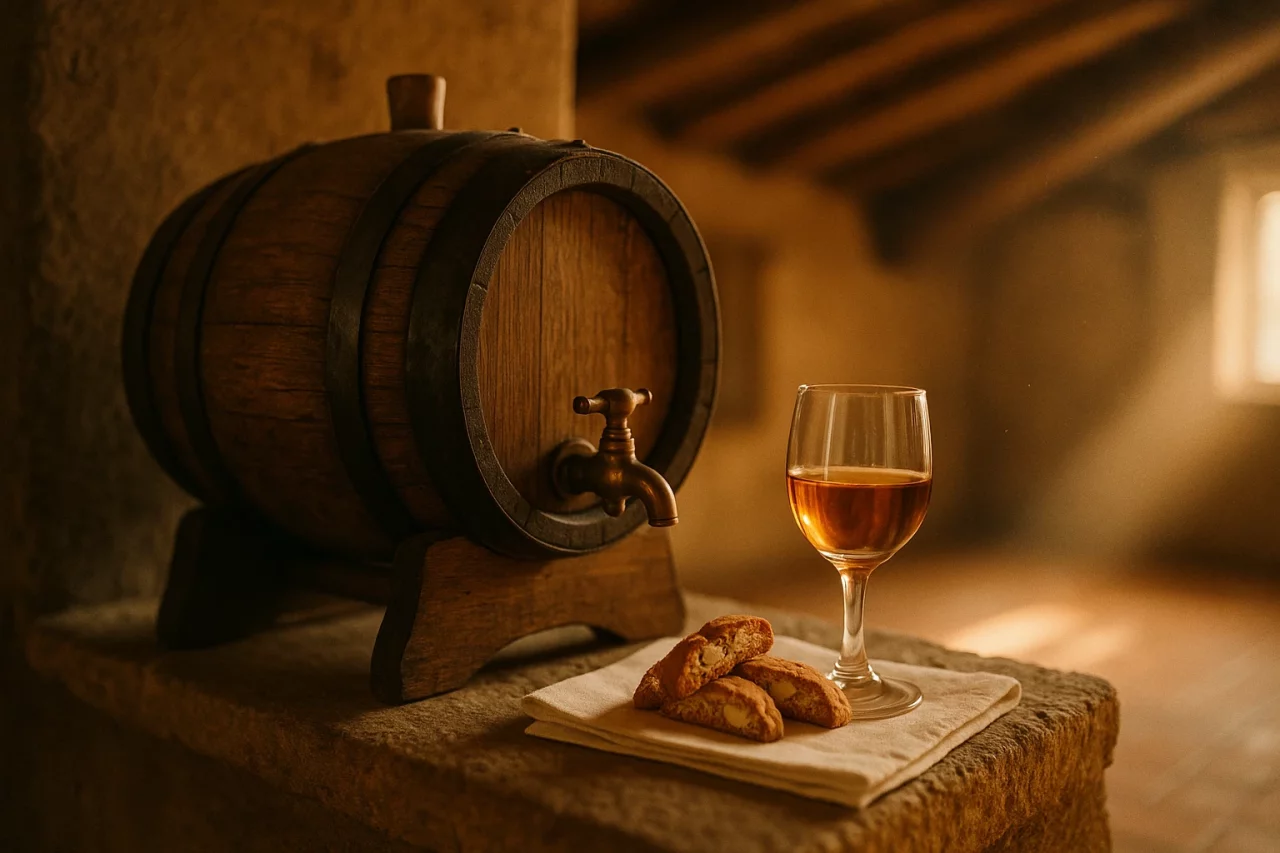
Vin Santo is the headline sweet white. The name (Holy Wine) comes from its place at the Catholic Mass and from the Holy Week tradition of bottling. Vin Santo del Chianti DOC and Vin Santo del Chianti Classico DOC are the most exported. Producers in Tuscany dry Trebbiano and Malvasia grapes on mats for several months, ferment in small chestnut or oak caratelli casks for three to ten years, and bottle the result around 14 to 16 percent alcohol with rich residual sugar, dried-fig and walnut on the nose. The Riserva tier doubles the cask time. The same Tuscan hill country produces Brunello di Montalcino from the dry side of the same producer rosters.
Vin Santo also exists in a rare rosé style called Occhio di Pernice ("partridge eye"), made from red grapes (often Sangiovese) treated identically. The colour is brick-amber, the fruit profile leans towards dried strawberry and orange peel, and the bottles are as expensive as the long ageing implies.
Friuli-Venezia Giulia's Picolit DOCG is one of Italy's rarest sweet wines. The grape itself is genetically prone to abortazione fiorale, where most flowers fail to set fruit; the few clusters that survive concentrate sugar dramatically. Total production is tiny. Tasting notes lean towards apricot, honey and a salty almond finish. Picolit historically appears as the after-dinner pour at northern Italian noble tables and remains a connoisseur category outside Italy.
Tuscany's Moscadello di Montalcino DOC is the rare sweet wine from Brunello territory. Moscadello Bianco grapes (a local Moscato variant) are dried briefly and fermented to a low-alcohol, frizzante or still sweet white. Sicily's Malvasia delle Lipari DOC and Sardinia's Malvasia di Bosa DOC complete the southern picture: both passiti made from Malvasia, both intensely floral, both produced in tiny volumes by island cooperatives.
Sparkling sweet: Moscato d'Asti, Asti, Brachetto d'Acqui
Piedmont owns the sparkling-sweet category. Moscato d'Asti DOCG sits at one end: low alcohol (around 5.5 percent), gentle frizzante bubbles from a partial fermentation stopped early, and Moscato Bianco's characteristic peach, orange-blossom and elderflower aromatics. The Italians treat it more like a lunch sparkler than a meditation wine; the bottle goes alongside panettone at Christmas and stone fruit in summer. See our Moscato 101 for the grape-side detail, and the broader sparkling wine style page for the dry counterparts.
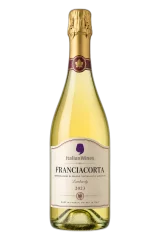
Asti DOCG (the older "Asti Spumante" name) is the fully sparkling version: same Moscato Bianco, higher pressure, around 7 to 9 percent alcohol, and a more pronounced effervescence. Both wines are bottled within months of harvest and intended for early drinking. They lose their floral edge after two years, so chase the freshest vintage you can find on the shelf. The dry sparkling counterpoint sits in Lombardy: Franciacorta DOCG uses Chardonnay and Pinot Nero in the metodo classico tradition, never with the residual sugar that defines Asti.
Brachetto d'Acqui DOCG is the rarer red sparkling sweet wine, from the Brachetto grape grown around Acqui Terme in Piedmont. The bubbles are gentler than Asti, the colour is bright pink-ruby, and the nose tracks rose petal and red berry. Brachetto's classic pairing is fresh strawberries with dark chocolate, where the wine's perfume amplifies the fruit and the bubbles cut the chocolate fat. For Italy's other low-alcohol after-dinner sparkling traditions, see our Italian Prosecco cocktails guide.
Italy's fortified tradition: Marsala and Sardinian Vernaccia
Marsala DOC is Italy's headline fortified wine and the only one with global fame. Made on the western tip of Sicily from Grillo, Catarratto and Inzolia (and Pignatello or Calabrese for the rosso versions), Marsala goes through a base fermentation, fortification with grape spirit, then ageing in oak. The label is dense with information. Colour grades run oro (gold, from white grapes), ambra (amber, sweetened with cooked must) and rubino (ruby, from red grapes). Sweetness levels go secco (dry, under 40 g/L sugar), semisecco (40 to 100 g/L) and dolce (over 100 g/L). Ageing tiers run fine (one year), superiore (two), superiore riserva (four), vergine (five) and vergine stravecchio (ten or more). For Sicily's volcanic counterpoint, see our Etna wines guide covering the eastern side of the island.
Vergine and vergine stravecchio are the two tiers worth chasing. Both are made by the perpetuum system, where a small fraction of older wine is used to top up the next vintage's barrels, in a chain that some Marsala houses have run unbroken since the 1800s. The result tastes of dried apricot, walnut, tobacco and salt, more like a Madeira than a sweet wine, even in the dolce versions.
Sardinia's Vernaccia di Oristano DOC is the second living Italian fortified tradition, made from the Vernaccia grape on the western Sardinian coast. The Liquoroso version is fortified with grape spirit and aged under flor yeast (the same biological film that makes Sherry distinctive), producing a dry, almond-and-salt wine that is closer to fino Sherry than to anything else in Italy. The non-fortified version exists too, with similar oxidative ageing but no spirit addition.
Pairing dessert wines without sugar overload
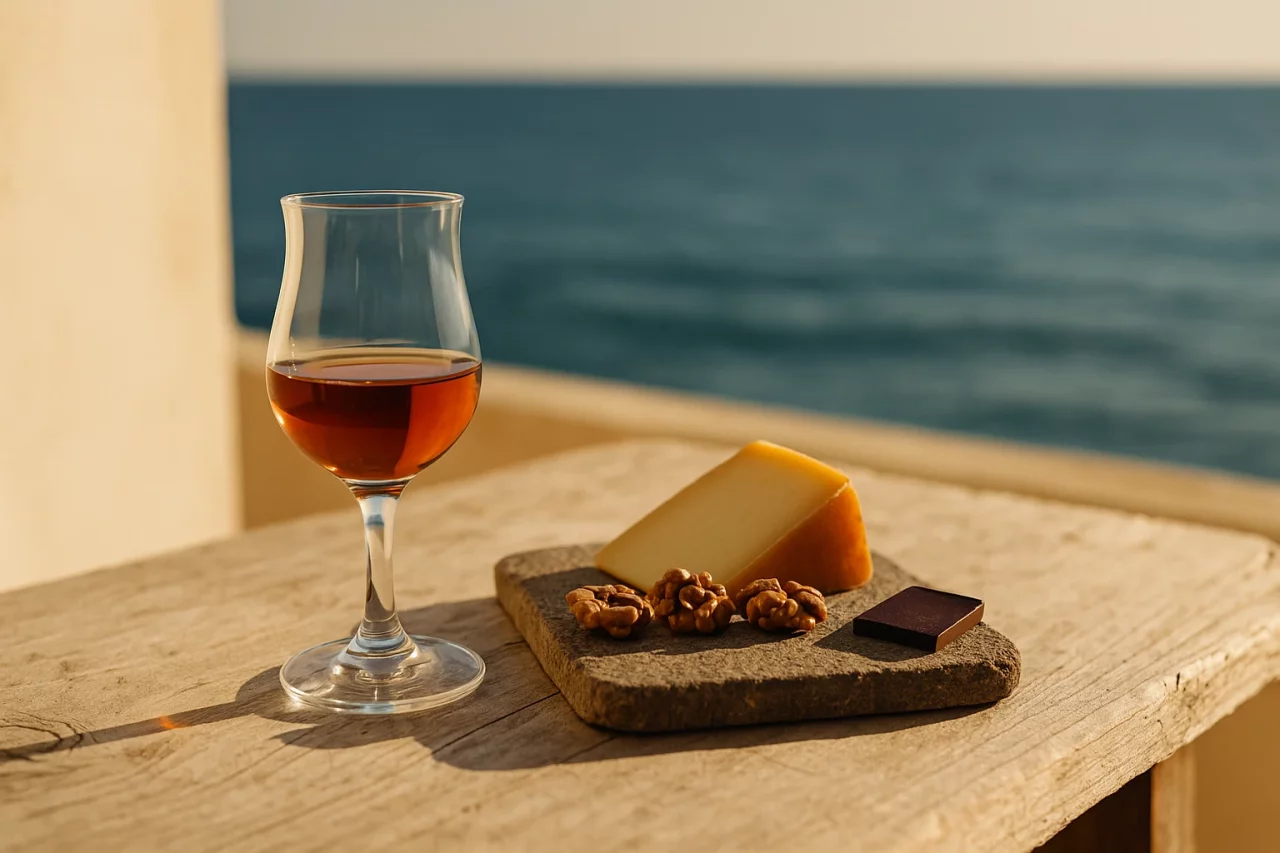
The cardinal rule is older than any of the producers above: the wine must be sweeter than the food, otherwise the food strips the wine of its sugar and leaves a sour shell on the palate. If pairing logic is new ground, our beginner's guide on how to pair food and wine covers the underlying rules. Italian dessert tradition usually solves the sweetness problem by pairing wine with food that is dry and nutty rather than sticky and creamy.
Vin Santo with cantucci is the textbook example. The almond biscotti are barely sweet on their own; they exist to be dipped into the glass. The wine softens them, the biscotti underline the wine's nuttiness. Try the same logic with Moscato d'Asti and a ripe peach, where the wine's floral lift catches the peach's perfume without overpowering it. Brachetto d'Acqui with strawberries and dark chocolate works because the bubbles cut the chocolate fat while the rose-petal aromatics amplify the berry.
Recioto della Valpolicella is the sweet wine that paradoxically loves savoury aged cheeses: a sliver of Parmigiano Reggiano 36-month or a salt-crusted pecorino di fossa. The Veneto pairing tradition reaches further into chocolate too: Recioto with bitter-dark torta sbrisolona is a Verona staple.
Marsala dolce belongs with hard aged cheese and candied walnuts, or with the regional Sicilian dessert cassata if the ricotta filling is not too sweet. Italian Wikipedia notes the category sometimes called vini da meditazione, meditation wines: passiti and fortified wines drunk on their own, after dinner, no food competing. A small glass of Picolit or Sagrantino Passito works as the entire dessert course.
How to read a sweet-wine label
Italian sweet-wine labels reward five vocabulary items. Passito: grapes were dried, by appassimento on mats or by late harvest in pianta. Vendemmia tardiva: specifically late-harvested, with drying on the vine. Liquoroso: fortified with grape spirit. Dolce / amabile / abboccato / secco: the sweetness scale, from fully sweet down to dry. Riserva: extended ageing in cask before bottling, usually 1 to 3 years longer than the non-Riserva tier. If sweetness scales and tannin balance are still abstract, our how to taste wine guide gives the structured approach.
Beyond vocabulary, the geography on the label tells you the most about the style. A bottle from Veneto with the word "Recioto" almost certainly means semi-dried Corvina in the Valpolicella tradition. A bottle from Tuscany with "Vin Santo" means Trebbiano and Malvasia aged in caratelli. A bottle from Sicily with "Marsala" means fortified, with the colour and ageing tier in the small print.
If the four-tier classification system itself is new ground, our Italian wine zones primer covers DOCG, DOC, IGT and the geographic structure they fit into. The sweet wine style page on this site filters our current bottle inventory across every category named above.
Frequently asked questions
Both wines start the same way: Corvina, Corvinone and Rondinella grapes from the Valpolicella zone in Veneto, dried on mats for around 100 days using the appassimento technique. The difference is fermentation. Recioto stops fermentation early, leaving residual sugar in the bottle and producing a sweet wine around 13.5 to 14% alcohol. Amarone ferments through to dryness, converting nearly all the sugar to alcohol and reaching 16 to 17%. Same grapes, same drying, two completely different glasses. Our Valpolicella 101 covers the wider zone.
Technically yes, though the Italians treat it more as an everyday lunch sparkler than a meditation wine. Moscato d'Asti DOCG carries about 5 to 6% alcohol and noticeable residual sugar from a partial fermentation that retains the Moscato grape's peach, orange-blossom and white-flower aromatics. It is sweeter than most Prosecco but lighter than the fully sparkling Asti DOCG (the older name "Asti Spumante"). Pair with stone fruit, panettone or simply on its own as the dessert. More on the grape in our Moscato 101.
The name "Holy Wine" comes from its association with the Catholic Mass and from the saintly week (Holy Week) when Tuscan producers traditionally bottled it. Sweetness varies. Vin Santo del Chianti Riserva tends towards 90 to 130 grams of residual sugar per litre, full sweet. Vin Santo Occhio di Pernice ("partridge eye") is a rosé style from red grapes. Some Vin Santo is bottled secco (dry). The label tells you which.
Cooler than reds, warmer than whites. Sweet sparkling like Moscato d'Asti or Brachetto d'Acqui at 6 to 8°C. Sweet whites like Vin Santo or Picolit at 10 to 12°C. Passito reds like Recioto at 14 to 16°C, just below regular red-wine territory. Fortified wines like Marsala dolce at 12 to 14°C. Avoid serving any sweet wine ice-cold; the sugar masks the aromatics that justify the price. Our serving wine 101 guide covers the full temperature ladder, and decanting wine 101 covers when older fortifieds benefit from a brief decant.
Sweet wines made through appassimento or fortification age remarkably well thanks to high alcohol and high residual sugar acting as preservatives. A good Vin Santo del Chianti can hold for 20+ years. Recioto della Valpolicella is built for a decade. Marsala Vergine Stravecchio is matured for at least 10 years before bottling and improves further. The exception is Moscato d'Asti, made for early drinking and best within 2 years of vintage to keep the floral aromatics fresh. Storage matters: see our guide to storing wine for the conditions that protect a long-lived dessert bottle.