Red Grape · Veneto

Corvinone

Valpolicella's big Corvina that turned out to be its own grape: thick-skinned, late to ripen, and the reason a modern Amarone dries so well.

Corvinone is the big-berried red grape of Valpolicella that everyone took for a large Corvina until 1993. It is a separate variety, and it dries better than any of its neighbours. That is why it now sits in most Amarone, Ripasso and Recioto, where it can stand in for up to half the Corvina.

152
Bottles live now
23
UK retailers
4
Denominations

Setting it straight

More than meets the eye

vs
The reality
  • Listed in Italy's grape register as its own variety since 1993
  • Bigger, looser bunches and much larger berries than Corvina
  • Ripens later, into mid-October, and dries better in the lofts
  • 930 hectares by 2010, up from 88 in 2000
The myth
  • The name means big Corvina, and the old vineyards mixed the two
  • Most back labels still write Corvina, Rondinella, Molinara and skip it
  • Its wine has less cherry and bitter almond than Corvina, more plum and flesh

The anchor fact: Corvinone was filed as a large form of Corvina until 1993. It is a separate variety, and the rules now let it replace up to half the Corvina in Valpolicella and Amarone.

Taste · Where it sits

What it’s actually like in the glass

Forget scores out of five. Here’s Corvinone described against grapes you already know.

BodyFleshier than Corvina
LightFull

Bigger, juicier berries give more flesh than Corvina fresh; dried for Amarone it carries most of the wine's weight.

TanninFirm but soft-edged
SoftGrippy

More grip than Rondinella, rounder than Corvina; the thick skins give structure that appassimento then softens.

AcidityLower than Molinara
SoftZippy

Less fresh than Corvina or the old Molinara, which is why blends still keep some of each; the late harvest ripens the acidity away.

Fruit & sweetnessPlum, then raisin
DrySweet

Dark plum and black cherry fresh; after three months on the racks it is raisin, fig and chocolate, the Amarone signature.

Key flavours

Plum
Corvinone's own fruit is dark plum rather than Corvina's red cherry, and it deepens in the Valpolicella Superiore wines that carry a big share of it.
Black cherry
The darker cherry note that Corvinone brings to a Valpolicella blend, without the bitter almond twist that marks Corvina.
Raisin
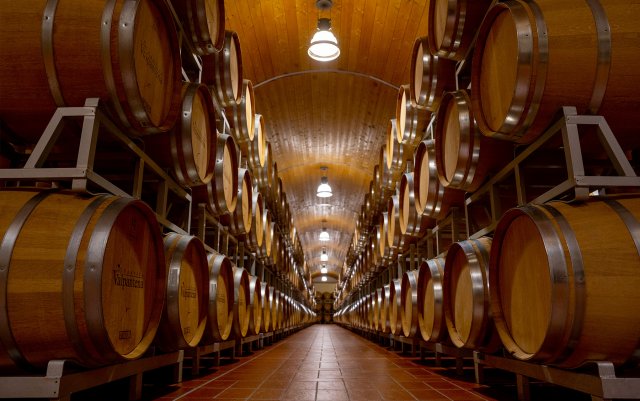
What the big berries become after months in the drying lofts: the Amarone note that Sartori's Reius and Brunelli's Classico both lead with.
Fig
Dried fig sits beside the raisin in Amarone and Recioto; Corvinone's thick skin dries slowly, so the fig note is rich rather than cooked.
Chocolate
Oak and dried fruit together give the chocolate note in Allegrini's Palazzo della Torre after 15 months in barrique.
Forest Floor
An earthy, leaf-litter note that arrives on aged Amarone once the Corvinone fruit has settled, alongside tobacco.
Structured · Tannic Soft · Approachable Light-bodied Bold · Full Sangiovese Nebbiolo Merlot Pinot Nero Cabernet Sauvignon Corvina
Corvinone

The map

Corvinone is full-bodied, firm tannin, mapped against other red grapes you can buy. The closer a grape sits, the more its weight and grip resemble Corvinone.

Corvinonefull-bodied, firm tannin
Sangiovesea close match
Nebbioloa close match
Merlota close match
Pinot Neromuch lighter, far softer
Cabernet Sauvignonfuller, firmer
Corvinalighter, softer

Is this for you?

An honest gut-check

Reach for it when…

A bold red that just works

  • Amarone or Ripasso: the wines where the dried Corvinone does its best work
  • A Valpolicella Superiore with more body than the basic bottle
  • Something to tell the table when the back label says only Corvina

Maybe skip it if…

You’re after something else tonight

  • You are hunting for a single-grape Corvinone: nobody bottles one in the UK
  • You want bright, fresh acidity: that is Molinara's job, or Corvina's
  • You want a light red to chill: a basic Valpolicella or a Bardolino does that

Serving guide

Pour it at its best

Serve at

16-18°C

Valpolicella at 14 to 16C; Ripasso at 16; Amarone at 18C so the dried fruit opens.

Decant

1 hours

Basic Valpolicella needs none; give a young Amarone an hour, and pour an old one gently.

Glass

Large Balloon Glass

A big bowl for Amarone; a standard red glass is enough for Valpolicella and Ripasso.

Drink within

3-5 days

Valpolicella within three years; Ripasso within five.

Cellar

3-15 years

Amarone with a big Corvinone share keeps 15 to 25 years; its shops suggest up to 25 for Reius.

Buy it · three to start with

Not sure which bottle? Start here

A curated trio across the price range, then every Corvinone on sale in the UK right now.

Entry · everyday

Sartori L Appassione Rosso Trevenezie

Sartori L Appassione Rosso Trevenezie

Trevenezie

3 retailers

£11.41

View Wine

Why this one: Sartori's L'Appassione part-dries Corvina and Corvinone before fermenting: silky, cherry and tobacco, about £11.

The sweet spot

Allegrini Palazzo della Torre

Allegrini Palazzo della Torre

Verona/Veronese

6 retailers

£18.50

View Wine

Why this one: Allegrini dries part of the Corvina, Corvinone and Rondinella and referments the rest on it, then 15 months in barrique: plum, chocolate, liquorice, around £18.

Special occasion

Casa Vinicola Sartori Reius

Casa Vinicola Sartori Reius

Amarone della Valpolicella

6 retailers

£27.61

View Wine

Why this one: An Amarone Classico that names Corvinone on the label: hillside grapes air-dried three months, three years in oak, dried fig and chocolate at 15%. About £33.

12 of 144 bottles

Denominations

Where it earns a name on the label

The appellations where Corvinone plays a starring role.

Amarone della ValpolicellaDOCG Recioto della ValpolicellaDOCG ValpolicellaDOC Valpolicella RipassoDOC

Where it grows

Where Corvinone grows in Veneto

Veneto wine region

Veneto

Italy's largest wine region by volume, where Prosecco hills, Valpolicella ridges, and Soave's volcanic plain shape three different Italian classics.

1,439 wines · 41 denominations
Explore the Veneto guide

The terroir

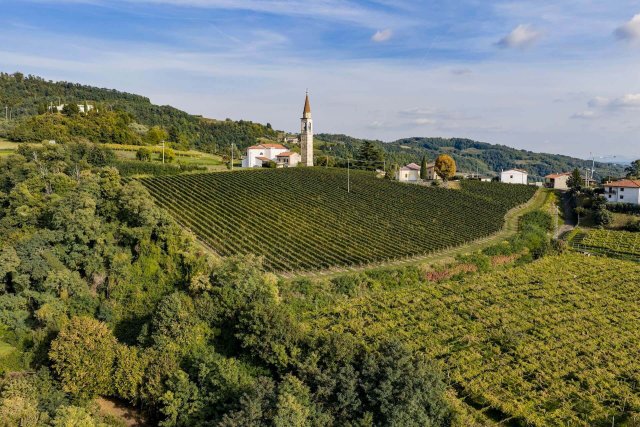
Corvinone grows where Corvina grows, in the hills north-west of Verona, and almost nowhere else on earth: one hectare in Argentina is the whole foreign total.

Editorial

About Corvinone

For two centuries the growers of Valpolicella planted Corvinone next to Corvina and called it big Corvina. The bunches are larger and looser, the berries much bigger and juicier, and the vine ripens later, so nobody looked closer. In 1993 two researchers, Cancellier and Angelini, showed it was a different grape, and Italy's grape register listed it as its own variety that year. The international catalogue still files it as Corvinone Veronese, with Corvina Grossa among its old names.

Corvina veronese and Corvinone: two different varieties. The 1993 paper that gave the big grape its own name.

Cancellier and Angelini, Vignevini, 1993, cited in Italy's national grape register

Once it had a name, it took off. Plantings grew from about 88 hectares in 2000 to 930 by 2010, almost all around Negrar, Fumane, Marano, San Pietro in Cariano and Sant'Ambrogio in the Veneto. Over the same ten years Molinara, the old third grape of the blend, fell from 1,300 hectares to under 600. Corvinone gives deeper colour and better flavour, and its thick skin dries without rotting.

That drying is the point. Amarone and Recioto are made from grapes laid out in lofts for months after the harvest, the appassimento, and a big, thick-skinned berry loses water slowly and evenly. The rules for Valpolicella and Amarone let Corvinone replace up to half of the Corvina, with Rondinella at 5 to 30%. So a modern Amarone can be more Corvinone than anything else, even though the label never says so.

On its own the wine is dark, soft and plummy, with less of Corvina's cherry and bitter-almond bite. Nobody bottles it alone in the UK. What you buy is the blend: a fresh Valpolicella, a Ripasso with a raisin edge, or an Amarone at 15% and more. Our Valpolicella guide walks through all of them.

Good to know

Frequently asked

Corvinone is a red grape from Valpolicella, near Verona, with bigger, looser bunches than Corvina. It was thought to be a form of Corvina until 1993. It is now one of the main grapes in Amarone, Ripasso, Recioto and Valpolicella, always in a blend.

No. They grew side by side for centuries and Corvinone was called big Corvina, but DNA and vine studies in 1993 showed it is a separate variety. Corvinone has larger berries, ripens later and dries better; Corvina has more cherry and bitter-almond character.

Up to half. The rules for Amarone and Valpolicella require 45 to 95% Corvina, and Corvinone may replace up to 50% of that share. Many producers now use a lot of it because its thick skins dry so well, but the label rarely names it.

Dark and soft, with plum and black cherry and less of Corvina's bitter edge. Dried for Amarone it turns to raisin, fig and chocolate, with a full, velvety body. It is rarely bottled alone, so you taste it inside the blend.

Because it makes a darker, fuller wine. From 2000 to 2010 Corvinone plantings rose from 88 to 930 hectares while Molinara fell from 1,300 to under 600. Molinara brings acidity and a pale colour; Corvinone brings colour, flesh and grapes that dry well.

Amarone and Ripasso, where the dried grape does its work. Sartori's Reius Amarone and Allegrini's Palazzo della Torre both name it in the blend. For a lighter taste of it, any Valpolicella Classico from Negrar, Fumane or Marano will have some.

Explore by style

Wine styles made from Corvinone

Jump to the editorial guide for each style this grape turns up in.

Keep exploring

More red grapes