







Wine route
Strada dei Vini di Romagna
2 days, 110 km · 7 stops
Open the driveYour cellar, your trips, and the wines you've been tracking are right where you left them.
New here?
Free, always. Education first, we'll never sell you anything you didn't ask to see.
Already have an account?
Enter the email you signed up with and we'll send a link to choose a new password.
Emilia Romagna · DOC
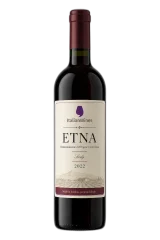
Romagna's own Sangiovese, grown on the hills south of the Via Emilia from Imola to Rimini. Since 2011 the label reads Romagna DOC Sangiovese. The wine is the one this name always meant: at least 85% Sangiovese, ruby red, cherry and violet on the nose, a light grip and a bitter-edged finish. Sixteen village names, Superiore and Riserva sit above it.
Decode the label
One denomination, 5 things it can say on the front. Colour first, then the qualifier.
On the label
Romagna Sangiovese
the base wine, no extra word
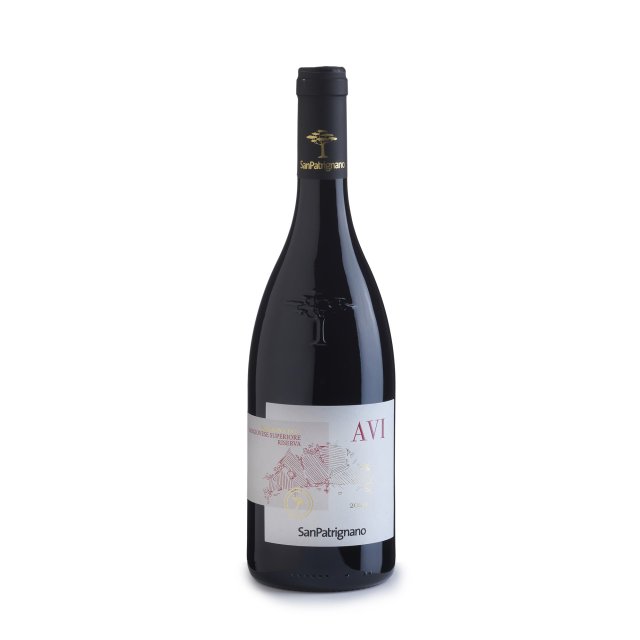
Cherry, violet and a bitter-edged finish. The weekday bottle of Romagna, at its best within three years.
No bottles in stock right now
On the label
Romagna Sangiovese Superiore
lower yields, a longer wait
The same grape from a stricter crop: a rounder middle and a little more depth.
In stock from £11.90 See the 11 bottles ↓On the label
Romagna Sangiovese with a sub-zone name
Predappio, Modigliana and fourteen more
The place goes on the label and the recipe tightens. Modigliana is the austere, mountain one; Predappio has vivid fruit and firm tannins.
In stock from £14 See the 8 bottles ↓On the label
Romagna Sangiovese Riserva
the cellar tier
Time turns the cherry towards dried fruit and leather. A sub-zone Riserva waits until 1 September of the third year after the harvest.
In stock from £11.20 See the 6 bottles ↓On the label
Romagna Sangiovese Passito
the rare dried-grape red
Almost never seen in the UK. Dry to lightly sweet, made from grapes shrivelled before pressing.
No bottles in stock right now
The boundary
Everything on this page, the estates, the bottles, the sub-zones, sits inside this line.
Wine route
2 days, 110 km · 7 stops
Open the drive
Estate 1
Coriano
Tastings available
Estate 2
Imola
Tastings available
Estate 3
Forlì
Tastings available
Estate 4
Marzeno
Tastings available
Estate 5
Modigliana
Book online
Estate 6
San Clemente
Tastings available
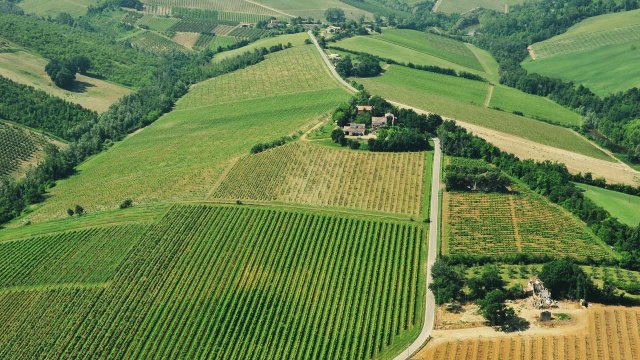
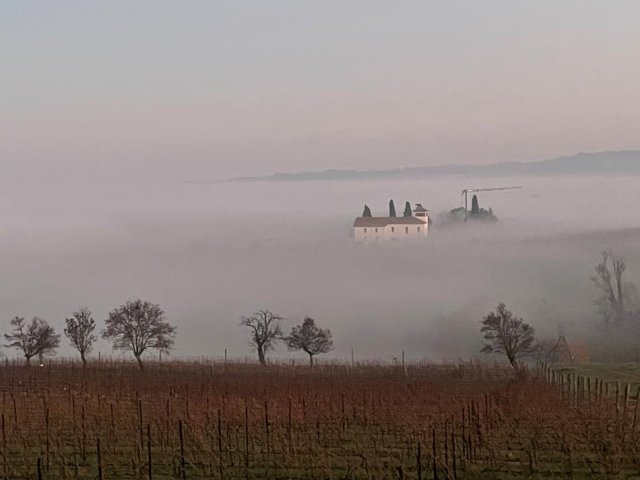
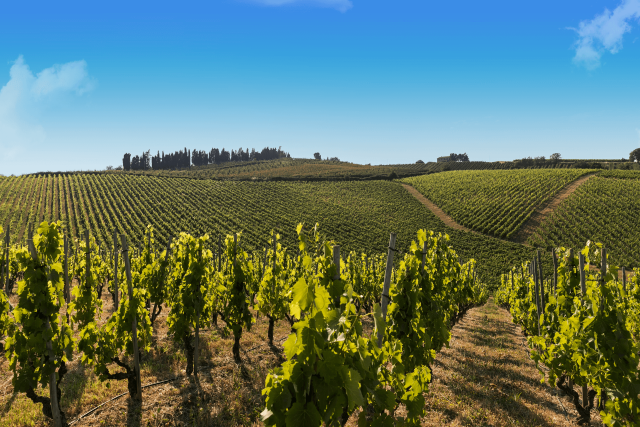
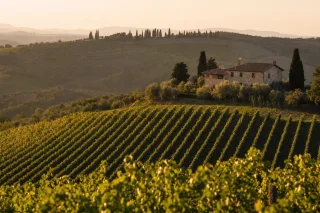
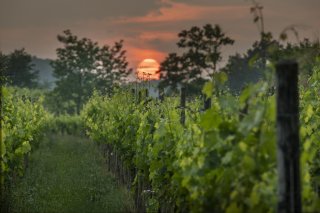
A strip of hills on the Adriatic side of the Apennines, running south-east for a hundred kilometres from Imola to Rimini. The Via Emilia and the Rimini to Bologna railway draw the downhill edge: everything on the flat plain to the north is out. The vines climb the valleys of the Lamone, Montone, Rabbi, Bidente, Savio and Marecchia rivers, on clay, sandstone and the poor limestone the locals call Spungone. Fifty-four towns and villages in the provinces of Bologna, Ravenna, Forlì-Cesena and Rimini qualify, and sixteen of the best-known hill villages have their own name on the label.
Inside the zone
Click or tap a pin for its estate. The numbered pins match the estate cards below.
Towns worth knowing
Faenza holds the 1672 deed, the first known document to name the grape; Predappio and Modigliana are the sub-zones UK shops stock most.
In the glass
Black cherry

Violet

Forest berries

Liquorice
The disciplinare
The same table on every denomination page, straight from the production rules.
 SangioveseThe whole point; 95% once a sub-zone name is on the labelat least 85%Other red grapes approved for Emilia-RomagnaOptional softeners; capped at 5% inside a sub-zoneup to 15%
Solid means the rules demand it. Striped means optional, up to that amount. The words on the right say the same rule.
The label now reads Romagna DOC Sangiovese the 1967 Sangiovese di Romagna DOC became a type inside the Romagna DOC in September 2011, and both names are still on UK shelves.
Sixteen sub-zones may follow the name each needs 95% Sangiovese, 9 tonnes per hectare and a wait until 1 September after the harvest.
Riserva means 24 months counted from 1 December of the harvest year; a sub-zone Riserva waits until 1 September of the third year after the harvest.
Hills and foothills, plus the drier sandy and clay soils inside the line qualify. The Via Emilia and the Rimini to Bologna railway set the downhill limit, and wet alluvial or newly reclaimed land is out.
Wood is allowed, never required for the base wine, Superiore, Riserva and Passito alike; ceramic jars are allowed too.
Ageing and alcohol minimums per tier are in the label guide above.
Editor's cellar
By style, today
Live prices, compared across 3 UK retailers.
Cellar doors · inside the zone
6 working estates with their gates open, numbered to match their pins on the map above.
No estates match these filters. Clear a filter to see more.
Experiences in the Sangiovese di Romagna zone
Cellar experiences here average around €45. These are the strongest fits for this page.
Ronchi di Castelluccio
A tasting journey that recounts the evolution of Ronchi di Castelluccio through four wines representative of its history and present.
Ronchi di Castelluccio
Learn more about Ronchi di Castelluccio's identity through a tasting that showcases its most iconic labels alongside its prestigious crus.
Ronchi di Castelluccio
An experience dedicated to the finest expressions of Ronchi di Castelluccio, designed for those who wish to discover the winery's soul.
Sixteen names, one grape
Any of these sixteen names may follow Romagna Sangiovese on a label. Each needs 95% Sangiovese, a smaller crop and a later release than the base wine. Same rulebook, different hills.

Furthest west, south of the Via Emilia around Imola: over a tenth of the region's Sangiovese grows in Bologna province, nearly all of it here.
The Serra hills between Castel Bolognese and Riolo Terme, up the Senio valley: a continental climate far from the sea gives floral, fresh-fruited wines.
Parts of Brisighella, Faenza and Casola Valsenio, olive country along the Vena del Gesso: sandstone and clay give elegant, floral, fresh wines.
The first big outcrop of Spungone limestone between the blue clays: rugged land that puts force into the wine, fruit well ahead of flowers.
The whole commune of Modigliana, high on the Tuscan border: the land turns harsher still and gives firm, powerful, austere, long-lived Sangiovese.
Yellow sands breaking through clay near Faenza: big wines that need time to soften, or lighter fruity ones, depending on the plot.
The old Romagna Toscana around Castrocaro Terme and Terra del Sole, once ruled from Florence: a zone drawn by history as much as by soil.
The commune of Predappio plus slices of Forlì, Meldola, Civitella and Galeata: a local long-berried strain gives vivid fruit and hard, austere tannins.
Farmed since Roman times along the Bidente valley, facing north-west to north-east: fine, fruit-led Sangiovese from cooler slopes.
Albana's home hill above Forlimpopoli, on poor limestone Spungone soils: the Sangiovese here is big and needs a long spell of ageing.
The hills behind Cesena, praised since Roman writers: structure that never tips over, with ripe cherry always in front.
The Savio valley where the Marnoso-arenacea sandstone runs deepest: balanced wines with sweet tannins, best below 200 metres.
The warm hills between Cesena and the Rubicone: rich, evidently fruity Sangiovese that loses its elegance if pushed too hard.
The hills just behind the Rimini coast, on grey clays with good exposure: the most structured, most cellar-worthy of the Rimini zones.
The warmest corner of the Rimini hills, on gypsum and coloured clays: structured wines that keep a lively acid line.
The slopes above the Marecchia valley behind Rimini: the easiest-drinking of the Rimini zones.
Vintage provenance
No denomination-wide vintage chart is published for Romagna Sangiovese. The Romagna wine consortium issues harvest reports and critics score individual wines, so quality is tracked producer by producer rather than through an annata table.
2022 was a small, ripe harvest with good reds. 2023 was the flood year: healthy hillside grapes, but a fifth to a quarter fewer of them. 2024 was very good for Sangiovese. Drink base wines young; give sub-zone and Riserva bottles from 2019 to 2022 a few years.
What to check instead
The sub-zone: where a wine comes from inside the zone changes what is in the glass. See them above.
The producer: quality here is tracked estate by estate rather than year by year.
The base wine is at least 85% Sangiovese, with up to 15% of other red grapes approved for Emilia-Romagna. Vineyards belong on the hills and foothills, or on the drier sandy and clay soils inside the line; wet alluvial and newly reclaimed land is out. The Via Emilia and the Rimini to Bologna railway draw the downhill limit. The base wine may carry 12 tonnes of grapes per hectare, must reach 12% alcohol and can be sold from 1 December of the harvest year. Superiore is stricter: 10.5 tonnes, 12.5% alcohol, and a wait until 1 April of the following year. A village name such as Predappio or Modigliana on the label needs 95% Sangiovese, a smaller crop, 12.5% alcohol and a release date of 1 September after harvest. Riserva means 24 months of ageing from 1 December of the harvest year, and 13% alcohol. A Riserva with a village name waits until 1 September of the third year after the harvest. Wood is allowed but never required. Two rarer types exist: a Novello made at least half by whole-berry fermentation, and a Passito from dried grapes.
On the table
Cherry fruit and a bitter-edged finish want cappelletti or tortelloni al ragù, red meat and game, the consortium's own matches. A Riserva can take aged cheese too.
In-depth guide
A dry red from the hills of Romagna, the eastern half of Emilia-Romagna, made from at least 85% Sangiovese. It is ruby red with cherry and violet on the nose, a light grip and a pleasantly bitter finish. The base wine is sold from 1 December of the harvest year, so most bottles are made to drink young.
Yes. The Sangiovese di Romagna DOC was created in 1967 and folded into the new Romagna DOC in September 2011. Since then the label reads Romagna DOC Sangiovese, but older labels and UK shop listings still use the old name for the same wine.
Romagna has always made Sangiovese on its own rather than in a blend, and its clay and limestone hills run warmer than central Tuscany. The wines are usually rounder and softer, with less acidity than a Chianti. The rules ask for 85% Sangiovese here against Chianti's 60%.
Superiore comes from a smaller crop, 10.5 tonnes instead of 12, reaches 12.5% alcohol and waits until 1 April after the harvest. Riserva means at least 24 months of ageing counted from 1 December of the harvest year and 13% alcohol. A Riserva with a village name waits until 1 September of the third year after the harvest.
Sixteen sub-zone names may follow the wine's name on the label: Imola, Serra, Brisighella, Marzeno, Modigliana, Oriolo, Castrocaro, Predappio, Meldola, Bertinoro, Cesena, Mercato Saraceno, Longiano, Coriano, San Clemente and Verucchio. A wine with one of these names must be 95% Sangiovese from a smaller crop. Predappio and Modigliana are the two names UK shops stock most.
The Romagna wine consortium's own list is red meat, game, cappelletti or tortelloni al ragù, and aged cheese. The cherry fruit and gentle grip also suit the region's ragù alla bolognese and lasagne. Save a Riserva for game or aged Parmigiano.
Drink the base wine within two or three years of the harvest. Superiore and village-name wines are good for five. A Riserva from Modigliana or Bertinoro can go a decade: the rulebook calls Modigliana's wines long-lived and says Bertinoro's Sangiovese needs a long spell of ageing.
Explore more Emilia Romagna
Same region only: the denomination Sangiovese di Romagna drinkers reach for next.

The one to know · DOCG
Italy's first white DOCG is a Romagna hill wine that comes dry, sweet or made from dried grapes. Romagna Albana must be at least 95% Albana, grown on the first hills above the Via Emilia. The zone's heart runs from.