About Ronchi di Castelluccio
The estate was conceived in 1974 by Gian Vittorio Baldi, the film director and intellectual. He set out to make precision wine on cold, wooded land that most Romagna growers had ignored. He worked with the agronomist Remigio Bordini and the oenologist Vittorio Fiore. What they built became one of Italy's earliest single-vineyard zoning experiments, and Luigi Veronelli championed it from its first vintages. The vines chosen then, low-yielding clones of Sangiovese and Sauvignon Blanc, still anchor the cellar today.
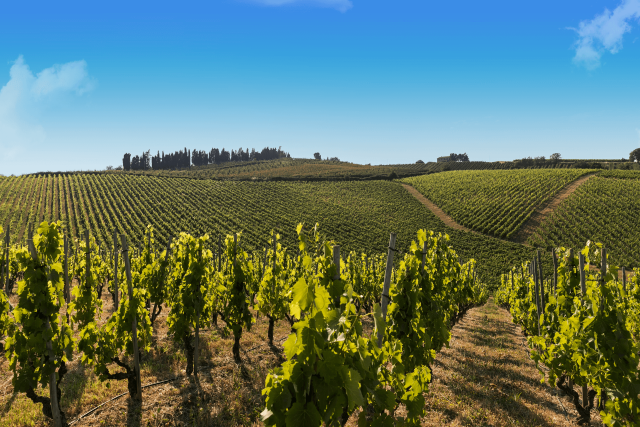
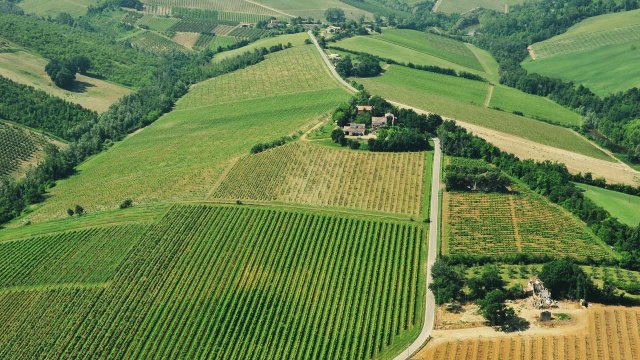
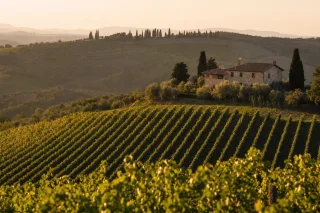
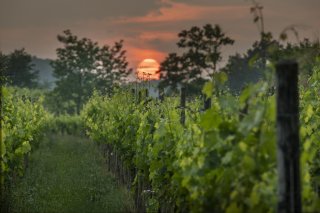
Modigliana is mountain wine country with a memory of the sea. The hills above the Acerreta valley climb to nearly 400 metres, on slopes carved from ancient seabed. The soils are layers of marl (clay) and sandstone (sand), laid down when the Adriatic still covered this land. The Adriatic breeze now tempers the summer heat. The woods close in around every parcel. On foggy mornings the ridges read as islets above a white sea.
Each ronco is a clearing of about one hectare, two and a half acres, reclaimed from the forest by hand. Each holds its own aspect, altitude and bedrock. Nine ronchi feed nine wines. Ronco del Re is the flagship, a Sauvignon Blanc planted in 1974. It ages in small low-toast barrels of Allier and Vosges oak and goes out as Colli di Faenza DOC, just 833 bottles a vintage. Ronco Casone, Ronco della Simia and Ronco dei Ciliegi all carry the Romagna Sangiovese Modigliana DOC, the sub-zone named after the town. Each comes from a different exposure and bedrock blend. Il Poggiolo is a north-west-facing Cabernet Sauvignon that nods to the founder's Bordeaux pilgrimages. Sottovento, Buco del Prete, Le More and Lunaria fill out the New Classics and Young Rebels ranges, and Sottovento is bottled as Rubicone IGT.
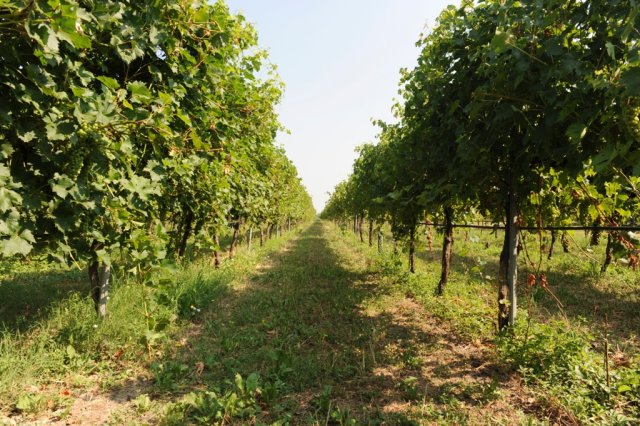
Yields are deliberately small: 20 to 25 quintals per hectare for the reds, and 12 for Ronco del Re. The rows are worked by hand and grassed between the vines. Treatments are limited to copper and sulphur. Each parcel is made into wine on its own. Fermentation runs in steel or in large oak vats. The wines then finish in toasted French oak from the forests of Allier, Vosges and Tronçais, and rest further in bottle.
The brothers Aldo and Paolo Rametta acquired the estate in 2020 and placed it inside a wider integrated farm. Their sister winery, Poggio della Dogana near Brisighella, works 49 acres of certified organic Sangiovese and Albana. An organic cattle farm of 963 acres joined in 2023. It carries the Suolo e Salute leaf and sends its own compost back to the Modigliana vines. Around 65,000 bottles leave the cellar each vintage. The larger share goes to Italian restaurants, the rest to a small group of importers across Europe and the United States.
Editorial · ItalianWines.co.uk
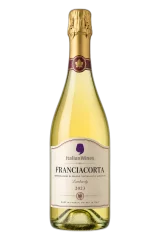
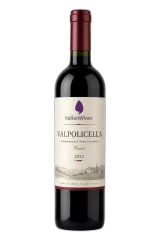
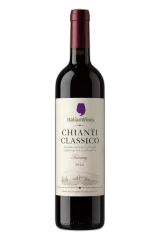
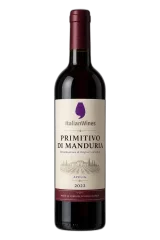





 Emilia Romagna
 Tastings
 Tours
Tours
 Booking required


 Wine grape

 13
13