





What Is Vin Santo? Tuscany's Amber Dessert Wine, Explained
TL;DR
- Vin Santo is Tuscany's amber wine, made from Trebbiano and Malvasia grapes dried for months and then aged for years in small sealed casks.
- Most bottles are sweet, but a Vin Santo del Chianti label can say anything from secco to dolce, so read it before you buy.
- Serve it cool in a small glass with cantucci, blue cheese or panettone, and keep an opened bottle in the fridge for up to three weeks.

What Vin Santo is
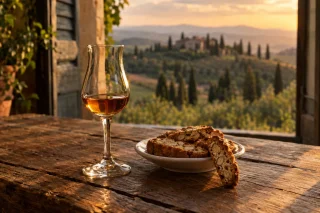
Vin Santo is amber in the glass, somewhere between honey and old gold. It smells of dried apricot, honey, toasted almonds and a little caramel.
Vin Santo is a wine made mainly in Tuscany, from grapes that are dried for months before they are pressed. The juice then spends years in small sealed casks. The name means holy wine. Most bottles are sweet and some are dry. Expect 13 per cent alcohol or more: that is the floor the rules set for Vin Santo del Chianti.
It belongs to the family of Italian passito wines. Our guide to Italian dessert wines covers the rest of that family, from the Alps to Sicily.
Why it is called holy wine
Nobody can prove where the name comes from. The official rules for Vin Santo del Chianti admit as much: they say the wine has legendary origins. Three stories are told most often.
- Siena, 1348. During the plague a friar gave the sick the wine he used at Mass, and people began to call it santo.
- Florence, 1439. At a church council the Greek bishop Bessarion tasted the local sweet wine and said it was Xantos. The Florentines heard santo, and the name stuck.
- The church calendar. The work ran from All Saints, in early November, to Holy Week before Easter, when the dried grapes were often pressed.
The plainest answer is probably the right one. This was the wine priests used at Mass.
How Vin Santo is made
Most Vin Santo starts with two white grapes, Trebbiano Toscano and Malvasia. In Vin Santo del Chianti they must make up at least 70 per cent of the blend.
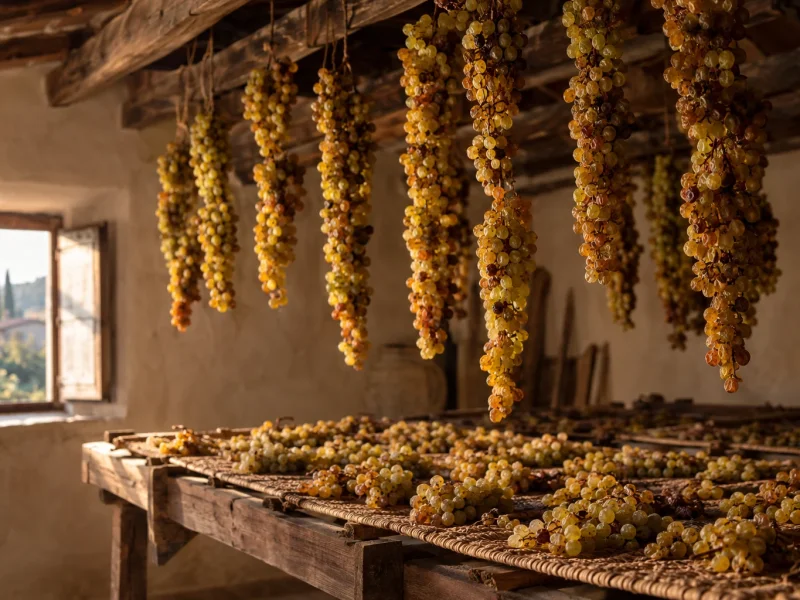
The bunches are picked ripe. Then they are hung from the rafters or laid on cane mats in an airy loft. This drying is called appassimento. Over the winter the grapes lose water and shrink towards raisins, so the sugar in each berry climbs. The Chianti rules ask for at least 26 per cent sugar before pressing. In Montepulciano the grapes cannot be pressed before 1 December.
The thick, sweet juice goes into caratelli, small wooden casks. Their size is capped: 500 litres in Chianti, 300 in Chianti Classico. Each cask is sealed and left for years. It often sits in the vinsantaia, a room under the roof. There the wine warms through the summer and cools through the winter. The Montepulciano rules describe exactly that.
By tradition the lees of the last batch stay in the cask to start the next one. Tuscans call them the madre, the mother.
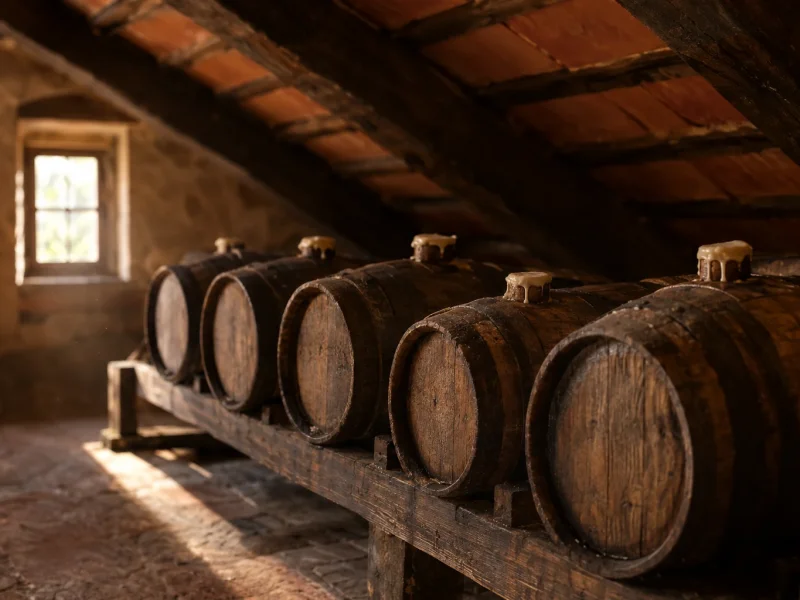
The casks stay sealed for years, and the wine inside ages with a little air above it. That slow oxidation gives Vin Santo its amber colour and its nutty taste.
None of this is quick. Vin Santo del Chianti cannot be sold before 1 November of the third year after the harvest. A Riserva waits one year more.
Is Vin Santo sweet or dry?
Most Vin Santo you will meet is sweet. The style runs wider than that, from dry to very sweet, and the label can tell you which. The Vin Santo del Chianti rules allow four words on the label.
| Label word | In the glass | Good with |
|---|---|---|
| Secco | Dry and nutty | Salted almonds, aged Pecorino |
| Abboccato | Just off-dry | Chicken liver crostini |
| Amabile | Medium-sweet | Cantucci, nut tarts |
| Dolce | Fully sweet | Blue cheese, panettone |
Two other appellations, Vin Santo del Chianti Classico and Vin Santo di Carmignano, give no such word. Their rules say only that the wine can be anything from dry to sweet, so read the shop's tasting note. Vin Santo di Montepulciano is always sweet.
A sweet Vin Santo is rich, with enough acidity to stop it feeling sticky. A dry one is closer to a dry sherry: nutty and sharp.
The Tuscan names on the label
Four Tuscan appellations are named after the wine. Each sets its own grapes and its own wait.
| Appellation | Grapes and earliest sale |
|---|---|
| Vin Santo del Chianti | Trebbiano Toscano and Malvasia, 70% or more. On sale from the third year after harvest, Riserva from the fourth. |
| Vin Santo del Chianti Classico | Trebbiano Toscano and Malvasia, 60% or more. On sale from the third year, after 24 months in cask. |
| Vin Santo di Montepulciano | Malvasia, Grechetto and Trebbiano Toscano, 70% or more. Three years in wood, five for a Riserva. |
| Vin Santo di Carmignano | Trebbiano Toscano and Malvasia, 75% or more. On sale from the third year after harvest, Riserva from the fourth. |
Vin Santo del Chianti Classico comes from the same hills as the red Chianti Classico, and its rules are tighter on casks. They hold no more than 300 litres and the wine stays in them for at least 24 months. The rules also ban any enrichment, so nothing may be added to raise the strength.
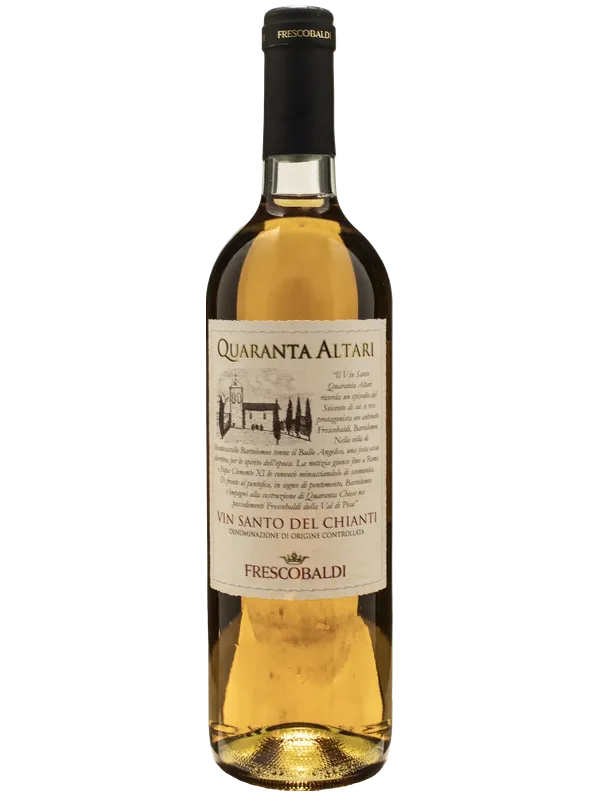
Vin Santo del Chianti DOC Quaranta Altari Marchesi de' Frescobaldi 2022
View Wine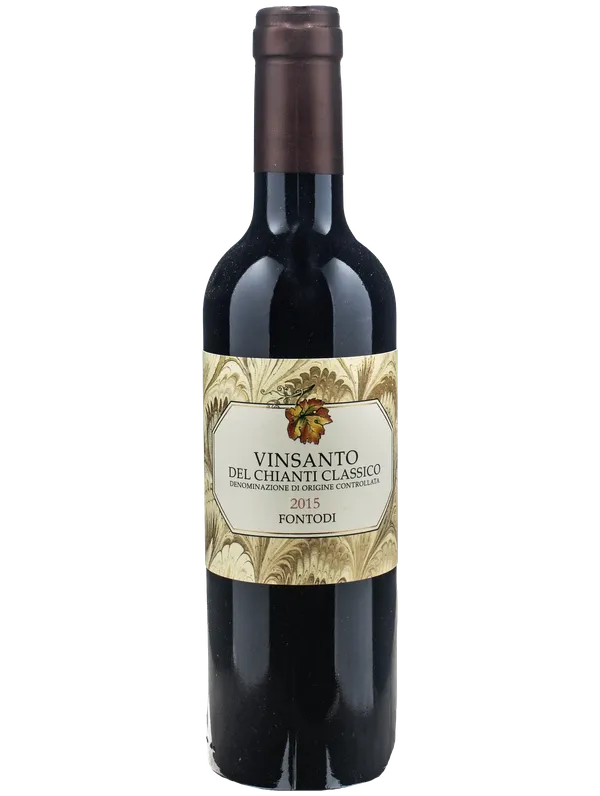
Vin Santo del Chianti Classico DOC Fontodi 2015
View Wine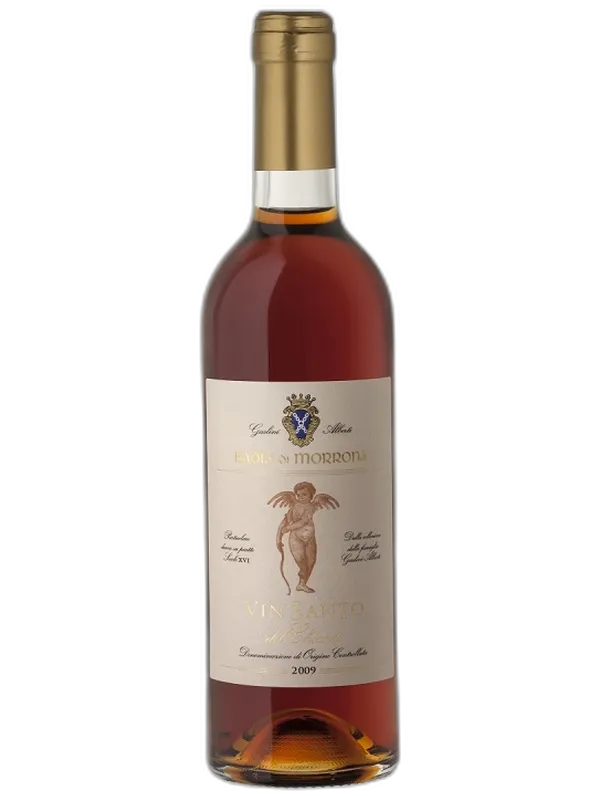
Vin Santo del Chianti DOC 2018
View Wine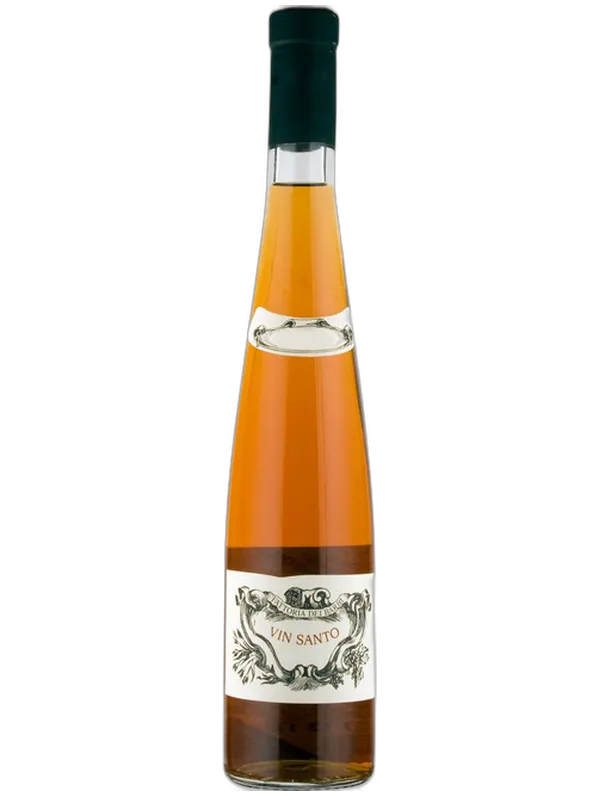
Fattoria dei Barbi Vin Santo 2019
Fattoria dei Barbi has made this sweet Vin Santo del Chianti DOC at Montalcino since 1870. Trebbiano, Malvasia and a little Sangiovese, dried to raisins then aged for years in oak caratelli: amber, velvety and full of dried fruit, walnut and honey.
View Wine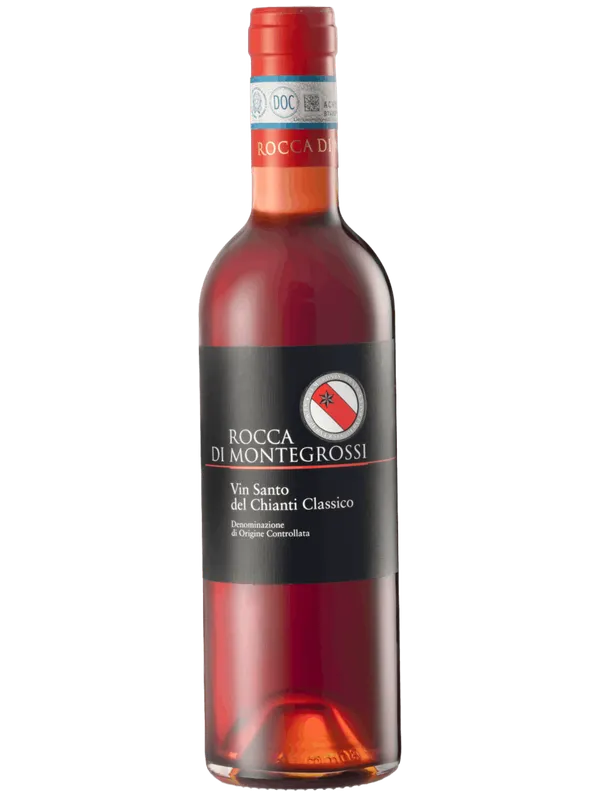
Vin Santo del Chianti Classico DOC Rocca di Montegrossi 2015
View Wine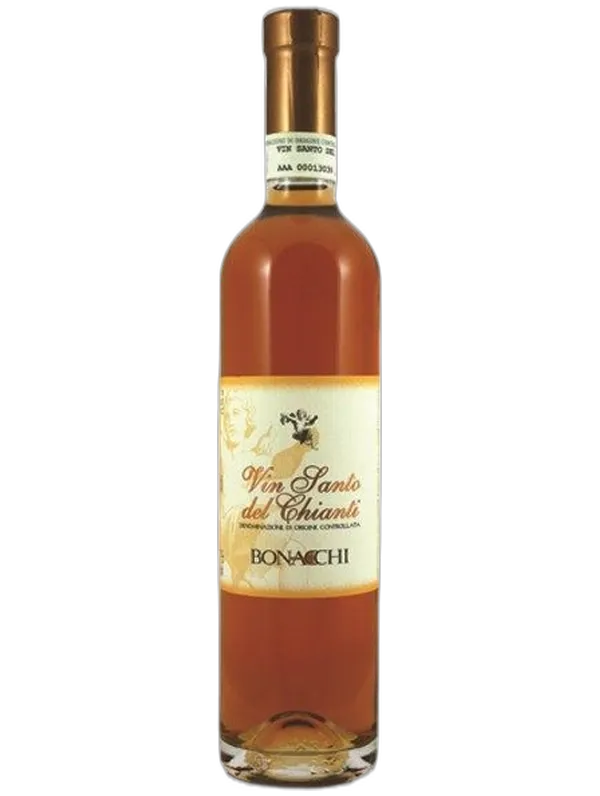
Cantine Bonacchi Vin Santo del Chianti 2019
View Wine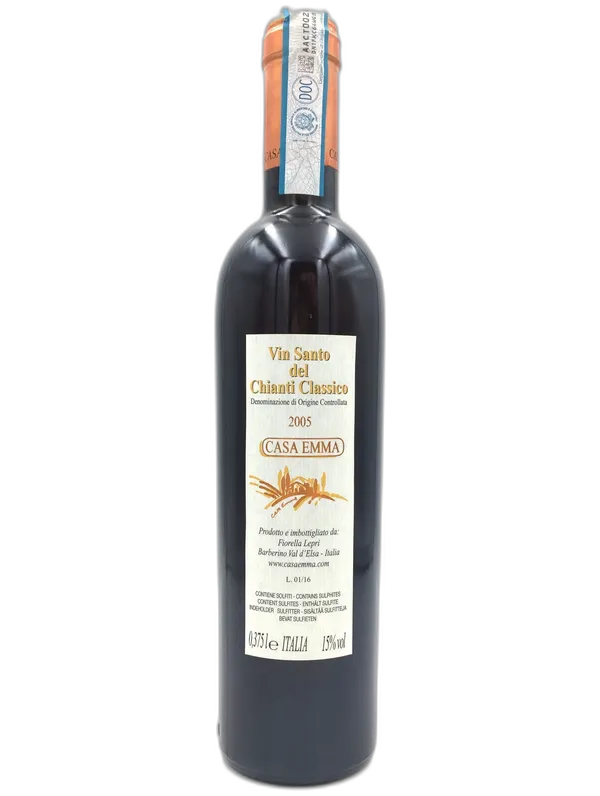
Vin Santo Del Chianti Classico Casa Emma 2005
View Wine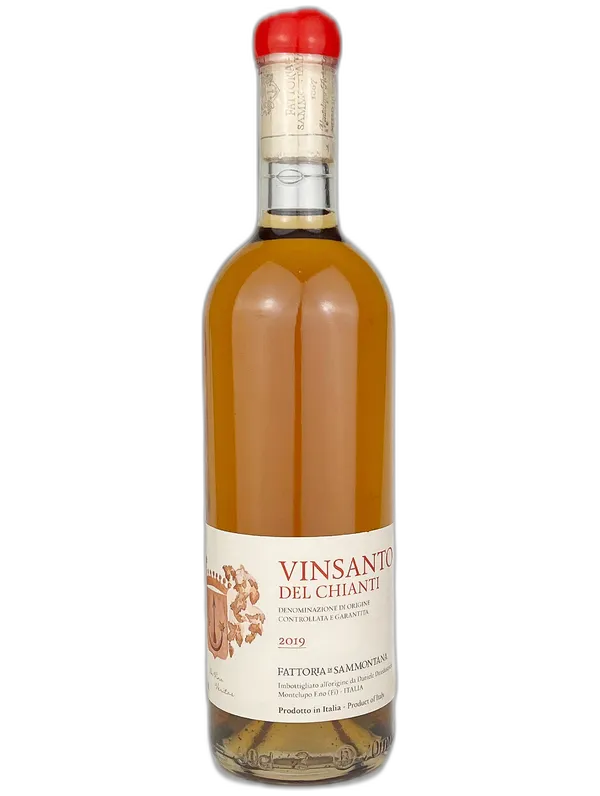
Vin Santo Del Chianti Fattoria di Sammontana 2021
View Wine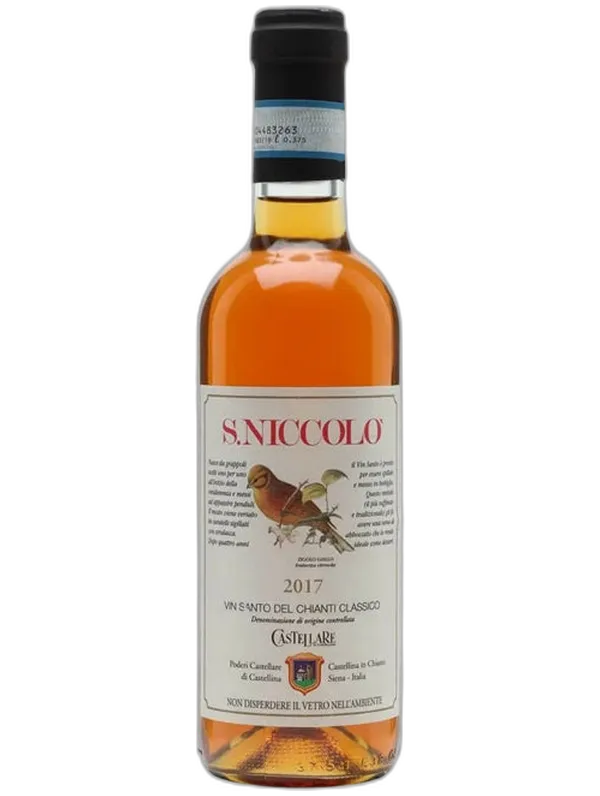
Castellare S.Niccolo Vin Santo 2017
View WineMontepulciano, the hill town known for Vino Nobile di Montepulciano, asks for the longest wait. Its Vin Santo spends three years in wood, and a Riserva five. Local Grechetto joins the usual two grapes.
Other Tuscan appellations make a Vin Santo as one of their styles. Pomino, Valdichiana Toscana and Bianco dell'Empolese all do, and their bottles reach British shops.
Occhio di Pernice, the red-grape Vin Santo
Occhio di Pernice means partridge eye. It is Vin Santo made mostly from red Sangiovese grapes. They must be at least half the blend in Chianti, Montepulciano and Carmignano, and at least 80 per cent in Chianti Classico. The wine is rosy amber. In Chianti it is always medium-sweet or sweet.
Montepulciano asks the most of Occhio di Pernice. There it ages for six years in casks of 75 litres or less. Avignonesi's Occhio di Pernice is made this way.
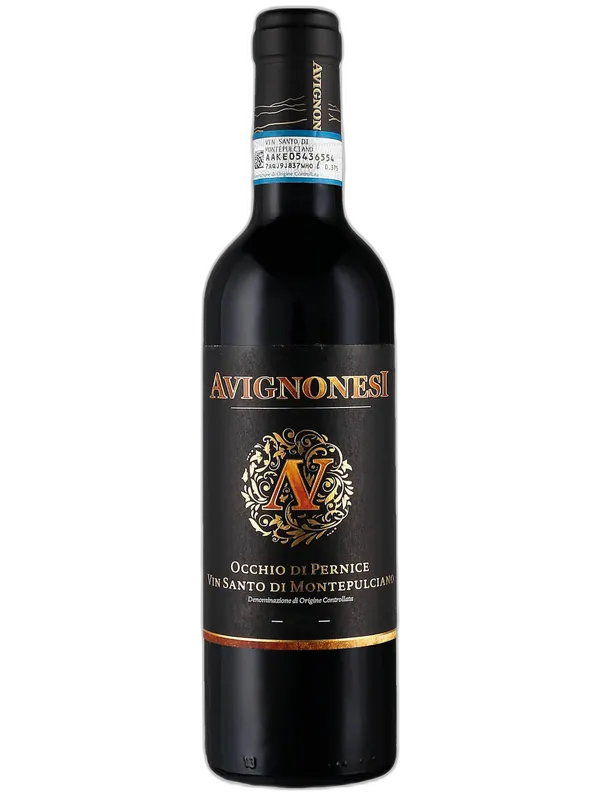
Vin Santo di Montepulciano DOC Occhio di Pernice Avignonesi 2011
View Wine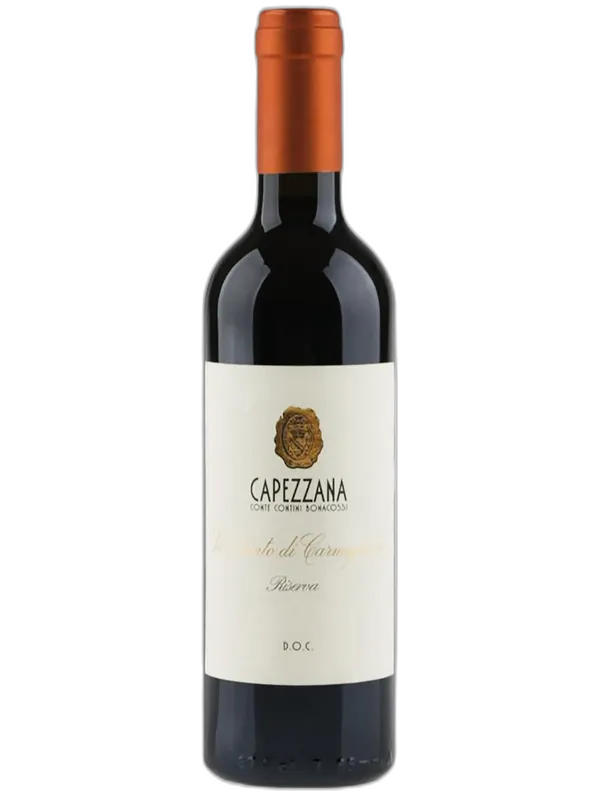
Vin Santo di Carmignano Riserva DOC Tenuta di Capezzana 2017
View Wine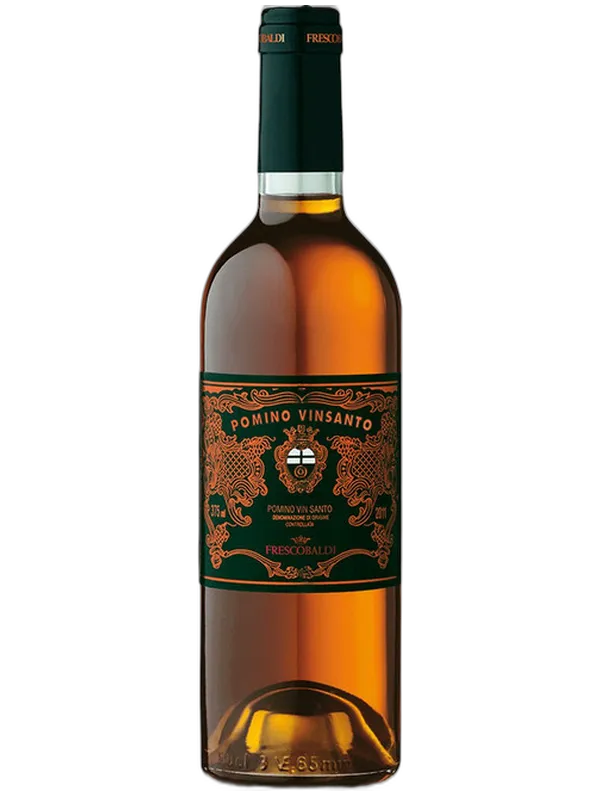
Marchesi de' Frescobaldi Pomino Vinsanto 2018
View Wine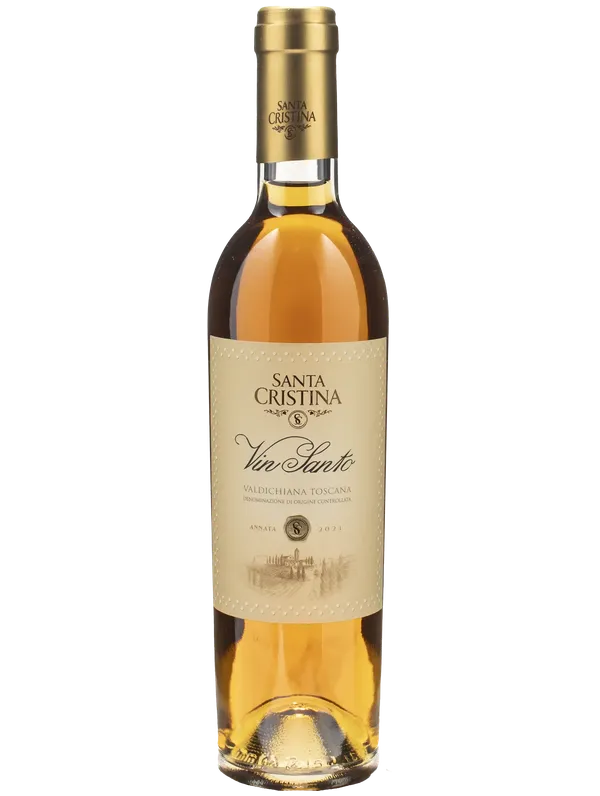
Santa Cristina Valdichiana Toscana Vin Santo 2022
View Wine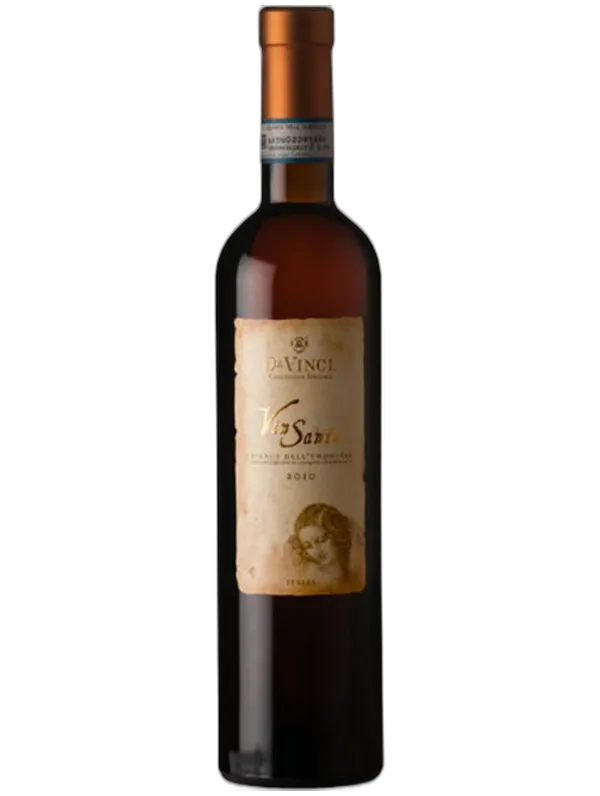
Cantine Leonardo da Vinci Vin Santo dell'Empolese 2012
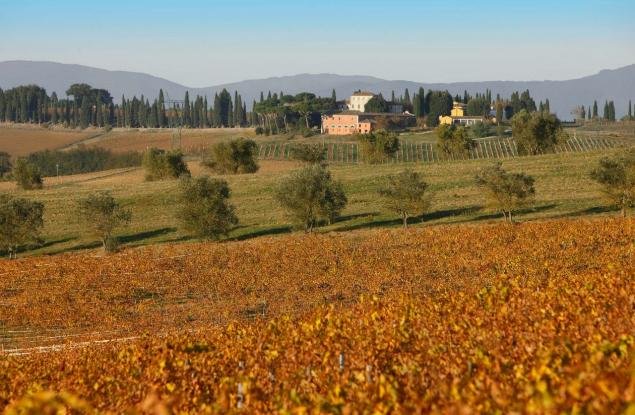
View WineSeveral of the estates behind these bottles take visitors. Avignonesi is in Montepulciano and Tenuta di Capezzana in Carmignano. Fontodi and Isole e Olena are in Chianti Classico. Frescobaldi makes the Pomino Vinsanto. Our guide to the best wineries in Tuscany to visit helps you plan the trip.
 15


Names that look like Vin Santo but are not
Some bottles carry the word liquoroso. It means fortified: alcohol or grape spirit has been added to raise the strength, the way Marsala is made. Vin Santo proper gets its strength from dried grapes alone. The Vin Santo del Chianti rules have no liquoroso type at all. So check for the word before you buy.
Vino Santo, with an o, comes from Trentino in the Alps. It is made from the white Nosiola grape, at least 85 per cent of the blend. By tradition the bunches dry on racks for more than six months and are pressed in Holy Week. It is a sweet cousin, not a Tuscan wine.
Vinsanto is also the name of a sweet wine from the Greek island of Santorini, made from sun-dried grapes. It is a different wine, and Greece has the name protected for it. The word Santorini on the label settles it.
How to serve Vin Santo, and what to eat with it
Serve a sweet Vin Santo cool, at about 10 to 12 degrees. Chill it in the fridge, then take it out a little before you pour. Use a small glass and pour a small measure, because this is a wine to sip.
In Tuscany the classic partner is cantucci, the hard almond biscuits made for dipping. The wine softens the biscuit, and the almonds pick up the nutty taste in the glass.
Blue cheese is the other great match. Sweetness takes the edge off salt, which is why a dolce Vin Santo works with Gorgonzola or Stilton. Our pages on wine with Italian cheese and wine with Italian desserts go further.
At Christmas, pour it with panettone and mince pies. Our Christmas dinner guide pours it at the end of the meal, with the Stilton.
A secco Vin Santo is a different drink. Pour it before dinner, as you would a dry sherry, with salted almonds or aged Pecorino.
Most bottles are small, 375 or 500 millilitres, and an opened one is forgiving. Sealed and kept in the fridge it lasts one to three weeks. Our guide to storing wine after opening explains why sweet wines keep so well.
Frequently asked questions
No. Sherry and Marsala are fortified, which means spirit is added to them. Vin Santo is not. Its strength and sweetness come from grapes dried for months before pressing. The taste can be close, because all three age in wood with some air and turn nutty. A dry Vin Santo sits nearest to a dry sherry. A sweet one is softer and rounder.
A sweet Vin Santo tastes of dried apricot, honey, toasted almonds and caramel, with a fresh edge that keeps it lively. Dry versions are nuttier and sharper, closer to a dry sherry. Occhio di Pernice, made mostly from red Sangiovese grapes, adds dried cherry and orange peel. The amber colour and the nutty taste come from years in small casks with a little air.
Longer than most wines. Put the cork back, keep the bottle in the fridge and a sweet Vin Santo lasts one to three weeks. Sugar and alcohol both slow the decline, and the wine has already spent years in contact with air. Drink it within a fortnight for the best of the flavour. Our guide to storing wine after opening gives the days for every style.
Blue cheese first: Gorgonzola or Stilton with a sweet Vin Santo is as good as the biscuits. Panettone, nut tarts, dried figs and plain almond cake all work, because none is sweeter than the wine. Very sugary puddings make the wine taste thin. A dry Vin Santo goes the other way: salted almonds, aged Pecorino or chicken liver crostini before dinner. Our pairings for Italian desserts have more.
Because there is little of it and you drink little at a time. Grapes dried for months give far less juice than fresh ones. That drying, appassimento, is followed by years of waiting in small casks. So estates bottle the wine in 375 or 500 millilitre sizes. A small measure is the usual pour. At about 50 millilitres a glass, a half bottle serves seven.
No. Vinsanto from the Greek island of Santorini is a separate wine, and Greece has the name protected for it. It is also sweet and also made from dried grapes, but the grapes, the place and the rules are Greek. Italian Vin Santo comes mainly from Tuscany, with a cousin called Vino Santo in Trentino. If the label names Santorini, it is the Greek wine.