Red Grape · Tuscany

Colorino

Tuscany's colouring grape: a few per cent of its thick, dark skins turn a pale Sangiovese into a deep ruby Chianti, and its name almost never reaches the label.

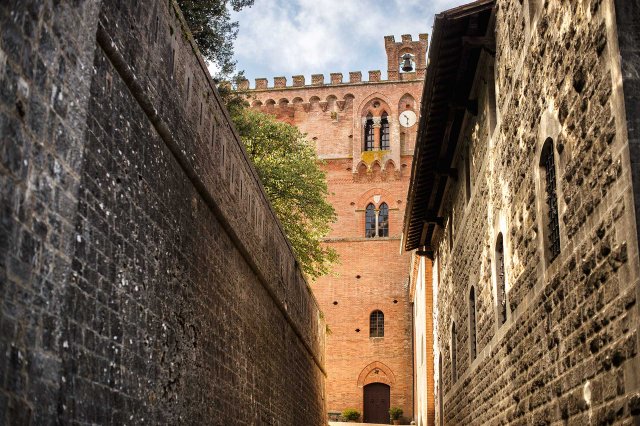
Colorino is a dark-skinned red grape from Tuscany, named for the deep colour held in its skins. Growers add a few per cent to Sangiovese to darken Chianti and Chianti Classico. The 2024 Brolio from Ricasoli carries 5 per cent. Bottled alone, which is rare, it gives a dense, firm, black-fruited red.

8
Bottles live now
14
UK retailers

Setting it straight

More than meets the eye

vs
The reality

Skins, structure and a quiet scent

  • Clear juiceThe national vine register records colourless juice under violet-black skins.
  • Structure tooThick skins bring firm tannin as well as pigment.
  • A quiet scentIt darkens Sangiovese without masking it, as Cabernet Sauvignon can.
  • Still in useRicasoli's 2024 Brolio is 5 per cent Colorino.
The myth

A dye and nothing more

  • Red fleshThe name suggests a grape that bleeds colour when cut.
  • Only a dyeA fix for pale wine, with nothing else to give.
  • A relicSomething old Chianti used and modern Chianti dropped.

The anchor fact: Colorino's juice is colourless. Its colour sits in the skins, as Italy's national vine register records, so it is not a red-fleshed grape.

Taste · Where it sits

What it’s actually like in the glass

Forget scores out of five. Here’s Colorino described against grapes you already know.

BodyDense, fuller than Sangiovese
LightFull

Bottled alone it is a compact, dense red, fuller than a straight Sangiovese. In a Chianti blend you feel it as extra weight in the middle of the wine.

TanninTight, from thick skins
SilkyGrippy

Thick skins give tight tannin. It firms up Sangiovese the way Petit Verdot firms up a Bordeaux blend, which is the job Tuscan growers tried it for in the 1980s.

AcidityModerate, calmer than Sangiovese
SoftRacy

Lower in acidity than Sangiovese. In a Chianti the Sangiovese supplies the freshness and Colorino supplies the depth.

Fruit-sweetnessDry, black-fruited, peppery
Bone dryLusciously sweet

The fruit is dark, not red: black cherry, blackberry and plum, where Sangiovese gives sour cherry. It finishes dry, with pepper and no sweetness.

Key flavours

Black cherry
The amarena note Italian tasters put first for Colorino: darker than the sour red cherry of the Sangiovese it is blended with.
Blackberry
It comes with the pigment. The thick, violet-black skins that colour a Chianti also give the grape its bramble fruit.
Plum
Shows when Colorino is bottled alone and picked fully ripe in late September, a rounder note under the black fruit.
Black pepper
The close of a wine made only from Colorino: dry and peppery after the black fruit, with none of the green edge Cabernet can bring to a Tuscan blend.
Spicy
A sweet-spice scent that Italian tasters note beside the fruit, clearest in bottlings aged in wood to soften the tannin.
Structured · Tannic Soft · Approachable Light-bodied Bold · Full Sangiovese Nebbiolo Merlot Pinot Nero Cabernet Sauvignon Corvina
Colorino

The map

Colorino is full-bodied, firm tannin, mapped against other red grapes you can buy. The closer a grape sits, the more its weight and grip resemble Colorino.

Colorinofull-bodied, firm tannin
Sangiovesea close match
Nebbioloa close match
Merlota close match
Pinot Neromuch lighter, far softer
Cabernet Sauvignonfuller, firmer
Corvinalighter, softer

Is this for you?

An honest gut-check

Reach for it when…

A red that just works

  • You like your Chianti dark and firm, not pale and light
  • You are curious about the old Tuscan blend of Sangiovese, Canaiolo and Colorino
  • You want a native grape doing the job Cabernet does elsewhere in Tuscany
  • You collect rare single-grape Tuscan reds

Maybe skip it if…

You’re after something else tonight

  • You want a grape you can shop for by name: it is rarely on the label
  • You prefer soft, low-tannin reds
  • You are after perfume: its scent is quiet
  • You want a single-grape wine that is easy to find

Serving guide

Pour it at its best

Serve at

16-18°C

At 16 to 18°C the tannin feels firm, not harsh. Any warmer and the alcohol leads.

Decant

30 minutes

Half an hour in a decanter loosens a young wine made only from Colorino. A Chianti with a few per cent needs none.

Glass

Bordeaux Glass

A tall Bordeaux glass suits the dense, dark style better than a wide bowl.

Drink within

2-3 days

Good for two or three days after opening: the tannin protects it longer than a light red.

Cellar

3-8 years

Three to eight years for a wine made only from Colorino. In a blend, follow the Chianti's own window.

Buy it · three to start with

Not sure which bottle? Start here

A curated trio across the price range, then every Colorino on sale in the UK right now.

Entry · everyday

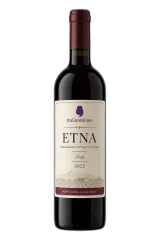
Barone Ricasoli Brolio Chianti Classico

Barone Ricasoli Brolio Chianti Classico

Chianti Classico

6 retailers

£19.00

+ delivery

View Wine

Why this one: Ricasoli's 2024 is 95 per cent Sangiovese and 5 per cent Colorino: a clear look at what a small share does to colour and grip.

The sweet spot

Badia a Coltibuono Chianti Classico Riserva

Badia a Coltibuono Chianti Classico Riserva

Chianti Classico

3 retailers

£26.60

+ delivery

View Wine

Why this one: About 90 per cent Sangiovese with Canaiolo, Ciliegiolo and Colorino, grown organically at Gaiole in Chianti. The old Tuscan field blend, aged as a Riserva.

Special occasion

Colore - Bibi Graetz

Colore - Bibi Graetz

Toscana

10 retailers

£126.88

+ delivery

View Wine

Why this one: Bibi Graetz's top wine, from old vines at Lamole. The 2022 is 96 per cent Sangiovese, 3 per cent Canaiolo and 1 per cent Colorino.

8 bottles

Where it grows

Where Colorino grows in Tuscany

Tuscany wine region

Tuscany

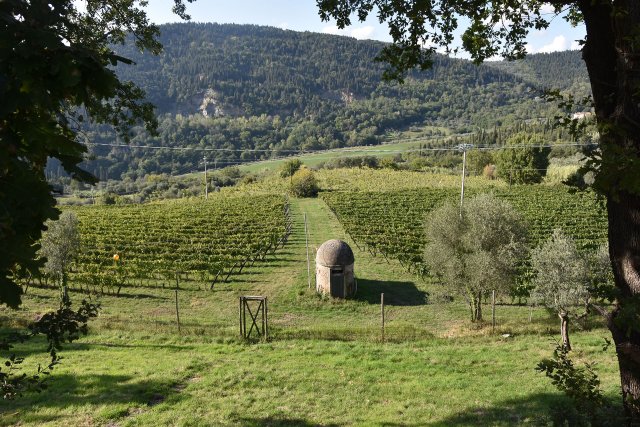
From galestro hills in Chianti Classico to the single Brunello rise of Montalcino and the sea-facing Cabernets of Bolgheri, Tuscany is Italian wine's stage in full Renaissance light.

1,524 wines · 58 denominations
Explore the Tuscany guide

Editorial

About Colorino

Colorino is a native grape of the Tuscan hills. Italy's national vine register lists it simply as Colorino, a black grape. The entry was written from the Valdarno type, whose leaves and shoots are tinged red. In autumn the leaves turn red too. The berries are small to medium, with thick, violet-black skins. The juice inside is clear. All the colour comes from the skins during maceration.

The name of this vine is owed to the abundant colour held in the skin of the berry, and not in the juice, which is colourless.

Italy's national vine register, entry for Colorino (our translation)

Its old job was in the governo, the Tuscan practice of adding partly dried grapes to the new wine. The register still calls Colorino an excellent grape for it. In Chianti and Chianti Classico it sits beside Sangiovese and lends the colour that grape can lack. A few per cent darkens the blend and adds tannin. It does so without the strong scent that Cabernet Sauvignon brings. Chianti Classico must be at least 80 per cent Sangiovese. Colorino shares the remaining fifth with grapes such as Canaiolo.

In the late 1980s some Tuscan winemakers saw it as their answer to Petit Verdot in Bordeaux: a local grape for colour and backbone. That was the era of the Super Tuscans, and Cabernet was the other route to colour and backbone. The fashion had faded by 2000, and Colorino went back to small shares.

It ripens just after Sangiovese, in late September. Most vines are in Tuscany, with small plantings in Umbria. It is also allowed in Vino Nobile di Montepulciano and in Montecarlo, near Lucca. A few estates bottle it alone. The result is a dark, firm wine of black cherry, blackberry and pepper that needs time in wood to soften.

Good to know

Frequently asked

Colorino is a red grape from Tuscany, used in small amounts to deepen the colour of Sangiovese wines. Italy's national vine register lists it as a black grape. You will rarely see its name on a front label. It is usually a few per cent of a Chianti or Chianti Classico.

Colour first, then structure. Its thick skins are rich in pigment, so a small share darkens a pale Sangiovese. It also adds firm tannin, while its scent stays quiet. Ricasoli uses it this way: the 2024 Brolio is 95 per cent Sangiovese and 5 per cent Colorino.

No. The juice of Colorino is clear. The national vine register says the colour sits in the skin of the berry, not in the juice. So it is not one of the rare red-fleshed grapes. The wine takes its deep colour from the time the juice spends on the skins.

Up to 20 per cent, shared with any other red grapes in the blend. Chianti Classico must be at least 80 per cent Sangiovese. In practice Colorino is usually a few per cent. Gran Selezione rises to 90 per cent Sangiovese from the 2027 harvest, which leaves even less room.

Dark, dense and firm. A wine made only from Colorino is deep ruby, almost opaque. Expect black cherry, blackberry and plum, with a peppery finish. The tannins are tight and the acidity is moderate. Most examples spend time in wood to soften before release.

Governo is an old Tuscan practice. Growers kept back some grapes, partly dried them, and added them to the new wine. That started a second fermentation. Colorino suited the job because its bunches dried without rotting. The national vine register still calls it an excellent grape for governo.

Mostly Chianti and Chianti Classico. On this site, Ricasoli's Brolio, Fattoria Rodano's Chianti Classico and Badia a Coltibuono's Riserva all include a little. Bibi Graetz's Colore, a Toscana IGT, has 1 per cent in its 2022 vintage. The label rarely says so. The producer's technical sheet does.

Explore by style

Wine styles made from Colorino

Jump to the editorial guide for each style this grape turns up in.

Keep exploring

More red grapes