







Wine route
Strada del Vermentino di Gallura
2 days · 7 stops
Open the driveYour cellar, your trips, and the wines you've been tracking are right where you left them.
New here?
Free, always. Education first, we'll never sell you anything you didn't ask to see.
Already have an account?
Enter the email you signed up with and we'll send a link to choose a new password.
Sardinia · DOC
Sardinia's everyday white: fresh, salty and made all over the island. Vermentino di Sardegna DOC covers the whole of Sardinia, so any vineyard from the Sulcis to Gallura can use the name. The wine is at least 85% Vermentino, light in body, dry, with white peach, wild herbs and a faint bitter-almond finish.
Decode the label
One word on the front changes the ageing, the strength and the price.
On the label
Vermentino di Sardegna
the everyday island white
The whole island in one name: light, dry and salty, meant for the year after the harvest.
In stock from £11.10
On the label
Vermentino di Sardegna Frizzante Rarely exported
a light fizz, rare in Britain
Same grapes and rules as the still wine, with a gentle sparkle. It may be finished off the island.
No bottles in stock right now
On the label
Vermentino di Sardegna Spumante Rarely exported
the full sparkler
Fine, lasting bubbles on the same 85% Vermentino base. Like the Frizzante, it may be made and bottled off the island.
No bottles in stock right now
The boundary
Everything on this page, the estates, the bottles, the sub-zones, sits inside this line.
Wine route
2 days · 7 stops
Open the driveWine route
2 days, 135 km · 4 stops
Open the drive
Estate 1
Serdiana · Parteolla hills, south of Cagliari
Tastings available
Estate 2
Santadi · Sulcis, south-west corner
Tastings available
Estate 3
Jerzu · Ogliastra, east coast
Tastings available
Estate 4
Cabras · Sinis peninsula, near Oristano
Book online
Estate 5
Arzachena · Gallura, north-east
Tastings available
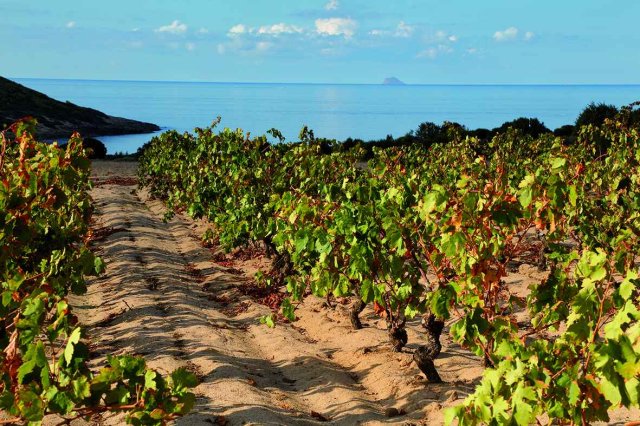
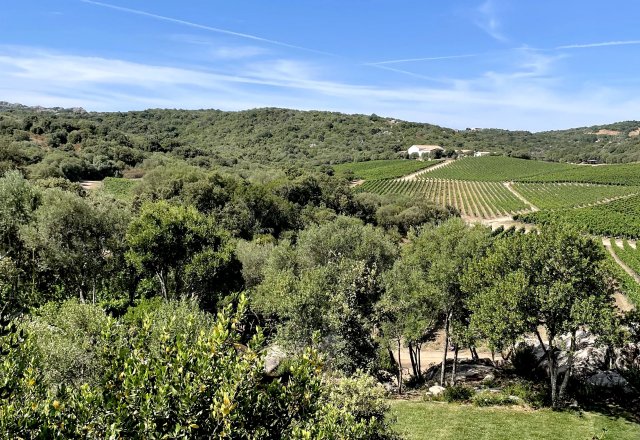
The zone is the whole island: every vineyard in Sardinia qualifies. Vermentino's first home is the granite sand of Gallura in the north-east, around Arzachena and Tempio. Down the west coast the soil turns to limestone in the Nurra around Alghero, then to the flat river silt of the Campidano plain that runs from Oristano to Cagliari. The centre is basalt plateau and high hill country. Nowhere on the island is more than 53 km from the sea. The Maestrale wind from the north-west blows for much of the year, which keeps the grapes healthy and the wines fresh.
Inside the zone
Click or tap a pin for its estate. The numbered pins match the estate cards below.
Towns worth knowing
Producers sit in every corner of the island, from Gallura's granite in the north-east to the Sulcis in the south-west. The town on the back label says more than the DOC does.
In the glass

Peach

Orange blossom

Chamomile

Pineapple
The disciplinare
The same table on every denomination page, straight from the production rules.
 VermentinoThe island's white, never below 85%at least 85%Other Sardinian white grapesAny non-aromatic white allowed in Sardiniaup to 15%
Solid means the rules demand it. Striped means optional, up to that amount. The words on the right say the same rule.
The whole island is the zone any vineyard in Sardinia can claim the DOC, from the Sulcis in the south to Gallura in the north.
16 tonnes per hectare a generous cap, and no more than 70 litres of wine from every 100 kilos of grapes.
The vintage goes on the label the still wine must carry its harvest year; only the fizzy versions may leave it off.
Say it if it is sweet a wine with some sugar left must print amabile on the label.
Made and bottled on the island except the Frizzante and Spumante, which may be finished elsewhere.
Ageing and alcohol minimums per tier are in the label guide above.
Editor's cellar
Live prices, compared across 11 UK retailers.
Cellar doors · inside the zone
5 working estates with their gates open, numbered to match their pins on the map above.
No estates match these filters. Clear a filter to see more.
Experiences in the Vermentino di Sardegna zone
Cellar experiences here average around €42. These are the strongest fits for this page.
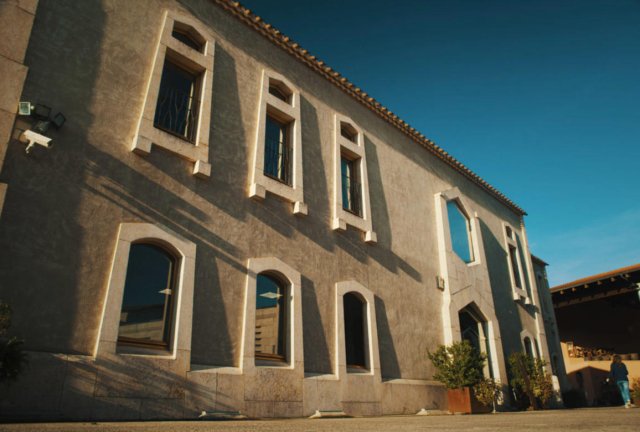
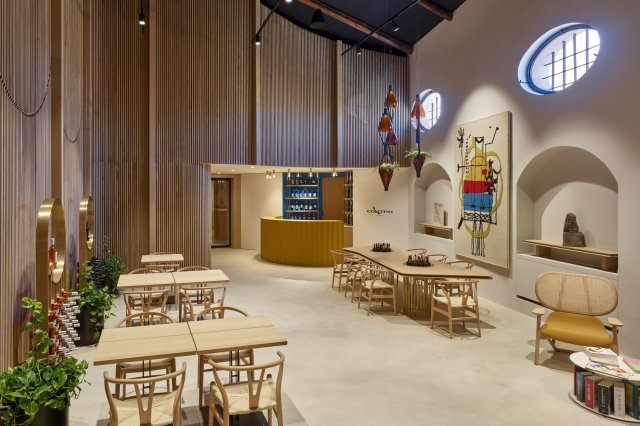
Azienda Vinicola Contini Attilio
Join us on a Wine Tour as we take you to the places where our wines are born and matured, and finish with a Tasting of 2 organic wines.
Azienda Vinicola Contini Attilio
Immerse in Sinis, the land of Tharros with a unique wine tour and tasting of 4 wines paired with local products at Vini Contini in Sardinia.
Azienda Vinicola Contini Attilio
Discover the Giants, wines dedicated to the impressive sculptures of Mont'e Prama, with our unique tour and tasting with local products.
Vintage provenance
No denomination-wide vintage chart is published for Vermentino di Sardegna. Gambero Rosso and the regional guides rate individual wines each year rather than the DOC as a whole, so quality is tracked producer by producer. The wine is made for drinking young, which is the other reason nobody keeps a year-by-year table.
Buy the newest vintage you can find and drink it within two or three years: freshness is the point. A few bottles are released a year later on purpose, like Quartomoro's Òrriu un anno dopo, whose name says so.
What to check instead
The producer: quality here is tracked estate by estate rather than year by year.
The rules are short. Grapes must be at least 85% Vermentino. The other 15% can be any non-aromatic white grape allowed in Sardinia. Vines may carry up to 16 tonnes of grapes per hectare, and no more than 70 litres of wine may come from every 100 kilos. New vineyards need at least 3,500 vines per hectare. The still wine must be made and bottled on the island. It needs 10.5% alcohol, and there is no minimum ageing: it can go on sale as soon as it is bottled, with the harvest year printed on the label. It is usually dry; an off-dry version must print amabile on the label. Two fizzy versions exist. The Frizzante shares the grape, yield, alcohol and amabile rules of the still wine. Like the Spumante, it may be finished and bottled off the island, and it need not print the harvest year. The Spumante needs 11% alcohol in total and runs from brut nature to demi-sec.
On the table
Salt and the sea: seafood fregula, malloreddus with a light sauce, pecorino with pane carasau. The acidity does the cutting and the salty edge matches the plate.
In-depth guide
Fresh, light and a little salty. Expect white peach and pear, a whiff of wild herbs and broom, then a dry finish with a faint bitter-almond note. It is lighter than most Vermentino di Gallura.
Almost always dry. The rules allow an off-dry version, but then the word amabile must be printed on the label, so a bottle without it is dry. The Spumante can run from brut nature to demi-sec.
Gallura is one corner of the island with its own DOCG since 1996; Vermentino di Sardegna is the DOC for the whole island. Gallura wines must be 95% Vermentino from granite soils, reach 12% alcohol and are usually fuller. The island-wide DOC needs 85% and 10.5%, and it is the lighter, earlier-drinking wine.
Seafood first. Fregula with clams and mussels, grilled fish and malloreddus with a light sauce all suit its fresh, salty style. It also works with pecorino sardo and pane carasau, and with simple vegetable dishes.
Two to three years from the harvest is the sweet spot. The wine is made for freshness, so buy the newest vintage you can find; the harvest year must be on the label. A few producers hold a bottle back on purpose, such as Quartomoro's Òrriu un anno dopo, whose name means a year later.
Most bottles cost £12 to £20. Entry wines start from about £11, and the dearest bottles in stock sit just under £30. Those are in-stock prices at UK shops, so they move as the shelf changes.
Yes. The rules allow a lightly fizzy Frizzante and a fully sparkling Spumante alongside the still wine. Both are rare in the UK, and both may be finished and bottled outside Sardinia, which the still wine, as a rule, may not.
Argiolas Costamolino, Sella & Mosca Cala Reale and Santadi Villa Solais are the easiest to find in the UK and cost under £15. For a step up, Cherchi's Tuvaoes and Pala's Stellato took Gambero Rosso's top Tre Bicchieri award for the 2023 vintage.
Explore more Sardinia
Same region only: the denominations Vermentino di Sardegna drinkers reach for next.