






Wine route
Strada del Cannonau
2 days, 135 km · 4 stops
Open the driveYour cellar, your trips, and the wines you've been tracking are right where you left them.
New here?
Free, always. Education first, we'll never sell you anything you didn't ask to see.
Already have an account?
Enter the email you signed up with and we'll send a link to choose a new password.
Sardinia · DOC
Cannonau is Sardinia's red grape, and this is its wine: warm, soft and full of red fruit. The DOC covers the whole island, from the Supramonte villages above Oliena to the terraces of Jerzu. Most bottles are Rosso, made to drink young. The Riserva waits two years, six months of them in wood.
Decode the label
One denomination, 6 things it can say on the front. Colour first, then the qualifier.
On the label
Cannonau di Sardegna Rosso
the everyday face of the island's red
Ruby red, small red and black fruit with pepper and a wild-herb edge: the rulebook's own description of the base wine.
In stock from £11.90 See the 25 bottles ↓On the label
Cannonau di Sardegna Rosato
the rosé that may pour first
Bright pink, rose and violet scented with cherry behind, dry and salty: the island's rosé for grilled fish and flatbread.
In stock from £13.99 See the 2 bottles ↓On the label
Cannonau di Sardegna Riserva
two years old before it may leave
Ruby turning garnet, dried rose petal and plum jam, clove and a balsamic mint note; warm and soft with a gently bitter finish.
In stock from £15 See the 7 bottles ↓On the label
Cannonau di Sardegna Classico
Nuoro and Ogliastra grapes, a year in wood
Rare on UK shelves: the tightest rules in the family, from the two provinces where the grape is most at home.
No bottles in stock right now
On the label
Cannonau di Sardegna Passito
dried grapes, sweet red
Grapes dried on the vine or on racks, with at least 50 grams of sugar per litre left in the wine: a sweet red not seen on UK shelves.
No bottles in stock right now
On the label
Cannonau di Sardegna Liquoroso
fortified, dry or sweet
The old-fashioned fortified style, jam-scented and warming, which the rulebook still protects.
No bottles in stock right now
The boundary
Everything on this page, the estates, the bottles, the sub-zones, sits inside this line.
Wine route
2 days, 135 km · 4 stops
Open the driveWine route
2 days · 7 stops
Open the drive
Estate 1
Serdiana · Parteolla hills, south
Tastings available
Estate 2
Santadi · Sulcis, south-west
Tastings available
Estate 3
Jerzu · Ogliastra, east coast
Tastings available
Estate 4
Cabras · Sinis peninsula, west
Book online
Estate 5
Arzachena · Gallura, north-east
Tastings available
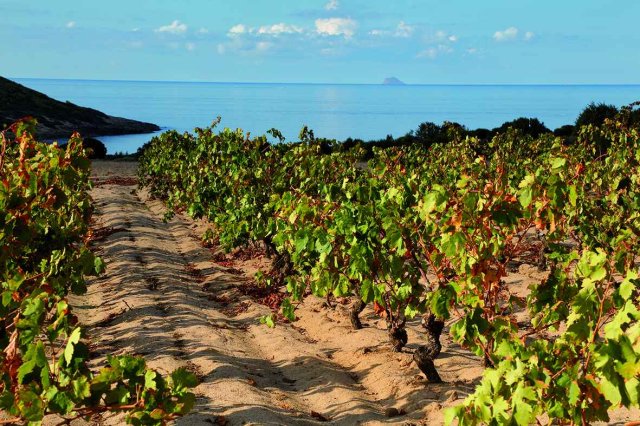
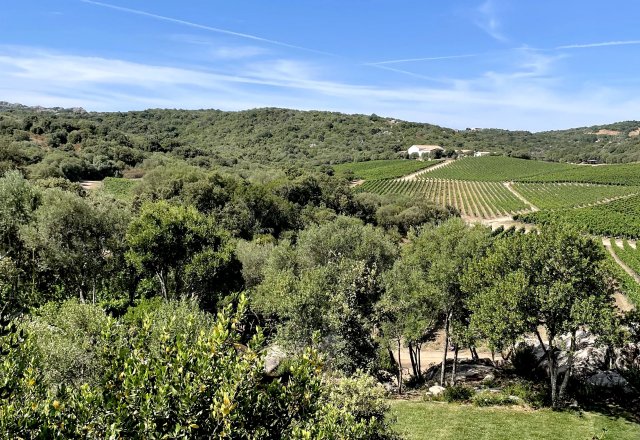
The zone is the whole of Sardinia, the second largest island in the Mediterranean: every commune may grow the grape and bottle the wine. The heart is the east. The Supramonte limestone above Oliena and Orgosolo, the granite of Mamoiada and the terraces of Jerzu in the Ogliastra are its core. Here the grape fills over half the vineyard. Three sub-zones are written into the rules: Oliena, Jerzu and Capo Ferrato in the south-east corner. The Classico label is reserved for the provinces of Nuoro and Ogliastra. Nowhere on the island is more than 53 km from the sea, which is why the Maestrale wind, not summer heat, is the climate story the rulebook tells.
Inside the zone
Click or tap a pin for its estate. The numbered pins match the estate cards below.
Towns worth knowing
The rules cover every commune on the island; the fame sits in the east, from the Supramonte villages of Oliena, Orgosolo and Mamoiada down the Ogliastra coast to Jerzu.
In the glass
One profile at a time, never blended into a single set of bars.
Cherry

Black pepper

Strawberry

Leather

Rose petal
Cherry
Strawberry
The disciplinare
The same table on every denomination page, one row group per style here, because Cannonau di Sardegna writes its rules per colour.
 CannonauThe grape the wine is named afterat least 85%Other black grapes of SardiniaNon-aromatic local reds, optionalup to 15%CannonauThe grape, at a higher floorat least 90%Other black grapes of SardiniaNon-aromatic local reds, optionalup to 10%
Solid means the rules demand it. Striped means optional, up to that amount. The words on the right say the same rule.
Cannonau at least 85% of the blend, rising to 90% for Classico; the rest can only be non-aromatic black grapes grown on the island.
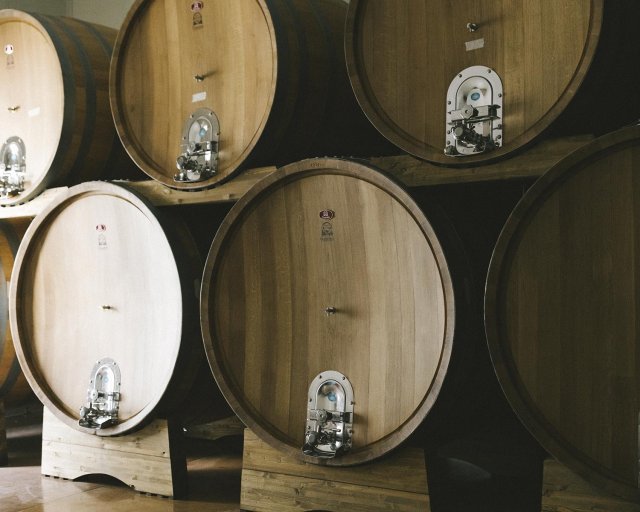
Riserva waits two years from 1 November of the harvest year, six of them in wooden casks; Classico waits the same two years with twelve months in wood.
No Rosso before 1 April of the year after harvest; the Rosato may go out from 1 January.
11 tonnes per hectare is the cap for the base wines, cut to 9 for Classico, and the high tendone pergola is banned outright.
Cork only for the serious tiers sub-zone, Classico, Riserva and single-vineyard wines must be sealed with a flush cork; screwcaps are allowed on plain bottles up to 75 cl.
Ageing and alcohol minimums per tier are in the label guide above.
Editor's cellar
By style, today
Live prices, compared across 11 UK retailers.
Cellar doors · inside the zone
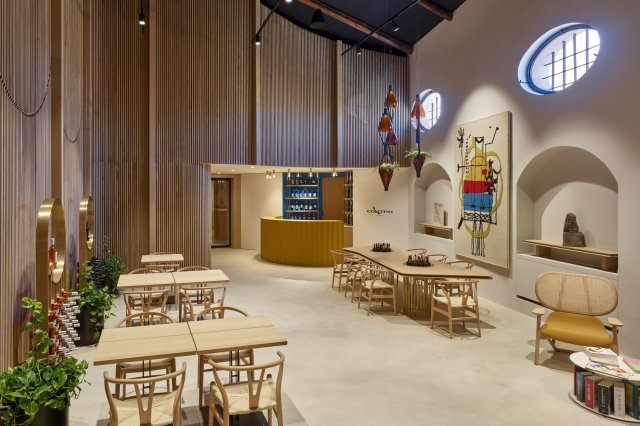
5 working estates with their gates open, numbered to match their pins on the map above.
No estates match these filters. Clear a filter to see more.
Experiences in the Cannonau di Sardegna zone
Cellar experiences here average around €42. These are the strongest fits for this page.
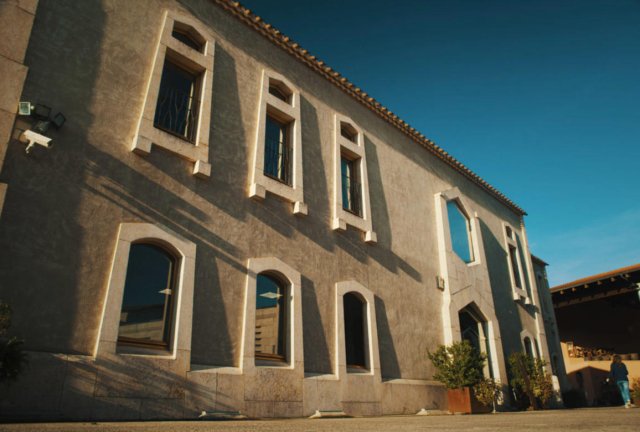
Azienda Vinicola Contini Attilio
Join us on a Wine Tour as we take you to the places where our wines are born and matured, and finish with a Tasting of 2 organic wines.
Azienda Vinicola Contini Attilio
Immerse in Sinis, the land of Tharros with a unique wine tour and tasting of 4 wines paired with local products at Vini Contini in Sardinia.
Azienda Vinicola Contini Attilio
Discover the Giants, wines dedicated to the impressive sculptures of Mont'e Prama, with our unique tour and tasting with local products.
Three names the label may add
Three places have earned their own line on the label: Oliena under the Supramonte, Jerzu on the Ogliastra coast and Capo Ferrato in the south-east corner. A wine that carries one of them must be grown, aged and bottled inside it.

The whole of Oliena and part of Orgosolo under the Supramonte limestone; the Nepente name is the one D'Annunzio wrote an ode to.
Jerzu and Cardedu in the Ogliastra, where terraced vines climb from the coast; the wine must be aged and bottled inside the zone.
Five communes in the island's south-east corner, Castiadas, Muravera, San Vito, Villaputzu and Villasimius, on the coast below the Ogliastra.
Vintage provenance
No denomination-wide vintage chart is published for Cannonau di Sardegna. The consortium does not rate years, and the guides that cover the island, such as Vinodabere's annual Sardinia guide, score individual wines instead. Quality here is tracked producer by producer, so buy on the name and the tier rather than the year.
Rosso and Rosato are made to drink within two or three years of the harvest. Give a Riserva or a Classico five years or more; the rulebook itself expects them to turn garnet with age.
What to check instead
The sub-zone: where a wine comes from inside the zone changes what is in the glass. See them above.
The producer: quality here is tracked estate by estate rather than year by year.
The rules are simple and island-wide. At least 85% of the grapes must be Cannonau. The rest can only be other non-aromatic black grapes grown in Sardinia. Vines may not be trained on the high tendone pergola, and yields are capped at 11 tonnes per hectare. The Rosso may not leave the cellar before 1 April after the harvest, at 12.5% alcohol or more. The Rosato may go out from 1 January. A Riserva must age for two years from 1 November of the harvest year, with at least six months in wooden casks, and reach 13%. Classico is stricter still. It is reserved for grapes from the provinces of Nuoro and Ogliastra. It needs 90% Cannonau, a 9 tonne cap, two years of ageing with 12 months in wood, and 13.5% alcohol. The rules also allow two styles not seen on UK shelves: a sweet Passito from dried grapes and a fortified Liquoroso, dry or sweet.
On the table
Cannonau wants the island's own table: roast suckling pig, sheep's cheese with pane carasau, and malloreddus in a sausage sauce.
In-depth guide
Yes. DNA tests published in 2009 showed that Cannonau and Spain's Garnacha are the same variety, so it is Grenache under a Sardinian name. How it crossed the sea is still argued over. The usual account credits the Aragonese rulers of the 1300s. The grower Antonella Corda told Decanter in 2020 that it is picked earlier than many Grenache. For her, that is what keeps the wines fresher and more red-fruited.
A Riserva has aged for at least two years, counted from 1 November of the harvest year, with six months or more in wooden casks. It must also reach 13% alcohol, half a degree more than the plain Rosso. Expect a darker, warmer wine with dried rose, plum jam and clove, and a gently bitter finish.
Classico is reserved for grapes grown in the provinces of Nuoro and Ogliastra, the grape's historic home in the east of the island. The rules are tighter: at least 90% Cannonau, a lower yield of 9 tonnes per hectare, two years of ageing with 12 months in wood, and 13.5% alcohol. It is rare in the UK. Most of what reaches our shelves is plain Rosso or Riserva.
They are the three places the label may name. Oliena, also sold as Nepente di Oliena, covers that village and part of Orgosolo under the Supramonte mountains. Jerzu takes in Jerzu and Cardedu on the Ogliastra coast. Capo Ferrato is five communes in the island's south-east corner. A wine that carries one of these names must also be aged and bottled inside that zone.
Ruby red, warm and soft. The rulebook itself lists small red and black fruit, cherry, myrtle, plum and blackberry, with black pepper and a note of wild herbs behind. Tannins are light and acidity is gentle, so the wine feels round rather than sharp. Alcohol runs high, which is where the warmth comes from. A Riserva turns towards garnet and adds dried rose, clove and a mint-like balsamic note.
From £11.90 to £56 a bottle: that is today's range across the 34 Cannonau di Sardegna wines in stock on this page. A co-operative Rosso costs about £13, and most bottles sit between £15 and £35. Santadi, Sella & Mosca and Argiolas hold the value end; the small Mamoiada growers cost the most.
Sardinian food first of all: roast suckling pig, sheep's cheese with crisp pane carasau, and malloreddus in a sausage and saffron sauce. The wine's soft tannin and warmth also suit lamb with rosemary, grilled sausages and hard cheeses in general. Serve the Rosso at 16 to 18°C and the Rosato cooler, around 10 to 12°C.
Explore more Sardinia
Same region only: the denominations Cannonau di Sardegna drinkers reach for next.