Red Grape · Umbria

Sagrantino

Umbria's one great native red: five hill towns around Montefalco, about 1,000 hectares, and the most tannic wine in Italy, which turns to velvet after a decade.

Sagrantino is Umbria's great red grape, grown in five hill towns around Montefalco and almost nowhere else. It makes inky, bone-dry wines with some of the highest tannin of any grape in the world, plus a sweet passito from dried grapes. Give it ten years and the grip turns to velvet.

38
Bottles live now
10
UK retailers
3
Denominations

Before you buy

The words that change the wine

Montefalco Sagrantino DOCG 100% Sagrantino, dry, aged at least two and a half years with a year in wood. The serious bottle: £20 to £45.
Secco Dry. Some estates print it to separate the dry wine from the passito; if the label says nothing, it is dry.
Passito Sweet. Grapes dried on racks after picking, then pressed. Raisin and fig with real tannin; the old style of the town.
Montefalco Rosso DOC Sangiovese-led blend with a share of Sagrantino (Adanti uses 15%). Lighter, cheaper, ready from two years.
Montefalco Rosso Riserva DOC The same blend with longer ageing; a step up in weight without the full Sagrantino grip.
Umbria IGT Anything goes. Sagrantino can appear alone or in a blend, from any part of the region, with no ageing rule.

The anchor fact: Montefalco Sagrantino DOCG is 100% Sagrantino and must age at least two and a half years before sale. Montefalco Rosso DOC is mostly Sangiovese with a share of Sagrantino, and is ready years sooner.

Taste · Where it sits

What it’s actually like in the glass

Forget scores out of five. Here’s Sagrantino described against grapes you already know.

BodyAs full as red gets
LightFull

Heavier than Aglianico or Nebbiolo, close to Amarone's weight, but bone dry at 14 to 15%.

TanninItaly's most tannic
SoftGrippy

More grip than Nebbiolo or Aglianico, around double Cabernet Sauvignon by published tests; it needs an hour of air or a decade of bottle.

AcidityEnough to carry the weight
SoftZippy

Medium-high: less than Nebbiolo, more than Primitivo, and it is what stops a 15% wine feeling heavy.

Fruit & sweetnessBone dry, unless passito
DrySweet

Blackberry and plum with no sweetness at all in the dry wine; only the passito, from dried grapes, is sweet.

Key flavours

Blackberry
The core fruit of every dry Sagrantino, from Adanti's Arquata to Caprai's Collepiano: ripe, dark and often jammy in the warm Montefalco years.
Plum
Ripe plum in youth turns to prune and fig with age, which is why a ten-year-old Sagrantino can taste like a dry version of its own passito.
Liquorice
A black-liquorice note that comes with the thick skins and long maceration; clearest in wines aged in big oak such as Adanti's, less masked by vanilla.
Black pepper
Pepper and clove sit over the fruit in almost every producer's note; the spice shows more in the modern barrique-aged style of Caprai.
Cinnamon
The sweet-spice note the old texts use for the grape itself, not the oak: it is there even in steel-aged Montefalco Rosso.
Tobacco
Dried tobacco leaf and a coffee edge arrive after a few years in bottle, once the tannin has started to soften.
Forest Floor
A dusty-earth note under the fruit, the mark of the Montefalco hills; Colsanto's tasting note calls it dusty earth.
Structured · Tannic Soft · Approachable Light-bodied Bold · Full Sangiovese Nebbiolo Merlot Pinot Nero Cabernet Sauvignon Corvina
Sagrantino

The map

Sagrantino is powerfully full, bold, gripping tannin, mapped against other red grapes you can buy. The closer a grape sits, the more its weight and grip resemble Sagrantino.

Sagrantinopowerfully full, bold, gripping tannin
Sangioveselighter, softer
Nebbiololighter, softer
Merlotlighter, softer
Pinot Neromuch lighter, far softer
Cabernet Sauvignona close match
Corvinamuch lighter, far softer

Is this for you?

An honest gut-check

Reach for it when…

A bold red that just works

  • A big, dry red for slow-cooked lamb, game or a cheese board
  • Something to lay down for ten years without paying Barolo prices
  • The passito, if you like Recioto della Valpolicella

Maybe skip it if…

You’re after something else tonight

  • You want a soft red for pizza night: buy Montefalco Rosso instead
  • You drink reds young and lightly chilled
  • You cannot decant: a young Sagrantino needs an hour in a jug

Serving guide

Pour it at its best

Serve at

16-18°C

16 to 18C: warmer and the 15% alcohol burns, colder and the tannin clamps shut.

Decant

1 hours

An hour in a jug is the minimum for a young bottle; past ten years, pour gently off the sediment.

Glass

Bordeaux Glass

The biggest bowl you own: air softens Sagrantino's tannin faster than anything else.

Drink within

4-5 days

Montefalco Rosso from two years old; Montefalco Sagrantino DOCG from five.

Cellar

10-20 years

Ten to twenty years for the DOCG; the passito keeps longer still.

Buy it · three to start with

Not sure which bottle? Start here

A curated trio across the price range, then every Sagrantino on sale in the UK right now.

Entry · everyday

Montefalco DOC Rosso Adanti SAVE -5%

Montefalco DOC Rosso Adanti

Montefalco

2 retailers

£16.90

£17.79

View Wine

Why this one: Adanti's Montefalco Rosso is 70% Sangiovese with 15% Sagrantino: the grape's grip in a lighter frame, ready now, for under £18.

The sweet spot

Montefalco Sagrantino DOCG Memoira Còlpetrone

Montefalco Sagrantino DOCG Memoira Còlpetrone

Montefalco Sagrantino

2 retailers

£20.50

View Wine

Why this one: Colpetrone's Memoira is 100% Sagrantino with a year in barrique, and the cheapest full DOCG in the shops we track, at about £20.

Special occasion

Arnaldo Caprai Collepiano

Arnaldo Caprai Collepiano

Montefalco Sagrantino

3 retailers

£28.90

View Wine

Why this one: Caprai's Collepiano is the benchmark: 22 months in barrique, blackberry jam, clove and pepper over tannin built for a decade. Around £37.

12 of 36 bottles

Denominations

Where it earns a name on the label

The appellations where Sagrantino plays a starring role.

Montefalco SagrantinoDOCG MontefalcoDOC UmbriaIGT

Where it grows

Where Sagrantino grows in Umbria

Umbria wine region

Umbria

Italy's landlocked green heart, where Montefalco Sagrantino brings the deepest tannins on the peninsula and Orvieto's tufa cliffs ripen the country's most patient white grapes.

138 wines · 21 denominations
Explore the Umbria guide

The terroir

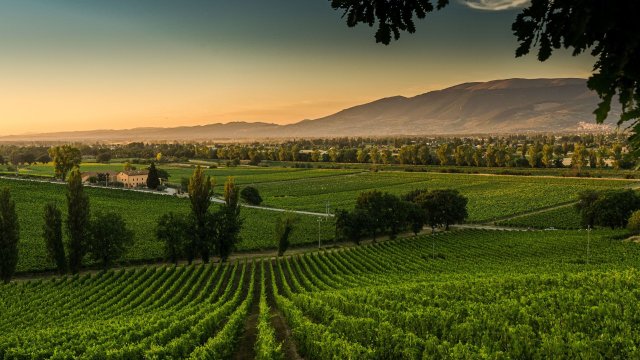
Sagrantino grows in five hill towns around Montefalco and almost nowhere else, so the differences are between estates more than places.

Editorial

About Sagrantino

Sagrantino has more tannin than almost any grape on earth. Published tests put it above Aglianico and Tannat, and around double Cabernet Sauvignon or Nebbiolo. The berries are small, with very thick blue-black skins, and the wine comes out a violet so dark it is almost black.

One of the most tannic grapes in the world, and it gives a wine so dark a violet it is almost black.

Quattrocalici, the Italian grape atlas

Its home is Montefalco in Umbria and four neighbouring hill towns: Bevagna, Gualdo Cattaneo, Giano dell'Umbria and Castel Ritaldi. Plantings grew from about 350 hectares in 2000 to nearly 1,000 by 2010, and that is still roughly the total, shared by around 50 producers. Written records go back to the 1500s, when it was a sweet wine for church feasts. The name probably comes from sacro or sagrestia. Where the vine came from is unknown: Italy's grape register lists no parents and no synonyms.

For centuries it was a passito: grapes dried on racks, then pressed into a sweet, raisiny red much like Recioto. Dry Sagrantino only took over in the 1970s. Montefalco Sagrantino became a DOCG in 1992. It must be 100% Sagrantino and age for at least two and a half years, a year of it in wood, before it can be sold. Montefalco Rosso DOC is the everyday wine of the same towns, mostly Sangiovese with a share of Sagrantino.

The 1990s boom brought a big, oaky, muscular style aimed at export markets. Today most estates are pulling back towards something more austere and closer to the grape. Either way, a young bottle needs an hour in a decanter and something fatty on the table. Ten years in the cellar does what the decanter cannot.

Good to know

Frequently asked

Sagrantino tastes of blackberry and plum with liquorice, black pepper, cinnamon and a tobacco, earthy edge. It is bone dry, full-bodied and very tannic when young, at 14 to 15% alcohol. With ten years in bottle the tannin softens and the fruit turns to prune and fig.

It is one of them. Published tests put its tannin above Aglianico and Tannat, and around double Cabernet Sauvignon or Nebbiolo. That is why a young bottle needs an hour in a decanter and rich food.

Montefalco Sagrantino DOCG is 100% Sagrantino, aged at least two and a half years before sale, and built to keep. Montefalco Rosso DOC is mostly Sangiovese with a share of Sagrantino, lighter, cheaper and ready sooner. Adanti's Rosso, for example, is 70% Sangiovese and 15% Sagrantino.

Drink Montefalco Sagrantino DOCG from about five years after the vintage and up to twenty. Montefalco Rosso is ready from two or three years. If you open a young Sagrantino, decant it for an hour.

A sweet red made from Sagrantino grapes dried on racks after picking, the way Recioto della Valpolicella is made. It was the traditional style for centuries and is still made under the Montefalco Sagrantino DOCG. Expect raisin, fig and blueberry with firm tannin behind the sugar.

Arnaldo Caprai is the name most UK shops stock, from Collepiano up to the 25 Anni. Antonelli, Adanti, Colpetrone, Scacciadiavoli and Lungarotti all make good Montefalco Sagrantino at £20 to £35. Paolo Bea is the cult natural-wine producer, harder to find.

Explore by style

Wine styles made from Sagrantino

Jump to the editorial guide for each style this grape turns up in.

Keep exploring

More red grapes