





Sardinia · IGT
Ogliastra IGT Sardinia's East Coast Wine Label, Explained
Ogliastra IGT is the local wine label of Sardinia's east coast, from the Gennargentu mountains down to the sea at Tortolì. Most of it is red and made from Cannonau, though the rules never let the label say so. The reds are warm and soft, whites and rosés are made too, and none of it has to be aged.
Decode the label
What the label tells you
One denomination, 4 things it can say on the front. Colour first, then the qualifier.
On the label
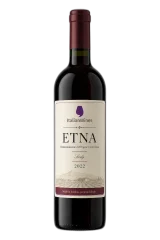
Ogliastra Rosso
the everyday red of Cannonau country


Warm, soft red fruit with a herbal edge. The label may not say Cannonau even when the bottle holds nothing else.
No bottles in stock right now
On the label
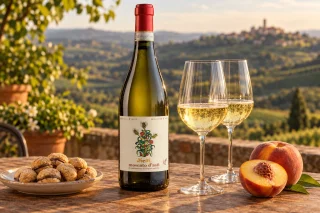
Ogliastra Bianco
fresh whites, sometimes from near-lost native grapes

Fresh and salty in the windy spots, softer on the warm coast. About ten old white grapes were rediscovered here.
No bottles in stock right now
On the label
Ogliastra Rosato
simple, fruity pink for the beach

Fruity and fresh, made for the fish and the pastoral cooking of the coast.
No bottles in stock right now
On the label
Ogliastra Novello
the first red of the year
Bright, grapey and young, red only. Drink it the winter it comes out.
No bottles in stock right now
The boundary
Where it is
Everything on this page, the estates, the bottles, the sub-zones, sits inside this line.
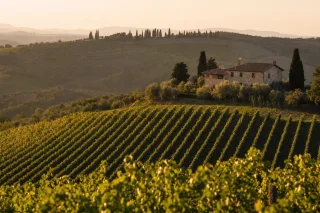
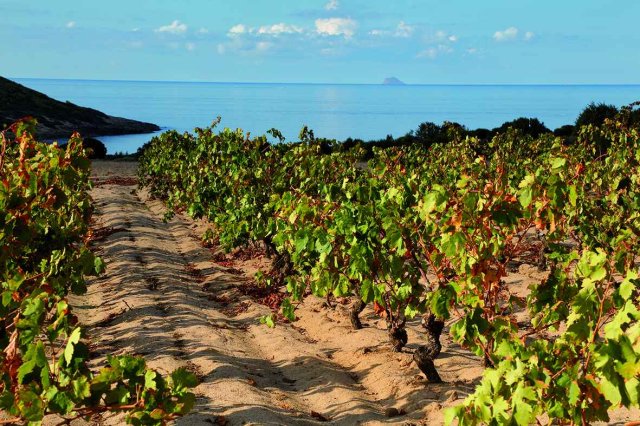
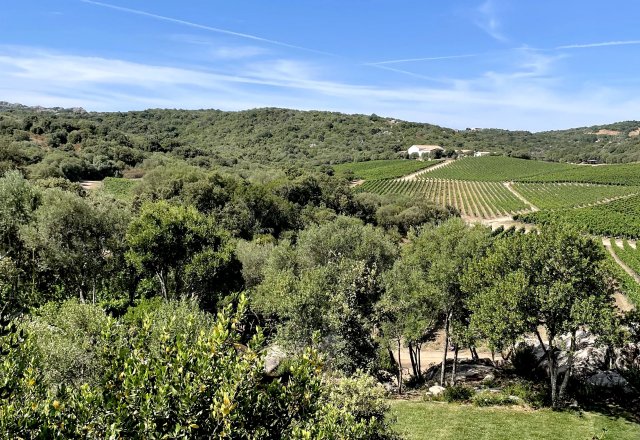
The zone is the old province of Ogliastra: twenty-three communes from Arzana to Villagrande Strisaili, plus Villaputzu and San Vito just south, in the Cagliari province. It runs from the Gennargentu ridge to the Tyrrhenian coast between Baunei and the mouth of the Flumendosa. The vines sit in three kinds of place. The first is the old walled terraces of the Rio Pardu and Rio Quirra valleys around Jerzu and Tertenia. The second is the open coastal valleys of Tertenia, Cardedu and Bari Sardo. The third is the amphitheatre of hills above the Gulf of Tortolì, from 150 metres to over 700.
Inside the zone
Towns worth knowing
Jerzu is the wine town; Tortolì and Arbatax are the port and the beach; Villaputzu and San Vito are the two Cagliari communes inside the line.
In the glass
What it tastes like
Cherry


Strawberry

Black pepper

Tobacco

Leather

Orange peel
The disciplinare
The rules that define it
The same table on every denomination page, one row group per style here, because Ogliastra writes its rules per colour.
 Any grape suited to Sardinia, in the wine's colourOne grape or many, in any shareup to 100%The named grapeNever Cannonau, Vermentino, Monica or the other eight reserved grapesat least 85%Other non-aromatic grapes of the same colourOptional blending partnersup to 15%
Solid means the rules demand it. Striped means optional, up to that amount. The words on the right say the same rule.
Cannonau can be in the bottle but not on the label the grape and ten other island grapes are reserved for their own DOCs.
Twenty-five communes, mountain to sea the old Ogliastra province plus Villaputzu and San Vito.

18 tonnes a hectare for reds and rosés and 19 for whites, far above what a DOC allows.
No superiore, no extra, no selected the rules ban every boastful word on the label.

A step-down for DOC vineyards a grower inside a DOC may sell the same grapes under this label instead.
Ageing and alcohol minimums per tier are in the label guide above.
Cellar doors · in Sardinia
Estates you can visit
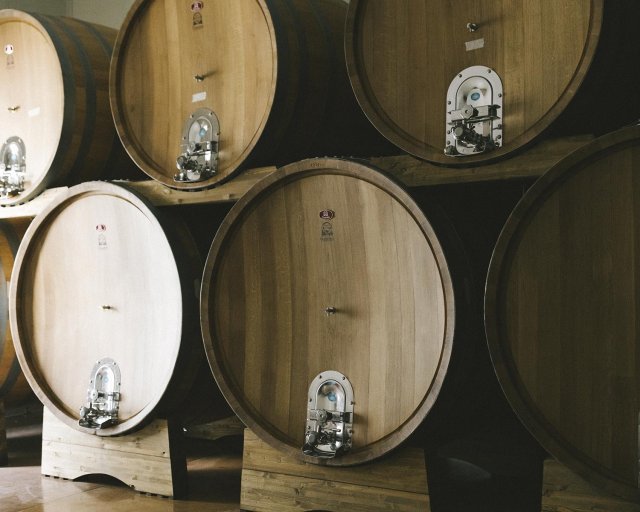
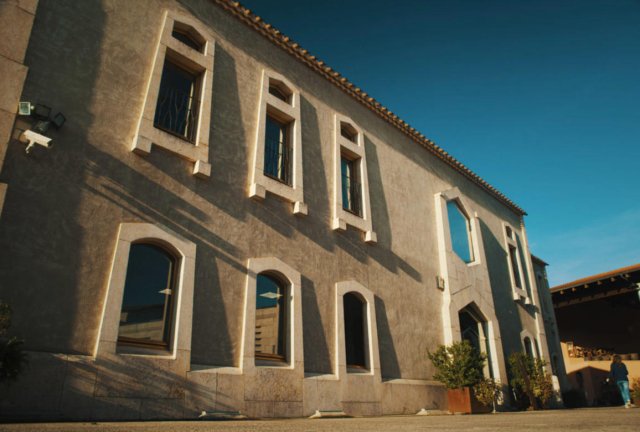
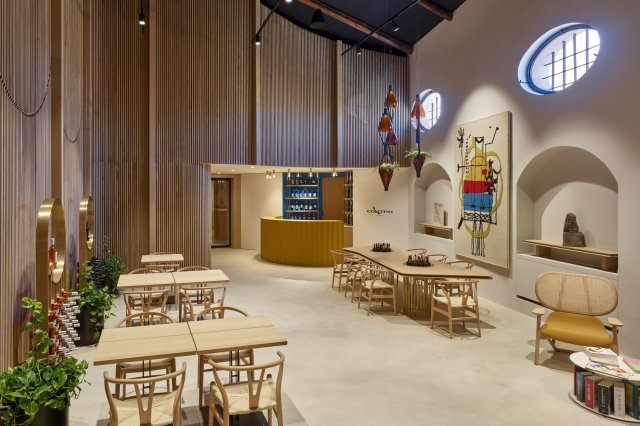
5 working estates with their gates open.

 3
3


No estates match these filters. Clear a filter to see more.
Experiences in the Ogliastra zone
Cellar experiences here average around €42. These are the strongest fits for this page.
An Organic Heart, Wine Tour and Tasting at Vini Contini in Sardinia
Azienda Vinicola Contini Attilio
Join us on a Wine Tour as we take you to the places where our wines are born and matured, and finish with a Tasting of 2 organic wines.
Sinis, the land of Tharros, wine tour and tasting at Vini Contini in Sardinia
Azienda Vinicola Contini Attilio
Immerse in Sinis, the land of Tharros with a unique wine tour and tasting of 4 wines paired with local products at Vini Contini in Sardinia.
The Giants of Mont'e Prama, wine tour and tasting at Vini Contini in Sardinia
Azienda Vinicola Contini Attilio
Discover the Giants, wines dedicated to the impressive sculptures of Mont'e Prama, with our unique tour and tasting with local products.
Vintage provenance
Why there is no vintage chart
No vintage chart is published for Ogliastra IGT. The guides that cover the area rate individual wines, so quality here is tracked producer by producer rather than year by year. Most of it is made to drink young.
Most Ogliastra wine is sold young and drunk young: look for a recent year rather than an old one.
What to check instead
The producer: quality here is tracked estate by estate rather than year by year.
How Ogliastra is made
Any grape suited to Sardinia may go in, as long as its colour matches the wine. A label may name a grape only when that grape makes at least 85% of the wine. Eleven island grapes can never be named here, because each has a Sardinian DOC of its own. They are Cannonau, Vermentino, Monica, Carignano, Girò, Malvasia, Moscato, Nasco, Nuragus, Semidano and Vernaccia. So a red made only from Cannonau is sold here as plain Ogliastra Rosso. Vineyards may crop up to 18 tonnes a hectare for reds and rosés, and 19 for whites. The wine must be made inside the zone. At sale a red needs 11% alcohol, a white 10% and a rosé 10.5%. Novello and frizzante versions are allowed, and the taste may run from dry to sweet. Words like superiore or selected are banned, and there is no ageing rule.
In depth
On the table
What to eat with Ogliastra
Roast suckling pig, malloreddus with sausage ragù and pecorino with pane carasau: the warm, soft reds of Ogliastra are built for the Sardinian table.


In-depth guide
Ogliastra, answered
It means the wine comes from the Ogliastra district on Sardinia's east coast and follows the IGT rules, which are lighter than a DOC's. The label has existed since 1995 and covers reds, whites and rosés, including frizzante and novello versions.
Mostly, yes. Cannonau is the most planted grape in Ogliastra and the one the rulebook calls its signature. But the label can never say Cannonau, so the bottle just reads Ogliastra Rosso.
Because Cannonau already has its own island-wide DOC. The Ogliastra rules bar eleven such grapes from being named on an IGT label: Cannonau, Vermentino, Monica, Carignano, Girò, Malvasia, Moscato, Nasco, Nuragus, Semidano and Vernaccia. Any other Sardinian grape may be named once it makes 85% of the wine.
The DOC is island-wide, must be at least 85% Cannonau and carries the grape's name. Ogliastra IGT is limited to twenty-five communes, may use any Sardinian grape, sets lighter yield and strength rules, and cannot name Cannonau. A Jerzu grower can bottle the same vineyard under either label, and the DOC version may add the Jerzu sub-zone name.
On the east coast of Sardinia, halfway down the island, between the Gennargentu mountains and the sea. Tortolì and its port at Arbatax sit on the gulf at the centre of the zone, and the wine villages are Jerzu, Bari Sardo, Cardedu, Tertenia and Triei.
The reds are warm and soft, with ripe red fruit, a touch of wild herb and spice, and gentle tannin. Wines from the higher, cooler vineyards are a little fresher. Whites are fresh and salty where the wind blows and softer on the warm coast, and the rosés are simple and fruity.
Not at the moment: no UK shop we track lists one. The same growers sell Cannonau di Sardegna DOC in the UK, and the Jerzu wines come from the same hills.
Explore more Sardinia
Same region only: the denominations Ogliastra drinkers reach for next.


