








Wine route
Strada del Vino del Molise
1 day, 70 km loop · 6 stops
Open the driveYour cellar, your trips, and the wines you've been tracking are right where you left them.
New here?
Free, always. Education first, we'll never sell you anything you didn't ask to see.
Already have an account?
Enter the email you signed up with and we'll send a link to choose a new password.
Molise · DOC
Biferno is Molise's coastal red: Montepulciano with a dash of Aglianico, grown on the hills between Campobasso and the Adriatic. The Rosso is dark, soft and velvety, made to drink young. A Riserva waits three years by law and turns garnet and savoury. There is a Rosato and a Trebbiano-based Bianco too.
Decode the label
One denomination, 5 things it can say on the front. Colour first, then the qualifier.
On the label
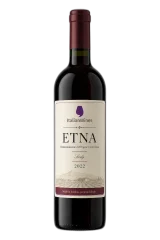
Biferno Rosso
the everyday red of the Molise coast
Ruby, dry and velvety by law: blackberry and plum in the glass, soft tannin, ready young.
In stock from £10.57 See the 3 bottles ↓On the label
Biferno Rosso Superiore
a smaller crop, a degree more
Same blend from a tighter crop, and a full degree stronger by law. Glass bottles only.
No bottles in stock right now
On the label
Biferno Rosso Riserva
three years' patience, 13% or more
The wait turns the ruby to garnet and adds a savoury, leathery note. Glass bottles only.
In stock from £10.75 See the 2 bottles ↓On the label
Biferno Rosato
the same grapes, picked for freshness
Delicate, fruity and dry in the rulebook's own words.
No bottles in stock right now
On the label
Biferno Bianco
Trebbiano from hills up to 600 metres
Straw yellow with a green glint, lightly aromatic and dry.
No bottles in stock right now
The boundary
Everything on this page, the estates, the bottles, the sub-zones, sits inside this line.
Wine route
1 day, 70 km loop · 6 stops
Open the drive
Estate 1
Campomarino
Visits by arrangement
Estate 2
San Martino in Pensilis · Lower Biferno hills
Book online
Estate 3
Montenero di Bisaccia · Coastal hills
Tastings available
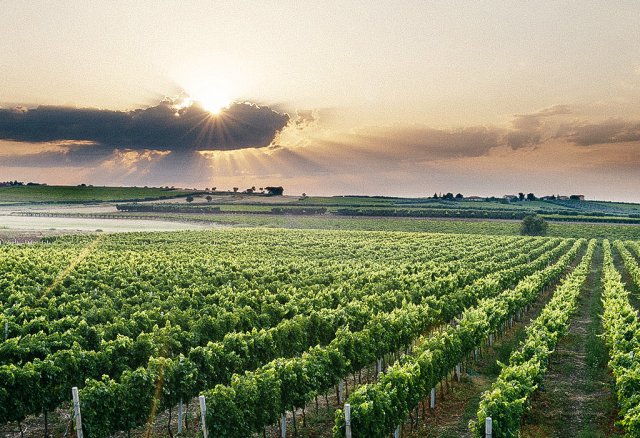
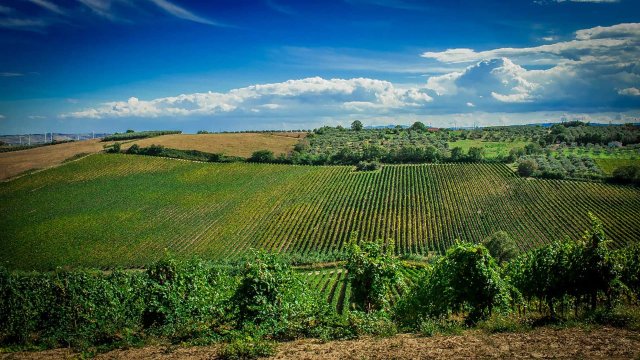
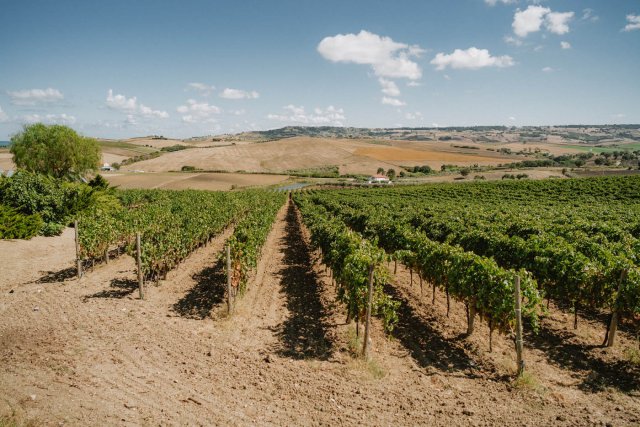
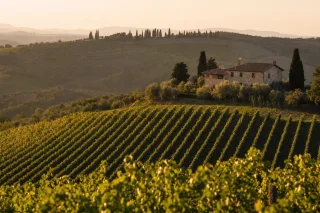
The hills of lower and middle Molise, in the province of Campobasso only. The zone follows the Biferno river from the regional capital down to the Adriatic at Termoli and Campomarino. From there it runs north along the coast to Petacciato and Montenero di Bisaccia. Southwards it reaches the Puglia border at San Martino in Pensilis and Ururi. Forty-two towns and villages qualify, but only their hillsides count: the rulebook stops red vineyards at 500 metres and whites at 600. The best-known estates sit on the coastal strip around Campomarino and Portocannone, where clay and sandy soils face the sea.
Inside the zone
Click or tap a pin for its estate. The numbered pins match the estate cards below.
Towns worth knowing
Campomarino and Portocannone hold the estates most UK buyers meet; Campobasso, the regional capital, is the inland edge of the zone.
In the glass

Leather

Blackberry

Blueberry

Violet

Black cherry

Black pepper

Plum

Smoked meat
The disciplinare
The same table on every denomination page, one row group per style here, because Biferno writes its rules per colour.
 MontepulcianoThe backbone70 to 80%AglianicoCompulsory partner10 to 20%Other red grapes of MoliseNon-aromatic onlyup to 20%
 Trebbiano ToscanoThe base70 to 80%Other white grapes of MoliseMust make up the rest20 to 30%
Solid means the rules demand it. Striped means optional, up to that amount. The words on the right say the same rule.
The blend is fixed in both directions Montepulciano 70 to 80 per cent and Aglianico 10 to 20, so neither grape can be left out.
Hills only, and not too high vineyards stop at 500 metres for the reds and 600 for the white.
Riserva waits three years counted from 1 November after the harvest, at 13 per cent or more, in glass only.
The vintage must be on the label every bottle, base Rosso included.
Up to 14 tonnes a hectare 12.5 for the Superiore, and only 70 per cent of the grapes may become wine.
Ageing and alcohol minimums per tier are in the label guide above.
Editor's cellar
Live prices, compared across 5 UK retailers.
Cellar doors · inside the zone
Three estates inside the zone open their doors today. A small list, honestly kept: only working cellars with confirmed visits appear here.
No estates match these filters. Clear a filter to see more.
Experiences in the Biferno zone
Cellar experiences here average around €47. These are the strongest fits for this page.
Catabbo
Three Tintilia Wines paired with local flavours!
Catabbo
Discover the essence of Molise at Cantine Catabbo, where fine wines and local flavors come together in a serene countryside setting.
Catabbo
A taste of Tintilia and local traditions
Vintage provenance
No denomination-wide vintage chart is published for Biferno. The sources that cover it set out the rules and score individual wines, so quality is tracked producer by producer rather than year by year.
Buy the Rosso young, within three or four years of the vintage on the label. A Riserva has already waited three years and Borgo di Colloredo rates its own for ten.
What to check instead
The producer: quality here is tracked estate by estate rather than year by year.
Every red and pink Biferno starts from the same vineyard mix: 70 to 80 per cent Montepulciano and 10 to 20 per cent Aglianico. Up to 20 per cent of other non-aromatic red grapes grown in Molise may join them. The Bianco is 70 to 80 per cent Trebbiano Toscano, topped up with other local whites. Vines must sit on hillsides no higher than 500 metres for the reds and 600 for the white. The crop is capped at 14 tonnes a hectare, 12.5 for the Superiore, and only 70 per cent of the grapes may become wine. The base Rosso has no ageing rule. The Riserva must wait at least three years from 1 November of the harvest year and reach 13 per cent alcohol. The other minimums are 11.5 per cent for Rosso and Rosato, 12.5 for Superiore and 10.5 for Bianco. The vintage goes on every label, and Riserva and Superiore ship in glass only.
On the table
Lamb, pork and sheep's cheese are the Rosso's natural company; Molise's cavatelli and pampanella sit right beside it, and the Bianco takes the Termoli fish stew.
In-depth guide
Biferno is a DOC from Molise, on Italy's Adriatic coast just south of Abruzzo. The red and the rosé are Montepulciano blended with Aglianico; the white is based on Trebbiano Toscano. It takes its name from the Biferno river, the largest in the region.
By law 70 to 80 per cent Montepulciano and 10 to 20 per cent Aglianico, with up to 20 per cent of other non-aromatic red grapes grown in Molise. The same mix makes the Rosato, the Superiore and the Riserva.
At least three years, counted from 1 November of the harvest year, and it must reach 13 per cent alcohol. The base Rosso has no ageing rule at all, and no type has to see oak.
Dark ruby, dry and velvety, with blackberry and plum fruit and soft tannin. The rulebook itself calls it velvety and properly tannic. A Riserva turns garnet and picks up a savoury, leathery edge.
Lamb, pork and sheep's cheese. In Molise that means cavatelli, pampanella (pork roasted with chilli) and lamb with cheese and egg. The Rosso's soft tannin and dark fruit suit them all, and the Bianco takes the fish stew of Termoli.
In 42 towns and villages of the province of Campobasso, on hills below 500 metres. The zone runs from the regional capital down the Biferno valley to Termoli, then along the coast to the Puglia border. The best-known estates sit around Campomarino and Portocannone, a few miles from the sea.
No, but they are close cousins. Both are Montepulciano-led reds from the Adriatic side of the Apennines. Biferno adds a compulsory share of Aglianico and comes from the Molise coast, one region to the south.
It is one of the cheaper Italian DOC reds on UK shelves. At the time of writing the bottles listed here run from about £10 to £21, with the Riserva often costing little more than the Rosso.
Explore more Molise
Same region only: the denominations Biferno drinkers reach for next.