






Wine route
Strada del Vino del Molise
1 day, 70 km loop · 6 stops
Open the driveYour cellar, your trips, and the wines you've been tracking are right where you left them.
New here?
Free, always. Education first, we'll never sell you anything you didn't ask to see.
Already have an account?
Enter the email you signed up with and we'll send a link to choose a new password.
Molise · DOC
Tintilia del Molise is a dark, peppery red from Molise, Italy's second-smallest region. The grape is Tintilia, grown almost nowhere else and nearly lost after the war. Since 2011 the rules demand 95% Tintilia from hill vineyards above 200 metres. Expect plum, black pepper and firm tannin, from about £18 a bottle.
Decode the label
One word on the front changes the ageing, the strength and the price.
On the label
Tintilia del Molise Rosso
the everyday face of the grape
Dark ruby with violet tints, plum and pepper on the nose, a warm middle and firm tannin; the style most estates make and most shops stock.
In stock from £17.52 See the 3 bottles ↓On the label
Tintilia del Molise Rosato
the pink version, rare in the UK
The same grape pressed early. Gambero Rosso rates Cipressi's Collequinto and Tenute Salvatore's Ros-is, but neither reaches UK shelves today.
No bottles in stock right now
On the label
Tintilia del Molise Rosso Riserva
two winters in the cellar
Garnet with orange tints and a spicier nose by law; a cap of 55% wine from grape keeps it concentrated.
In stock from £39 See the 1 bottle ↓The boundary
Everything on this page, the estates, the bottles, the sub-zones, sits inside this line.
Wine route
1 day, 70 km loop · 6 stops
Open the drive
Estate 1
San Martino in Pensilis · Adriatic hills
Book online
 Tintilia
Estate 2
Montenero di Bisaccia · hills above the Trigno
Tastings available
Tintilia
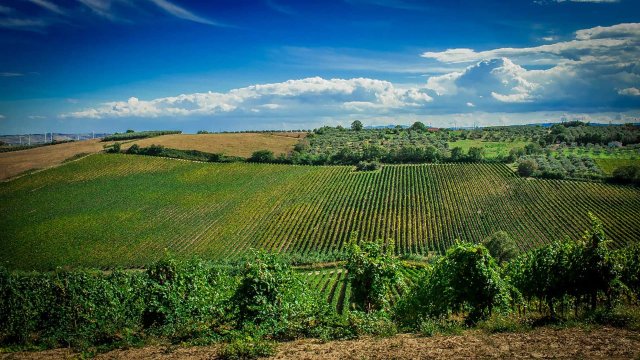
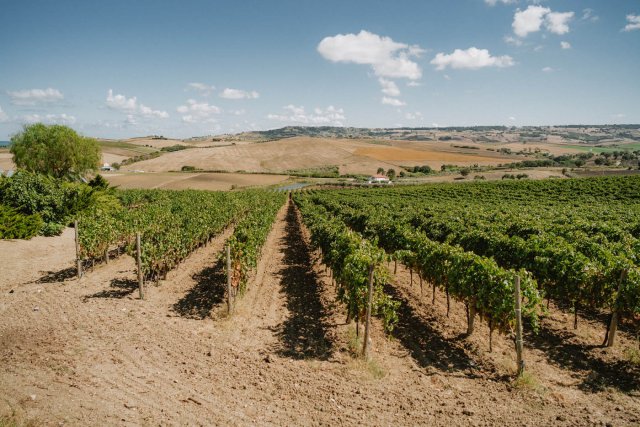
The zone is the hill country of central and upper Molise: 59 communes in Campobasso province and 17 in Isernia province. It runs from Agnone in the north to Venafro in the west and the Adriatic-facing hills around Larino and Ururi. Only vineyards at 200 metres or higher qualify, so the coastal plain around Termoli is out, though wine may be made and aged there. Molise is more than half mountain and the rest hill, on clay, marl and limestone that drain well. Summers are warm and nights cool at this height, which is what keeps the grape's pepper and freshness.
Inside the zone
Click or tap a pin for its estate. The numbered pins match the estate cards below.
Towns worth knowing
Campobasso, the regional capital, sits in the middle of the zone; the estates whose Tintilia you can buy cluster in the eastern hills between Larino and the coast.
In the glass

Plum

Cherry

Black pepper

Liquorice

Spicy

Leather
The disciplinare
The same table on every denomination page, straight from the production rules.
TintiliaThe whole story, native to Moliseat least 95%Other non-aromatic local grapesA splash at most, rarely usedup to 5%Solid means the rules demand it. Striped means optional, up to that amount. The words on the right say the same rule.
At least 95% Tintilia the other 5% may only be non-aromatic grapes grown in Campobasso and Isernia provinces.
Hills only, 200 metres and up a vineyard below that line cannot join the register, however good the grape.
Riserva means two years counted from 1 November after the harvest, with no rule on wood, and a 13% floor instead of 11.5%.
Eight tonnes a hectare, every type and only 55% of a Riserva's grapes may become wine, against 70% for Rosso and Rosato.
The vintage goes on every label words such as superiore or vecchio are banned, and a Riserva must be sold in glass under a cork stopper.
Ageing and alcohol minimums per tier are in the label guide above.
Editor's cellar
Live prices, compared across 3 UK retailers.
Cellar doors · inside the zone
Two estates inside the zone open their doors today. A small list, honestly kept: only working cellars with confirmed visits appear here.
No estates match these filters. Clear a filter to see more.
Experiences in the Tintilia del Molise zone
Cellar experiences here average around €47. These are the strongest fits for this page.
Catabbo
Three Tintilia Wines paired with local flavours!
Catabbo
Discover the essence of Molise at Cantine Catabbo, where fine wines and local flavors come together in a serene countryside setting.
Catabbo
A taste of Tintilia and local traditions
Vintage provenance
No denomination-wide vintage chart is published for Tintilia del Molise. Gambero Rosso and the other guides review individual wines rather than rating the appellation year by year, so quality here is tracked producer by producer.
Most Rosso is made to drink within two to four years of the harvest. The Riserva's two years in the cellar and its 13% floor point to a wine that can go a decade.
What to check instead
The producer: quality here is tracked estate by estate rather than year by year.
The rules are short and strict. At least 95% of the grapes must be Tintilia. The rest may only be non-aromatic red grapes grown in the provinces of Campobasso and Isernia. Vines must stand on hills at 200 metres or higher, and each hectare may give no more than eight tonnes of grapes. The wine is made and aged inside the zone, with Campomarino and Termoli on the coast as the two allowed exceptions. A Rosso needs 11.5% alcohol and has no set ageing, so the estate decides when to sell it. A Riserva must reach 13% and wait two years, counted from 1 November after picking. The law says nothing about barrels. Only 55% of a Riserva's grape weight may become wine, against 70% for Rosso and Rosato. The Rosato is dry, with no more than 10 grams of sugar a litre. Every label carries the vintage.
On the table
Tintilia wants lamb, grilled meat and Molise's own agnello cacio e ova; its pepper and firm tannin need fat and char, not delicate fish.


Molise's flagship Easter lamb, slow-braised in white wine with garlic and parsley, then finished off the heat by stirring through a beaten mixture of eggs and grated pecorino cacio.
In-depth guide
It is a red wine from Molise made almost entirely from the Tintilia grape, which grows nearly nowhere else. The denomination, a DOC since 2011, covers a Rosso, a Rosso Riserva and a Rosato. The wine must be at least 95% Tintilia, from hill vineyards at 200 metres or higher in the provinces of Campobasso and Isernia.
Dark ruby with violet tints, plum and sour cherry on the nose, black pepper and liquorice behind them. It is full in the mouth, warm, with firm but soft-edged tannin and enough acidity to stay fresh. The Riserva turns garnet and spicier with age. Gambero Rosso describes it as warm, with good structure and elegant spice over red fruit.
No proven relative. Research at the University of Molise showed it is a native grape and not the Sardinian Bovale it was once taken for. The name comes from the Spanish tinto, red. One theory says the Bourbon rulers brought it in the 1700s, and one DNA study suggests a possible cousin in Somontano in northern Spain. Nothing is settled.
Drink most Rosso within two to four years of the harvest, when the fruit and pepper are brightest. A Riserva has already spent two years in the cellar and must reach 13% alcohol, so it can go to eight or ten years. Italian critics note its acidity and tannin suit medium to long ageing.
Lamb, grilled red meat and slow-cooked stews. In Molise it goes with agnello cacio e ova, lamb finished with cheese and egg, and pampanella, pork rubbed with chilli and vinegar. The pepper and firm tannin want fat and char; keep it away from delicate fish.
Two years of ageing, counted from 1 November after the harvest, and at least 13% alcohol against 11.5% for the plain Rosso. The rules do not demand wood, so the cellar chooses. A Riserva must also be sold in glass under a cork stopper, while Rosso and Rosato may even come in a bag-in-box of two litres or more.
Because the grape ripens best with cool nights and steady breezes, which the Molise hills give and the coastal plain does not. Only vineyards at 200 metres or higher can join the DOC register. Tenimenti Grieco named its Tintilia 200 Metri after this rule; its own vines sit at 300 metres between Larino and Ururi.
Explore more Molise
Same region only: the denominations Tintilia del Molise drinkers reach for next.