






Wine route
Strada del Vino della Valtellina
2 days, 67 km · 8 stops
Open the driveYour cellar, your trips, and the wines you've been tracking are right where you left them.
New here?
Free, always. Education first, we'll never sell you anything you didn't ask to see.
Already have an account?
Enter the email you signed up with and we'll send a link to choose a new password.
Lombardy · DOC
Rosso di Valtellina is the young, light Nebbiolo of the Lombardy Alps. The grapes grow on stone terraces above the River Adda, north of Lake Como, where the growers call the grape Chiavennasca. Six months in the cellar and it is on sale: pale ruby, fresh, with cherry and violet and a gentle grip.
Decode the label
One word on the front changes the ageing, the strength and the price.
On the label
Rosso di Valtellina
the one and only tier
The label may add Nebbiolo or Chiavennasca, but no boosting word: no Riserva, no Superiore, no vigna unless the plot is registered.
In stock from £20
The boundary
Everything on this page, the estates, the bottles, the sub-zones, sits inside this line.
Wine route
2 days, 67 km · 8 stops
Open the drive
Estate 1
San Giacomo di Teglio · the Valgella end
Tastings available
Estate 2
Chiuro · east of Sondrio
Tastings available
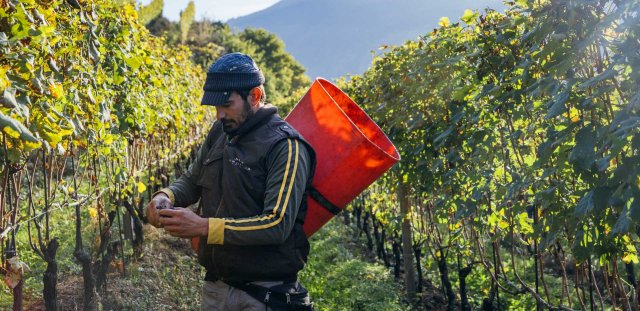
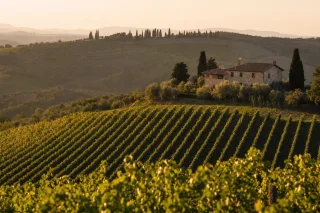
A thin ribbon of terraces on the sunny side of one alpine valley. The vines climb the north bank of the River Adda, which faces south, from Ardenno in the west to Tirano in the east. They sit between the main valley road and 700 metres. At Piateda and Ponte in Valtellina the vineyards cross the road and run down to the river. Two pockets sit on the shaded left bank, at Stazzona, a hamlet of Villa di Tirano, and at Albosaggia, and stop at 600 metres. It is the same slope that grows Valtellina Superiore. The plain DOC simply takes in the terraces above the DOCG zones, the alluvial fans, and any grapes a grower chooses to sell young.
Inside the zone
Click or tap a pin for its estate. The numbered pins match the estate cards below.
Towns worth knowing
Sondrio is the hub. The zone runs the whole length of the valley's sunny bank from Ardenno to Tirano, plus two left-bank pockets at Albosaggia and Stazzona.
In the glass
Cherry

Violet

Rose petal
Red forest berries

Strawberry

Black pepper

Liquorice

Leather
The disciplinare
The same table on every denomination page, straight from the production rules.
 NebbioloChiavennasca, the mountain name for the same grapeat least 90%Other red grapes of LombardyNon-aromatic varieties onlyup to 10%
Solid means the rules demand it. Striped means optional, up to that amount. The words on the right say the same rule.
Six months, then it can be sold counted from 1 December after the harvest; wood is allowed but never required.
No Riserva, no Superiore the rules ban every boosting word on this label, so a longer-aged wine is sold as Valtellina Superiore DOCG.
Slopes only, stony ground only flat land is barred, and a new vineyard needs at least 3,500 vines per hectare.
10 tonnes per hectare and no more than 7,000 litres of wine from each; above 7,500 the whole lot loses the name.
The vintage must be on the label in a dark Bordeaux or Burgundy bottle, never under a crown cap.
Ageing and alcohol minimums per tier are in the label guide above.
Editor's cellar
Live prices, compared across 5 UK retailers.
Cellar doors · inside the zone
Two estates inside the zone open their doors today. A small list, honestly kept: only working cellars with confirmed visits appear here.
No estates match these filters. Clear a filter to see more.
Vintage provenance
No denomination-wide vintage chart is currently published for this wine. Current sources define the denomination and review individual wines, but quality is tracked producer by producer rather than through a maintained annata table.
Most bottles on sale are the latest one or two harvests. Drink within three years of the vintage. A few growers hold theirs back a year longer, and the wine copes with that.
What to check instead
The producer: quality here is tracked estate by estate rather than year by year.
The rules are short. At least 90% of the grapes must be Nebbiolo, which the valley calls Chiavennasca. The rest must be other red grapes grown in Lombardy. The vines have to sit on sloping, stony, well-exposed ground. Flat land is out. A new vineyard needs at least 3,500 vines per hectare, and a hectare may give 10 tonnes of grapes and no more than 7,000 litres of wine. The wine waits six months, counted from 1 December after the harvest, so the first bottles reach shops in June. Wood is allowed but not required. The bottle must show the vintage and be dark glass in a Bordeaux or Burgundy shape. The label may add the grape name, Nebbiolo or Chiavennasca, but never Riserva or Superiore. A longer-aged wine from the same slope is sold as Valtellina Superiore DOCG instead.
On the table
Light grip and fresh acidity make it the valley's lunch red: pizzoccheri and sciatt sit well with it. So do a mushroom risotto or a simple cotoletta.
In-depth guide
Rosso di Valtellina is the entry-level red of the Valtellina, an alpine valley in Lombardy. It is at least 90% Nebbiolo, known locally as Chiavennasca, and it may be sold six months after the harvest. It is lighter and fresher than Valtellina Superiore DOCG from the same terraces.
Ageing and the zone. Rosso di Valtellina waits six months and may come from any terrace in the zone. Valtellina Superiore DOCG waits two years, one of them in wood. Its zone is smaller and sits inside the Rosso's, and it holds five named sub-zones: Maroggia, Sassella, Grumello, Inferno and Valgella. The valley's consortium says the Rosso comes from terraces above 650 metres, the gravel fans, or grapes a grower prefers to sell young. The rules also ban the words Superiore and Riserva on a Rosso label.
Yes. The rulebook allows both names, and a label may also add the grape, Nebbiolo or Chiavennasca. Producers mostly print Rosso di Valtellina.
Nebbiolo, at least 90% of the blend. In the Valtellina it is called Chiavennasca. Up to 10% of other red grapes grown in Lombardy may join it, as long as they are not aromatic varieties.
It is made to drink young. Most bottles are at their best within two or three years of the harvest, when the cherry and violet fruit is freshest. Some growers hold theirs back a year longer and it copes, but it is not a wine to cellar.
Valley food first: pizzoccheri and sciatt. Its light grip and fresh acidity also suit a mushroom risotto, a cotoletta or plain roast meat. Serve it at 16 to 18 degrees.
Most bottles on UK shelves sit between about £20 and £35. Growers sell it for less than their own Valtellina Superiore.
Explore more Lombardy
Same region only: the denominations Valtellina Rosso/Rosso di Valtellina drinkers reach for next.