






Wine route
Strada del Vino della Valtellina
2 days, 67 km · 8 stops
Open the driveYour cellar, your trips, and the wines you've been tracking are right where you left them.
New here?
Free, always. Education first, we'll never sell you anything you didn't ask to see.
Already have an account?
Enter the email you signed up with and we'll send a link to choose a new password.
Lombardy · DOCG
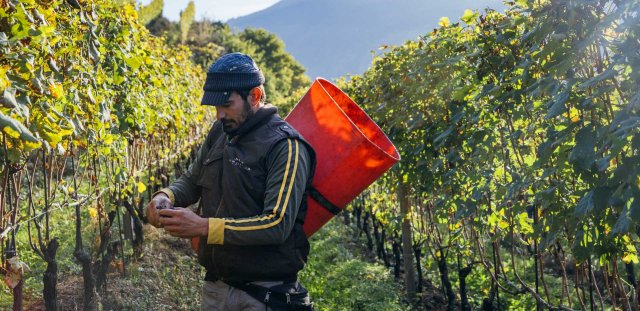
Sforzato di Valtellina is Nebbiolo made from grapes dried for months in the alpine cold. Growers on the terraces above the River Adda pick the best bunches, rest them on racks until at least December, then press them into a dry, warm, full-bodied red. Sfursat is the local spelling of the same wine.
Decode the label
One word on the front changes the ageing, the strength and the price.
On the label
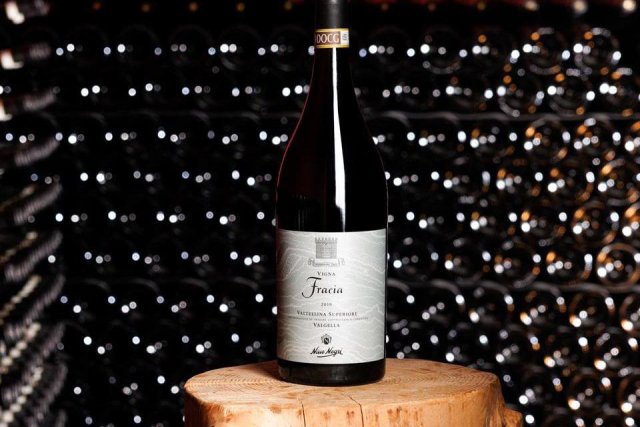
Sforzato di Valtellina
one wine, two spellings
Sfursat and Sforzato on a label are the same DOCG; the rulebook allows both names.
In stock from £34.90
The boundary
Everything on this page, the estates, the bottles, the sub-zones, sits inside this line.
Wine route
2 days, 67 km · 8 stops
Open the drive
Estate 1
Chiuro
Tastings available
Estate 2
San Giacomo di Teglio
Tastings available
The zone is the sunny north bank of the River Adda, from Ardenno in the west to Tirano in the east. It takes every slope between the main valley road and the 700-metre line. At Piateda and Ponte in Valtellina the vineyards run below the road down to the river. Two pockets on the shaded south bank count too, Stazzona above Villa di Tirano and Albosaggia, up to 600 metres. It is much the same terrace country as Valtellina Superiore, seen from the drying room: any steep, stony, well-exposed plot in the zone can make Sforzato.
Inside the zone
Click or tap a pin for its estate. The numbered pins match the estate cards below.
Towns worth knowing
Eighteen communes share the zone along the valley road from Ardenno to Tirano. Chiuro is home to Nino Negri and Rainoldi, the two names most bottles carry.
In the glass
Cherry

Liquorice

Black pepper

Leather
Vanilla

Rose petal

Violet

Burnt toast
The disciplinare
The same table on every denomination page, straight from the production rules.
 Nebbiolo (Chiavennasca)The whole wine, picked ripe and driedat least 90%Other red grapes of LombardyNon-aromatic varieties onlyup to 10%
Solid means the rules demand it. Striped means optional, up to that amount. The words on the right say the same rule.
The grapes dry first on racks in airy rooms from harvest until at least 1 December, and nothing may be added to the must.
20 months before sale 12 of them in wood, counted from 1 April after the harvest.
14% is the floor and no more than 8 tonnes of grapes per hectare may go to the drying room.
Only 40 hectolitres a hectare anything over that, up to 44, is sold as plain Rosso di Valtellina.
No Riserva, no Superiore the rulebook bans both words: one wine, one name, two spellings.
Ageing and alcohol minimums per tier are in the label guide above.
Editor's cellar
Live prices, compared across 6 UK retailers.
Cellar doors · inside the zone
Two estates inside the zone open their doors today. A small list, honestly kept: only working cellars with confirmed visits appear here.
No estates match these filters. Clear a filter to see more.
Vintage provenance
No denomination-wide vintage chart is published for Sforzato di Valtellina. The growers' consortium, the body that promotes the Valtellina wines, publishes no year ratings. The one decade review, from AIS Lombardia, covers all Valtellina reds and stops at 2010. Quality is tracked producer by producer.
Buy the current release and give it two to five more years, or hold a strong year for a decade. The drying and the 20 months in the cellar mean it is never sold raw.
What to check instead
The producer: quality here is tracked estate by estate rather than year by year.
The rulebook starts in the vineyard. At least 90% of the blend is Nebbiolo, called Chiavennasca here, and only steep, stony, well-exposed plots qualify. Growers may pick no more than 8 tonnes of grapes per hectare for drying. The bunches must reach 11% potential alcohol at harvest and 14% after drying. Pressing cannot begin before 1 December. No sugar or concentration may be added: the drying does that work. From those grapes a hectare may give at most 40 hectolitres of wine, about 5,300 bottles. Every wine then rests for 20 months, at least 12 of them in wooden casks, and the clock starts on 1 April after the harvest. The finished wine must reach 14% alcohol. Bottles show the vintage, use dark glass and carry the name in Italian only. The words Riserva and Superiore are banned on the label.
On the table
Warm, soft and dry, it wants rich alpine food: pizzoccheri, braised and slow-cooked meat, mushroom risotto and aged cheese at the end of the meal.
In-depth guide
Sforzato means forced. The grapes are picked ripe, then dried on racks through the winter until they lose about 30% of their water. That forces the sugar up, and the wine gains weight and warmth. Sfursat is the local dialect form of the same word, and both names are allowed on the label.
No. Sforzato di Valtellina is a dry red. The drying concentrates the sugar, but all of it ferments into alcohol, which is why the rulebook sets a minimum of 14%. What you taste is ripe and dried fruit, not sweetness.
Both are dry reds made from grapes dried after harvest. Sforzato is Nebbiolo grown on alpine terraces in Lombardy, while Amarone is made from Corvina and its partners in the Veneto. Sforzato must rest 20 months, at least 12 of them in wood, and reach 14% alcohol.
Yes. Sforzato di Valtellina and Sfursat di Valtellina are two spellings of one DOCG, and a producer may use either. Nino Negri labels its wine Sfursat, other houses write Sforzato, and the rules behind both bottles are identical.
Rich, slow-cooked dishes. In the valley it goes with pizzoccheri, the buckwheat pasta baked with butter and cheese, and with braised beef. Ossobuco, mushroom risotto and aged hard cheeses all work, because the wine is soft, full and dry with a fresh edge.
Serve it at 16 to 18 degrees and open it an hour or two ahead. The 20 months in the cellar mean it is never sold raw, and a good bottle will keep for a decade. Every label must show the vintage, so you always know how old the wine is.
The drying loses about 30% of the water in the grapes, so each vine gives less wine, and the rulebook caps the yield at 40 hectolitres per hectare. Add 20 months in the cellar before sale, and the price sits above Valtellina Superiore from the same terraces.
Explore more Lombardy
Same region only: the denominations Sforzato di Valtellina/Sfursat di Valtellina drinkers reach for next.