







Estate 1
Campochiarenti
Visit →San Gimignano
Tastings available
Your cellar, your trips, and the wines you've been tracking are right where you left them.
New here?
Free, always. Education first, we'll never sell you anything you didn't ask to see.
Already have an account?
Enter the email you signed up with and we'll send a link to choose a new password.
Tuscany · DOCG
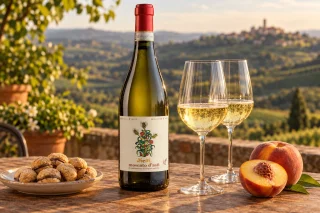
Vernaccia di San Gimignano is the crisp white of Tuscany's tower town, and the first wine in Italy to be granted a DOC, in 1966. Made from at least 85% Vernaccia on the yellow sand hills around one town, it is dry, lemony and finishes on bitter almond. The Riserva version adds time and a little oak.
Decode the label
One word on the front changes the ageing, the strength and the price.
On the label
Vernaccia di San Gimignano DOCG
the crisp base wine
Steel-made, lemon and almond, drunk within three years. The white of the piazza, at its best from a serious estate.
In stock from £9.50 See the 12 bottles ↓On the label
Riserva
a rest, a little oak, five years
Broom, jasmine and honey over the same bitter-almond finish. One of the few Italian whites with a legal Riserva tier.
In stock from £14.60 See the 5 bottles ↓The boundary
Everything on this page, the estates, the bottles, the sub-zones, sits inside this line.
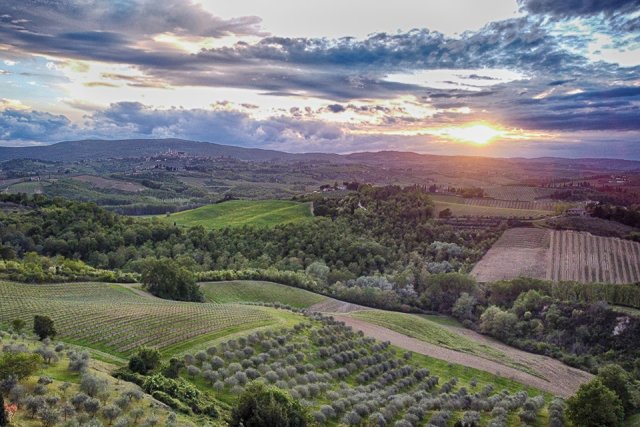
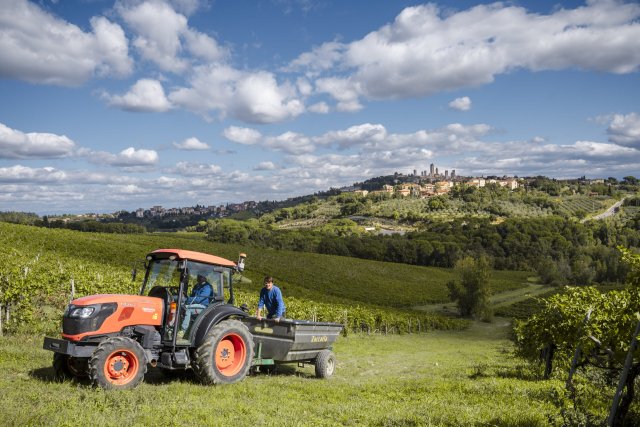
The zone is one municipality: the hills that ring San Gimignano's towers, between Siena and Florence. Vineyards may stand anywhere on those hills below 500 metres. The best face south and west on the yellow sand that gives the wine its stony edge. There are no sub-zones. Estate and vineyard names on the label do the work instead.
Inside the zone
Click or tap a pin for its estate. The numbered pins match the estate cards below.
Towns worth knowing
The whole zone lies inside the municipality of San Gimignano. The estates are spread across its hamlets, from Cusona and Pancole to Ulignano and Santa Margherita.
In the glass
Almond
Lemon

Chamomile

Green Apple

Wet stones

Jasmine
The disciplinare
The same table on every denomination page, straight from the production rules.
 Vernaccia di San GimignanoThe grape, and the whole pointat least 85%Other non-aromatic whitesSauvignon and Riesling capped at 10% togetherup to 15%
Solid means the rules demand it. Striped means optional, up to that amount. The words on the right say the same rule.
Yields are capped at 9 tonnes per hectare and 3 kg per vine, low for a white this affordable.
Aromatic grapes are banned from the blend so the wine tastes of Vernaccia, not of Moscato or Traminer.
Made, aged and bottled inside the zone with a DOCG tasting panel before release.
Ageing and alcohol minimums per tier are in the label guide above.
Editor's cellar
Live prices, compared across 8 UK retailers.
Cellar doors · inside the zone
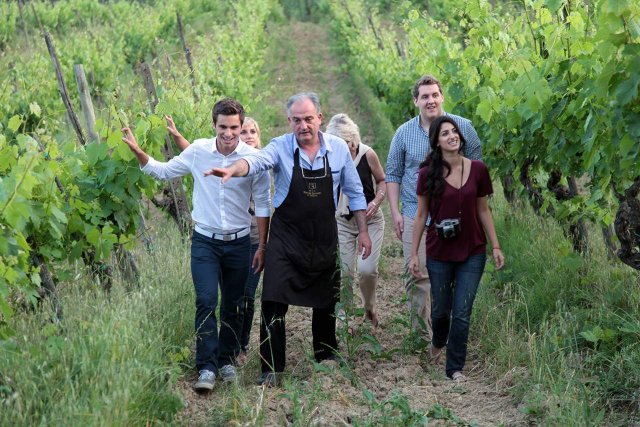
Three estates inside the zone open their doors today. A small list, honestly kept: only working cellars with confirmed visits appear here.
No estates match these filters. Clear a filter to see more.
Experiences in the Vernaccia di San Gimignano zone
Cellar experiences here average around €74. These are the strongest fits for this page.
Palagetto
Tasting of five wines from the Palagetto estate, accompanied by a platter of typical Tuscan products in San Gimignano. Program: The experien…
Palagetto
Immerse yourself in Tuscan origins with our "Tosca" experience!!! Lunch featuring Tuscan products and specialties with a tasting of 5 wines …
Palagetto
Immerse yourself and relax among the rows of Vernaccia di San Gimignano, tasting local products and typical wines: our basket will make you …
Vintage provenance
No denomination-wide vintage chart is currently published for Vernaccia di San Gimignano. The consortium describes the wine rather than rating the years, and quality is tracked producer by producer. The base wine is made to drink within three years in any case.
Buy the newest base wine; give a Riserva two or three years.
What to check instead
The producer: quality here is tracked estate by estate rather than year by year.
The rules are short. Every grape must come from the hills inside the municipality of San Gimignano, in the province of Siena, below 500 metres. The soil is the yellow sand and sandy clay the town sits on. At least 85% must be Vernaccia di San Gimignano. Other non-aromatic white grapes may fill the rest, with Sauvignon and Riesling capped at 10% between them. Aromatic grapes such as Moscato and Traminer are banned outright. Yields are capped at 9 tonnes a hectare. The base wine has no minimum ageing and is usually made in steel. It reaches the shelf in the spring after the harvest at 11.5% or more. The Riserva must reach 12.5%. It rests at least 11 months from the 1st of January after the harvest, then three more months in bottle. Wood is allowed at every stage but never required. Every bottle must be made, aged and bottled inside the zone. As a DOCG, each lot passes a tasting panel before release.
On the table
Fried fish, seafood pasta and Tuscan bread soups; the almond finish likes salt and the acidity cuts oil.
In-depth guide
Dry and crisp: lemon, green apple and chamomile, a stony middle and a bitter-almond finish. The base wine is light to medium-bodied and made without oak. The Riserva is rounder, with broom, jasmine and honey from a rest on its yeast and a little wood.
Yes. It was granted the first DOC in Italy on 3 March 1966 and became a DOCG on 9 July 1993. The town's own records show the wine being taxed in 1276.
At least 85% Vernaccia di San Gimignano. Other non-aromatic white grapes can make up the rest, with Sauvignon and Riesling capped at 10% between them. Aromatic grapes such as Moscato, Traminer and Malvasia di Candia are not allowed.
The Riserva must reach 12.5% alcohol instead of 11.5%, rest at least 11 months from the January after the harvest and spend three more months in bottle. Most Riservas also see some oak, so they are rounder and keep longer.
The base wine is best within three years of the vintage. Riserva and single-vineyard bottles keep five years or more and gain honey and nut notes. Serve the young wine at 8 to 10C and a Riserva at 10 to 12C.
Fried fish and seafood, pappa al pomodoro, a risotto with San Gimignano saffron, rabbit cooked in the wine itself, and simple roast chicken for a Riserva. The acidity handles oil and batter; the almond finish likes salt.
Explore more Tuscany
Same region only: the denominations Vernaccia di San Gimignano drinkers reach for next.






 Multiple varieties permitted


