








 54 wines
 23 denominations








Chardonnay is a white grape with a clear Italian role.
Wines
626
Acidity
Body
White Grape · Calabria
Mantonico Bianco is Calabria's ancient Ionian white: honeyed passito tradition on one side, Librandi's rich dry Efeso on the other, and a DNA-confirmed parent of Gaglioppo and Nerello Mascalese.
Mantonico Bianco is one of Calabria's oldest white grapes, at home on the Ionian coast around the town of Bianco. It makes honeyed passito and, in Librandi's Efeso, a rich dry white. DNA work adds a twist: with Sangiovese, this grape is a parent of Gaglioppo and Nerello Mascalese.
Your cellar, your trips, and the wines you've been tracking are right where you left them.
New here?
Free, always. Education first, we'll never sell you anything you didn't ask to see.
Already have an account?
Enter the email you signed up with and we'll send a link to choose a new password.
Clearing it up
Ionian Calabria, around the town of Bianco
Marche and Abruzzo, with pockets in Calabria
The anchor fact: Italy's vine register lists Calabria's Mantonico Bianco (code 494) and central Italy's Montonico Bianco as separate varieties, and records how the name mix-up delayed the Calabrian grape's recognition.
Taste · Where it sits
Forget scores out of five. Here’s Mantonico Bianco described against grapes you already know.
Fuller than Calabria's Greco and closer to a barrique-raised Fiano in weight; Librandi calls Efeso complex and opulent, and the grape earns it.
No red-wine grip: what structure you feel in a Mantonico is acidity and extract, not skin tannin.
Picked into October yet still zesty; the register notes its pronounced acidity, the trait that keeps even the dried-grape passito versions fresh.
Efeso is dry yet reads honeyed; old Locride growers exploited that sweet-and-sour berry by drying it, long before anyone made it dry.
Key flavours




The map
Mantonico Bianco is full-bodied, crisp, fresh acidity, mapped against other white grapes you can buy. The closer a grape sits, the more its weight and freshness resemble Mantonico Bianco.
Is this for you?
Reach for it when…
Maybe skip it if…
Serving guide
Serve at
10-12°C
10-12C for the dry style; colder mutes the honey and almond.
Decant
Not needed
No decanter, but give it five minutes in the glass: it unfurls.
Glass
Chardonnay Glass
A Chardonnay-style bowl; a small tulip hides the opulence.
Drink within
2-3 days
Two or three days open; day two is often the best of it.
Cellar
3-5 years
Three to five years for the dry wines; a passito keeps for a decade.
On the table
Start with the home-table matches that made the grape, then browse the full cuisine library.

Ionian fish, Ionian white
Grilled tuna wants a white with weight, and Mantonico brings it, while the late-harvest acidity does the lemon-wedge job over the char.

Honey meets squash
The honeyed apricot echoes sweet pumpkin, and the flinty edge stops the pairing sliding into dessert; a leaner white would vanish into the butter.

Sweet against blue
This is the passito's moment: dried-grape honey against salty gorgonzola, with enough acidity to reset the palate; the almond finish picks up the walnuts.
Buy it · three to start with
A curated trio across the price range, then every Mantonico Bianco on sale in the UK right now.
The sweet spot
 2 retailers
Calabria
2 retailers
£14.90
+ delivery
Why this one: The wine that revived the grape: dry, opulent Mantonico from Tenuta Rosaneti, all peach, apricot and flint.
Special occasion
 1 retailer
Calabria
1 retailer
£23.60
+ delivery
Why this one: The centuries-old sweet face of the same grape: dried-berry honey and candied fruit, kept fresh by that late-harvest acidity.
2 bottles
Where it grows

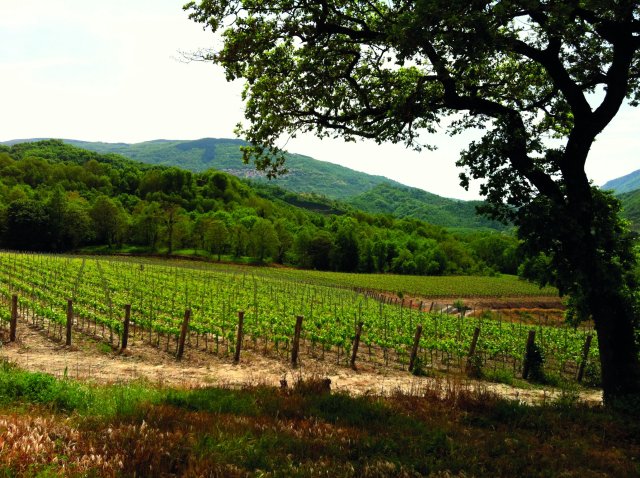
Calabria is the toe of Italy where Cirò Rosso stands as the south's most historic red, framed by the Pollino, the Sila, and 780 km of two-sea coast.
The terroir
An Ionian grape that never strayed far from home.
Locride, around Bianco
Reggio Calabria's Ionian toe
The historic heartland, where it is dried for passito in the same hills as Greco di Bianco DOC.
Val di Neto hills
Rocca di Neto and Casabona, near Cirò
Librandi replanted it at Tenuta Rosaneti on limestone and clay, picking in early October for the dry Efeso.
Producers
Every estate on the site that works with Mantonico Bianco.
Editorial
Vines called Mantonico have been written about since the thirteenth century, and the white one settled on Calabria's Ionian toe, in the Locride. Its second name, Mantonico di Bianco, comes from the town of Bianco, whose growers dry the grapes for sweet wine in the same hills as Greco di Bianco DOC. Locals called it Mantonacu viru, the true Mantonico, to set it apart from the lookalikes that borrowed the name. It ripens late, into October, and holds pronounced acidity even then: the reason its passito never turns cloying.
Growers called it Mantonacu viru, the true Mantonico, to set it apart from the lookalikes that borrowed its name.
Registro Nazionale delle Varietà di Vite, scheda 494DNA work then made the old grape famous twice over. Paired with Sangiovese, Mantonico Bianco turns out to be a parent of Gaglioppo, the red behind Cirò, and of Etna's Nerello Mascalese. A quiet white grape from the Locride sits at the head of southern Italy's red-wine family tree.
It nearly disappeared anyway. Central Italy's separate Montonico Bianco traded under the name Mantonico on wine labels, and Italy's vine register records how that mix-up delayed the Calabrian grape's own recognition. Librandi led the revival, replanting it at Tenuta Rosaneti between Rocca di Neto and Casabona. Picked in early October, their Efeso shows peach, apricot and flint, rich but zesty, at its best over three to five years. The same house dries it for Le Passule, and Statti bottles a version near Lamezia. UK merchants list all three styles.
Good to know
An ancient white grape from Calabria's Ionian coast, recorded under the Mantonico name since the thirteenth century. It makes rich dry whites such as Librandi's Efeso and traditional passito sweet wines around the town of Bianco.
No. Montonico Bianco is a separate variety from central Italy, and Italy's vine register keeps the two apart. The name mix-up ran so deep that it delayed official recognition of the Calabrian grape.
Dry versions are rich and mouth-filling with peach, apricot, honey, almond and a flinty streak, held together by zesty acidity. Passito versions add candied fruit and more honey while staying fresh.
Yes, directly. DNA studies identify Mantonico Bianco and Sangiovese as the parents of Gaglioppo, and of Nerello Mascalese too. Calabria's ancient white stands behind two of southern Italy's best-known reds.
Librandi's Efeso is the easiest to find, and its Le Passule passito appears in half bottles. Statti also makes one near Lamezia. Specialist Italian merchants carry them rather than supermarkets.
Explore by style
Jump to the editorial guide for each style this grape turns up in.
Keep exploring