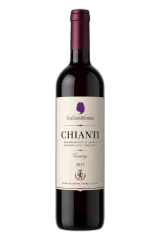
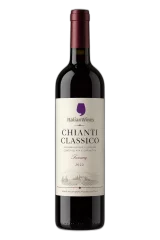


DOCG Red Shop's own label

Collezione di Paolo Chianti

Own label of Laithwaites

Grape
Sangiovese
Denomination
Chianti DOCG
Region
Tuscany
ABV
13%

Direct Wines' own-label Chianti DOCG, made by Paolo Masi of Fattoria di Basciano in Rufina. Juicy cherry and plum Sangiovese with almond hints and fresh acidity at 13% abv: a 13.99 GBP partner for tomato-led pasta, drinking to 2027.

Price
£13.99

2025 · 75cl · checked 6 Nov · Delivery £7.99, free on 12+ bottles

Black FridayNo checked saving on this wine today. See 14 checked deals on Chianti

We track 1 UK retailer across all vintages and formats, including out-of-stock offers. Prices read several times a week. We earn a commission on some links; it never changes the order.

Where to buy Collezione di Paolo Chianti

£13.99 price · 1 retailer with 75cl · 2025 in stock · checked 6 Nov 2026

One shop on this page sells this wine, so there is no price to compare between shops. Each price is the one we last read on its page, on the date beside it.

Laithwaites Best price 2025 · 75cl · checked 6 Nov · Delivery £7.99, free on 12+ bottles
Read from the retailer's page on the date shown, so treat it as a guide and confirm at the retailer.
£13.99 £18.65/L

Stock status is read from each retailer’s page several times a week and may lag.

Tasting Notes

Tasting the 2023 Collezione di Paolo Chianti

Cherry, violet and almond over fresh Sangiovese acidity, with a light balsamic, cinnamon edge in the 2023 and no obvious oak.

Tasted by
Style guidance
Source
Style guidance · confidence Medium
Typical of Sangiovese
Body Light / Full
Tannins Smooth / Grippy
Sweetness Dry / Sweet
Acidity Soft / Crisp
Typical flavours for this style (Sangiovese)

The flavours below are the signature of Sangiovese in this style, shown here as shared reference. Tasting notes specific to this bottle are added when we research it.

VioletViolet
BlackberryBlackberry
CherryCherry
PlumPlum
RaspberryRaspberry
AlmondAlmond
CinnamonCinnamon
Live UK pricing

Buying Paolo Masi's own-label Chianti in the UK

Collezione di Paolo is a Direct Wines exclusive, so UK stock moves through Laithwaites and its sister shops Averys and the Sunday Times Wine Club. The 2023 sells at 13.99 GBP a bottle.

Best price · 75 cl · 2025 £13.99 at Laithwaites
75cl · 2025 available from Laithwaites £13.99, in stock
Against other Chianti Cheaper than 6 in 10 Of the 71 Chianti bottles we track; the middle price is £14.60
Vintages live 2025 Newest vintage on sale here: 2025
Per-litre (75cl · 2025 basis) £18.65 Lowest current 75cl · 2025 offer
Last checked 6 Nov 2026 Refreshed once every 24 hours
Wine fit score

Italian Wine Fit Score for this 13.99 GBP Chianti

Scores lean on the Chianti DOCG frame: bright Sangiovese acidity for food, 13.99 GBP against entry-Chianti benchmarks, and a drink-by-2027 window that caps its cellar appeal.

Best with food 8.8/10

Fresh Sangiovese acidity with brisk, fast-fading tannin makes a tomato-and-table red that also suits beef, veal and poultry.

Best intro to this style 8.5/10

Textbook entry Sangiovese from a famous appellation at 13% abv: cherry fruit forward, no oak to decode, and Laithwaites' best-selling Chianti for a reason.

Best everyday bottle 8.2/10

A 13.99 GBP, 13% abv weeknight red whose acidity handles everyday tomato cooking; the flip side of its low cellar score.

Best value 6.0/10

At 13.99 GBP it sits mid-band for entry Chianti DOCG. Drinkers' steady liking and an 18.99 USD price on the same wine abroad say fair rather than steal.

Best for an occasion 3.5/10

A merchant own-label at entry-DOCG level: honest at the table but not a statement bottle for a milestone dinner.

Best for cellar 2.5/10

Bottled for early drinking with a stated drink-by of 31 December 2027 and only the base Chianti DOCG 3-month minimum ageing behind it. Buy to drink, not to lay down.

Scoring is rule-based and deterministic. The model and weightings are documented in our Wine Fit Score methodology.

Denomination Compliance Snapshot

Chianti in five fields

A compact view of what the Chianti denomination actually requires, and how this bottle sits inside it. Pulled from the official Italian disciplinare.

Allowed grapes
6 varieties listed in the disciplinare
This bottle: Sangiovese.
Minimum ageing
From 1 March
after harvest, no minimum ageing
Region / area
Arezzo · Firenze · Pisa · Pistoia · Prato · Siena
Source: Disciplinare.
Style
DOCG · Chianti
Alcohol minimum in the rules: 11.5%. A total-alcohol minimum includes the alcohol the remaining sugar could produce, so the ABV on the label can be lower.
Classification
DOCG (Denominazione di Origine Controllata e Garantita)
Vintages

The 2023 vintage in Chianti DOCG

A wet, mildew-marked spring cut the 2023 Chianti crop, and the Consorzio Vino Chianti reported patchy losses across the zone. Picked fruit still came in healthy: a fresh, early-drinking year, best to 2027.

2025 Newest vintage on sale here
Best price
£13.99
Retailers
1 in stock
2023 No current offer here
Best price
not listed
Retailers
0 in stock
ABV
13.0%
Window
Drink now through 2027

A wet, mildew-marked spring cut the 2023 Chianti DOCG crop, with the Consorzio Vino Chianti describing patchy losses across the zone, though picked fruit came in healthy. A fresh, early-drinking year: enjoy this bottling to Laithwaites' stated drink-by of 31 December 2027.

Drink-now / hold guidance reflects general style cues for this wine, not a forecast for a specific bottle. Where vintage-level editorial notes exist, they appear above.

The disciplinare, the place, the label

The Chianti DOCG rules behind this bottle

Chianti DOCG requires 70 to 100% Sangiovese grown across six Tuscan provinces, at yields no higher than 9 tonnes per hectare. It is released only from 1 March after the harvest.

01

DOC, DOCG, IGT: what the badges mean

Italian wine law sorts bottles into a pyramid. DOCG sits at the top: tightly drawn boundaries, prescribed grapes, mandatory ageing, government tasting before release. DOC is the same idea with looser thresholds. IGT (Indicazione Geografica Tipica) is broader still, requiring only that 85% of the grapes come from the named territory.

Chianti is in the DOCG tier. That is not a quality verdict, it is a description of how much freedom the producer has at vinification and ageing.

02

The denomination rules, in detail

  • Allowed grapes. 6 varieties listed in the disciplinare
  • Yield ceiling. 11.0 tonnes per hectare
  • Alcohol minimum in the rules. 11.5% vol. A total-alcohol minimum includes the alcohol the remaining sugar could produce, so the ABV on the label can be lower.
  • Minimum ageing. From 1 March after harvest, no minimum ageing
  • Tasting panel. Chemical analysis and a tasting commission before sale, required by Italian law for every DOC and DOCG
03

Region and area context

Chianti falls within Tuscany, covering Arezzo · Firenze · Pisa · Pistoia · Prato · Siena. The denomination is further divided into 8 sub-zones.

Chianti DOCG zone Chianti Classico, its own DOCG Wine routes in the zone

Wine routes in the zone: Strada Chiantigiana SR 222, Strada del Vino Nobile, Brunello and Rosso loop.

04

Reading the label

  • SangioveseGrape varieties
  • Chianti DOCGGeographic indication and quality tier
  • 2025Vintage of the 75 cl bottle on sale here
  • 75 clBottle size
05

What sits behind the price of Collezione di Paolo Chianti

Tracked from
£13.99
Direction
Mostly cost up
Drivers
3 up / 2 down
Main factor
UK duty and VAT on a 13.99 GBP still wine
  1. 01

    UK duty and VAT on a 13.99 GBP still wine

    Cost up

    HMRC duty on still wine at or under 15% abv is 2.67 GBP a bottle, and VAT at 20% adds roughly 2.33 GBP. So about 5 GBP of the 13.99 GBP shelf price is tax before any wine, glass or freight.

  2. 02

    Merchant own-label sourcing at scale

    Cost down

    Collezione di Paolo is a Direct Wines exclusive bottled by Masi Renzo and C. in Rufina. Buying finished Chianti in volume for a captive label strips out estate branding and third-party distributor margin.

  3. 03

    Base Chianti DOCG fruit, not Rufina or Classico

    Cost down

    The rules allow base Chianti 9 tonnes per hectare, against 7.5 for Superiore and stricter sub-zone rules for Chianti Rufina. The Masi estate sells its own Rufina bottlings under its own name at higher prices.

  4. 04

    A named Rufina winemaker, not anonymous bulk juice

    Cost up

    Laithwaites has worked with the Masi family for around 30 years, and Paolo Masi is the named maker. A consistent named supplier relationship costs more than spot-market blending.

  5. 05

    DOCG certification and release tasting

    Cost up

    As a DOCG the wine must pass chemical analysis and a tasting commission before sale. It may only be released from 1 March after harvest under the Chianti rules: certification and holding cost built into every bottle.

01

UK duty and VAT on a 13.99 GBP still wine

Cost up

HMRC duty on still wine at or under 15% abv is 2.67 GBP a bottle, and VAT at 20% adds roughly 2.33 GBP. So about 5 GBP of the 13.99 GBP shelf price is tax before any wine, glass or freight.

Perfect Pairings

Dishes that go with this wine

Food Pairing

Sangiovese acidity at work: dishes for this Chianti

Chicken, pasta, beef, veal and poultry all suit it. The common thread is the fresh acidity and brisk, fast-fading tannin of young Rufina-made Sangiovese.

Acidity matching Strong match

Tomato-led pasta and pizza

Sangiovese's fresh acidity runs level with tomato's own sharpness, so neither flattens the other. Pasta is this bottle's natural home, and a tomato-rich braise shows why: Chianti and tomato dishes are natural partners.

Try with: Pasta arrabbiata · Lasagna · Pizza Margherita · More pairings →

Tannin softening Strong match

Bistecca, porchetta and the Sunday roast

The 2023's tannins arrive brisk and grippy then fall away fast, so seared protein and rendered fat are what they want. Beef comes first, and a Fiorentina steak or herbed roast pork gives those quick tannins something to bind.

Try with: Fiorentina steak · Porchetta · Sunday Roast Beef · More pairings →

Body matching Good match

Roast chicken and veal cotoletta

At 13% abv and medium body this Chianti will not swamp white meats. It is ideal with chicken, and veal and poultry sit beside beef among its best matches: weight matched to weight, with cherry fruit doing the lifting.

Try with: Roast chicken · Cotoletta alla bolognese

Fat cutting Good match

Pecorino, finocchiona and the cheese board

The 2023's dry, quickly-fading tannins beg for cheese, and the acidity scrubs sheep-milk fat and cured-meat richness clean. Tuscan pecorino and fennel salami are the home fixtures for a Rufina-made Sangiovese.

Try with: Cheese board · Pecorino Toscano · Finocchiona · More pairings →

Aromatic bridge Good match

Slow tomato braises and Tuscan comfort food

The balsamic and dried-herb notes in the 2023 echo the aromatics of long-cooked braises, while the lingering tang refreshes each spoonful. Try it with a slow-cooked beef and mushroom stew: the match works.

Try with: Beef stew · Agnello Ragu Lucano · Pappa al Pomodoro · More pairings →

Avoid Clash

Hot chilli dishes and delicate raw fish

Chilli heat amplifies this wine's brisk tannin and 13% alcohol into bitterness, exactly the streak that already sits on the finish. Delicate raw fish pushes the same tannins metallic: keep it away from fierce spice and sashimi-style plates.

Skip with: Chicken madras · Szechuan beef · Nigiri Sushi · Pairing guide →

Drinking + cellar

Why Collezione di Paolo is not a cellar wine

This is a merchant-label Chianti bottled for early drinking, with a stated drink-by of 31 December 2027 for the 2023. Base Chianti DOCG carries only a 3-month minimum ageing rule.

Decanting
1 hour

A short splash decant softens the first-pour edge and opens the aromatics.

Serving temperature
16-18°C

Aim for the cooler end on a warm day; warmer end opens up more aromatics.

Cellar potential
Low

Bottled for early drinking with a stated drink-by of 31 December 2027 and only the base Chianti DOCG 3-month minimum ageing behind it. Buy to drink, not to lay down.

Buy now or wait?
Buy now

£13.99 for a 75cl bottle of the 2025, at Laithwaites, is the best price we track, and we have no signal of further discounting.

Sources & trust

Sources behind this Collezione di Paolo page

Prices & stock

Read directly from each retailer’s public product page several times a week. Last refresh: 6 Nov 2026, 04:44 BST. We do not hold stock and we do not accept payment for placement.

Confidence · High
Who owns this label

The name on the label belongs to Laithwaites, a shop, not to a winery. Laithwaites names Paolo Masi of Rufina as the maker. Laithwaites is the only UK shop we track that sells it, so there is no price comparison to make. How we tell estate, shop and brand labels apart.

Confidence · High
Tasting notes

A style read drawn from the grape and the appellation, not from this exact bottle. We mark these notes openly so you know what you are reading.

Confidence · Medium
Appellation rules & ageing

From the official Italian disciplinare for this denomination, cross-checked against the Ministry of Agriculture register.

Confidence · High
Why it costs what it costs

Our reading of the price, from how this wine is made, the rules of its appellation, UK duty and VAT and the price shops charge for it today. Not a quote from the producer or a retailer.

Confidence · Medium
Drink window & cellar potential

Any advice here on keeping this wine is general, not a forecast for the bottle in your hand. Drinking years, where shown, belong to the vintage named beside them.

Confidence · Medium
Related

Chianti, Sangiovese and Tuscany: where this bottle sits

Common Questions

Paolo Masi of Fattoria di Basciano in Rufina makes it as an own-label for Direct Wines, the company behind Laithwaites. The bottler on the label is the family firm Renzo Masi and C. of Rufina, and Laithwaites has worked with the Masi family for around 30 years. For the wider story of how merchant exclusives like this one are made, read our deep dive "Who Really Makes Britain's Own-Label Italian Wine?"

No. It is a base Chianti DOCG, which requires 70 to 100% Sangiovese grown across six Tuscan provinces. It is not Chianti Classico and not Chianti Rufina either, even though the Masi family estate itself sits in the Rufina zone.

Cherry and red plum fruit with violet florals, an almond hint and a light balsamic, cinnamon edge in the 2023. It is medium-bodied at 13% abv with fresh acidity and brisk tannins that fade quickly, built for drinking young with food.

Tomato-led pasta, pizza and slow braises first: the acidity matches tomato sharpness. Chicken, pasta, beef, veal and poultry all work, as do bistecca, lasagna and pecorino cheese.

Drink it between now and the end of 2027, the drink-by date stated for the 2023. It is an early-drinking Chianti with a 3-month minimum ageing requirement, not a wine that improves with long cellaring.

It is fair mid-band value for entry Chianti DOCG. It is a well-liked everyday red, with the 2023 slightly ahead of the label's usual form. The same wine retails at 18.99 USD through WSJ Wine in the United States. In the UK it sells through Laithwaites and its sister shops Averys and the Sunday Times Wine Club.

You May Also Appreciate

Affiliate disclosure. Some links above are affiliate links. If you buy through them we may earn a small commission at no extra cost to you. Editorial coverage, ratings and tasting notes are written independently and a retailer cannot pay to be listed or to be ranked higher.

How retailer prices are sourced. Prices and stock are read from each retailer’s public product page several times a week. Outbound buy links carry rel="nofollow sponsored noopener". The list is sorted by price; we do not accept payment for placement.

What we will never do. Imply we tasted a bottle when we didn’t. Imply stock when a retailer is out. Imply independence on links that are paid affiliate links.

Collezione di Paolo Chianti