





Hugo Spritz: the Alpine Prosecco Cocktail
TL;DR
- The Hugo Spritz is the white spritz of the Alps: Prosecco, elderflower, soda and mint, first mixed by barman Roland Gruber in Alto Adige in 2005.
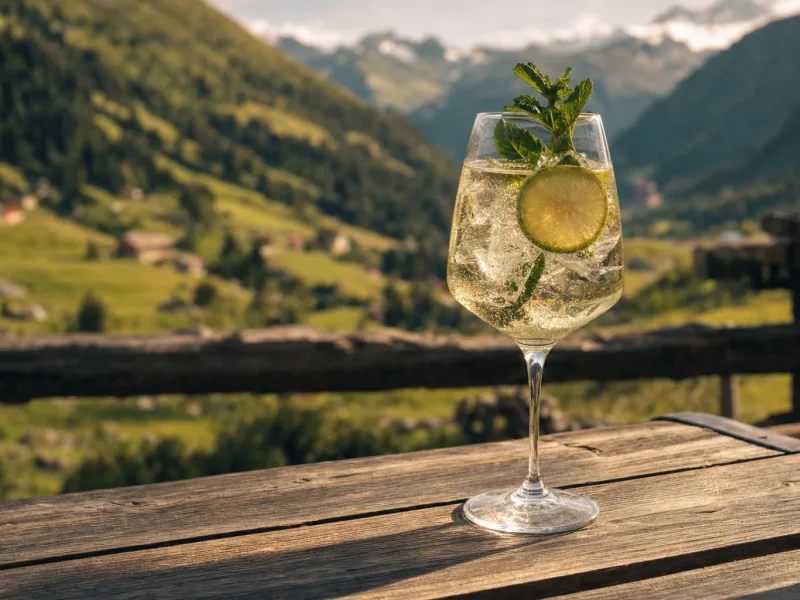
- Build it over ice in a large wine glass: 20ml elderflower syrup, 120ml Prosecco, a short 30ml top of soda.
- A Brut Prosecco DOC balances the floral sweetness; where an Aperol Spritz leads with bitter orange, the Hugo stays floral, alpine and lighter.

A white spritz born in the Alps
The Hugo is barely twenty years old. Barman Roland Gruber mixed the first one in 2005 at the San Zeno bar in Naturno, a village in Alto Adige in the far north of Trentino-South Tyrol, as a gentler answer to the bitter spritzes of the Veneto. By his own account he nearly called it Otto before settling on Hugo.
It was not even an elderflower drink at first. Gruber sweetened those early glasses with lemon balm syrup, and elderflower took over simply because the syrup was easier to buy, a swap the Italian food institution Cucchiaio d’Argento still records in its recipe. From Naturno the Hugo spread through the Triveneto into Austria, Switzerland and Germany before British bars caught on.
It remains a wine drink at heart. There is no spirit in the original build: just Prosecco, syrup, soda and mint, which is why it earns its place on an Italian wine list alongside the other Prosecco serves we have covered.
The build: exact measures, ice first
Cucchiaio d’Argento pours it generously at 150ml of Prosecco to 20ml of syrup; British bar builds run sweeter and boozier. The ratio below keeps the syrup present without turning the glass sticky. Chill a large stemmed glass first, the shape we recommend in our guide to choosing the right glass, and get the ice in before the wine so the Prosecco keeps its sparkle.
-
120ml Prosecco DOC Brut, well chilled
-
20ml elderflower syrup (or 30ml St-Germain for the liqueur version)
-
30ml chilled soda water
-
6 to 8 fresh mint leaves
-
1 slice of lime or lemon
-
Plenty of ice
-
11
Chill a large stemmed wine glass, then pour in the elderflower syrup.
-
21
Fill the glass generously with ice so the Prosecco stays cold and lively.
-
31
Pour the Prosecco over the ice, then lengthen with the soda.
-
41
Stir once or twice with a bar spoon, gently, so the syrup lifts without the bubbles dying.
-
51
Slap the mint between your palms, drop it in, and finish with the slice of lime.
Which Prosecco to pour
The Hugo is mostly wine, so the bottle you open decides the drink. Elderflower brings sugar of its own, which is why a Brut Prosecco, the driest common style at up to 12 grams of residual sugar per litre, keeps the glass in balance where an Extra Dry can tip it toward cloying. The grape is Glera, all pear skin and white blossom, and its aromatics sit naturally beside elderflower rather than fighting it.
Standard Prosecco DOC, tank-fermented across the Veneto and Friuli-Venezia Giulia, is exactly right for mixing: fresh, fruity and made to be drunk young, as we explain in our guide to how sparkling wine is made. Save Conegliano Valdobbiadene Prosecco Superiore DOCG, with its finer mousse and steep-slope fruit, for the flute rather than the spritz. And if you are tempted to upgrade to Champagne, our Prosecco versus Champagne guide explains why the brioche and pastry notes you pay for would vanish under elderflower and mint.
| Style | Character | In a Hugo |
|---|---|---|
| Prosecco DOC Brut | Driest common style, up to 12 g/l sugar; pear and white blossom | First choice: keeps the glass crisp against the syrup |
| Prosecco DOC Extra Dry | Softer, 12 to 17 g/l; riper orchard fruit | Works, but ease off the syrup or it turns cloying |
| Conegliano Valdobbiadene Superiore DOCG | Finer mousse, steep-slope fruit, higher price | Drink it neat from a flute; wasted in a mixed glass |
One warning at the bottom shelf: coarse, flat fizz has nowhere to hide here. The drink is roughly two-thirds sparkling wine, so pour something you would happily drink on its own.
Syrup or St-Germain: two different Hugos
The Alto Adige original uses elderflower syrup, which carries no alcohol, so the finished drink holds only the Prosecco’s strength, softened further by the soda. A bottle of supermarket elderflower cordial does the job well; the cordials stocked by Lidl and IKEA that sit in many British kitchens work once you nudge the measure to taste.
British bars usually reach for St-Germain instead, an elderflower liqueur bottled at 20% abv. Waitrose’s own recipe, from chef Angela Hartnett, builds it with 40ml of the liqueur to 60ml each of Prosecco and soda: a rounder, noticeably stronger Hugo that wants the driest Prosecco DOC you can find. A 30ml pour inside our ratios above splits the difference.
Two more forks in the road. A 25ml shot of dry gin turns it into the bar-menu Hugo with gin, closer to a highball than a spritz. And skipping alcohol entirely still works, because elderflower, mint, lime and soda carry the drink’s whole personality; top with an alcohol-free sparkler and nobody feels short-changed. More builds in that spirit live in our Prosecco cocktails guide.
Hugo or Aperol: pick your spritz
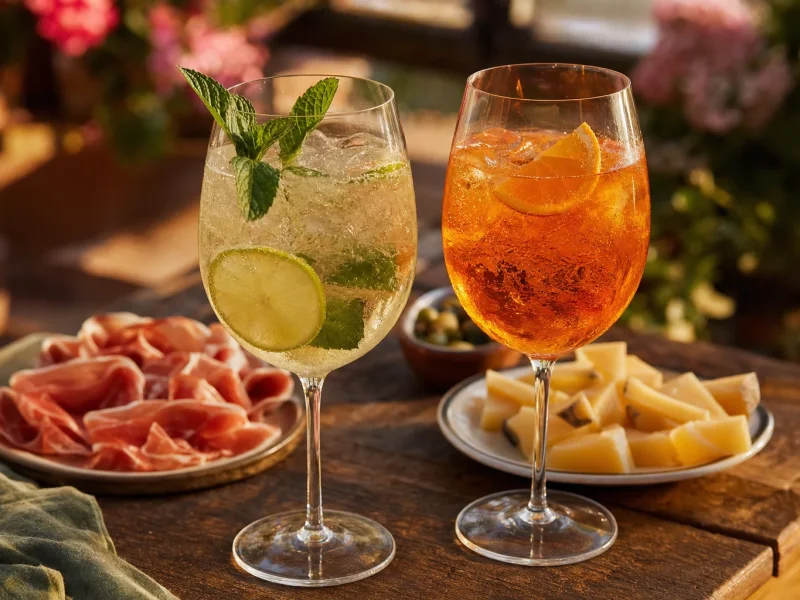
Set the two side by side and the choice picks itself. The Aperol Spritz leads with bitter orange and a sunset colour; the Hugo is pale, floral and alpine, and when built with syrup it is also the lighter drink, since the syrup adds sweetness but no alcohol. Bitter-leaning drinkers have a sharper option again in the Bicicletta, the Campari and white wine serve we covered separately, while the Tuscan Mule takes the opposite road entirely with Chianti and ginger.
At the table it behaves like the white wine it mostly is. Mint and elderflower flatter speck, Alpine cheeses and lake fish more than crisps and olives. And if the evening then calls for something sweeter in the same floral register, the Moscato grape delivers it as a wine rather than a cocktail, while Lambrusco answers the opposite call: dark, dry and frothing.
Frequently asked questions
Prosecco, elderflower syrup, a short top of soda water, fresh mint and plenty of ice, finished with a slice of lime or lemon. That is the whole drink: no spirit appears in the original Alto Adige build. The very first Hugos used lemon balm syrup rather than elderflower, and the swap stuck only because elderflower was easier to buy. The wine matters most, so use a Prosecco you would drink on its own, ideally Brut, made from the Glera grape.
No, not when it is built the traditional way. Elderflower syrup carries no alcohol, so a syrup Hugo holds only its measure of Prosecco, diluted by soda, while an Aperol Spritz adds a full pour of an 11% abv aperitivo on top of the same wine. Swap the syrup for St-Germain, a 20% abv elderflower liqueur, and the gap closes. Our Prosecco cocktails guide covers the Aperol Spritz and its siblings in more detail.
Yes, and it survives the change better than most cocktails. Elderflower, mint, lime and soda are doing the aromatic work, so pour elderflower cordial over ice and mint, then top with an alcohol-free sparkler or simply more soda, and the drink keeps its character. Treat the cordial gently: 15ml to 20ml is enough. The result drinks like a garden lemonade with the posture of a sparkling wine serve.
A large stemmed wine glass, the same generous shape most bars use for a spritz. The bowl leaves room for ice and mint, and the stem keeps warm hands off the wine. Fill it with ice before the Prosecco goes in so the sparkle survives, and stir once, gently, with a long spoon. Our guide to choosing the right glass for Italian wine explains why shape changes how aromatics land.