


DOCG

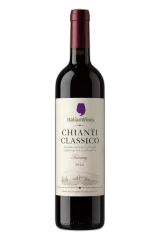
Castellare di Castellina Chianti Classico DOCG

Castellare di Castellina

Vintages 2024 2022

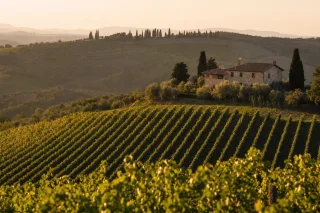
Castellare's Chianti Classico from Castellina in Chianti: 95% Sangioveto, 5% Canaiolo, only native grapes from limestone at 409m. Cherry, violet and tobacco; balanced, food-friendly Sangiovese. The 2022 rated 4.0 on Vivino.

UK Market From £21.60 Found across 2 retailers
Check Availability
Verified retailers Price comparison Updated daily
Tasting Notes

Tasting notes: Castellare's 2022 Chianti Classico annata

Drawn from Castellare's own note and the consensus of 31,804 Vivino drinkers: a native-grape Sangioveto with cherry fruit, a violet lift and an earthy tobacco edge.

Tasted by
Style guidance
Source
Style guidance · confidence Medium
Taste profile
Body Light / Full
Tannins Smooth / Grippy
Sweetness Dry / Sweet
Acidity Soft / Crisp
Typical flavours for this style (Sangiovese)

The flavours below are the signature of Sangiovese in this style, shown here as shared reference. Tasting notes specific to this bottle are added when we research it.

VioletViolet
Black cherryBlack cherry
RaspberryRaspberry
TobaccoTobacco
LeatherLeather
OakOak
LiquoriceLiquorice
VanillaVanilla
Live UK pricing

Buying Castellare Chianti Classico: the 2022 at around £22

One UK listing tracked, the 2022 vintage at roughly £22 a bottle. Prices below come straight from the retailer and update as they change.

Best price · 75 cl £21.60 at vino
Price spread £21.60 - £22.10 Across 2 UK retailers tracked
Retailers tracked 2UK 2 in stock
Vintages live 2024 · 2022 Current release: 2024
Per-litre (75 cl basis) £28.80 Per-litre price for the lowest current offer
Last checked 29 Jul 2026 Refreshed once every 24 hours
Wine fit score

How Castellare Chianti Classico scores for food, value and cellaring

A native-grape Chianti Classico annata at around £22: strong on food, fair on value, an easy entry to Sangiovese rather than a long-haul cellar wine.

Best with food 9.0/10

Medium-tannin Sangiovese with bright acidity is a textbook food red, built for Tuscan grilled meat, ragu and aged cheese.

Best intro to this style 8.0/10

A classic native-grape Chianti Classico annata at mid-tannin and mid-price: an easy, recognisable entry to Sangiovese.

Best value 7.2/10

At about £22 the wine sits around the Chianti Classico annata norm; Vivino's 4.0 for 2022 and a 90-point critic band make it fair, not a bargain.

Best everyday bottle 7.0/10

Versatile and food-friendly at around £22, comfortably an everyday Tuscan red rather than a special-occasion bottle.

Scoring is rule-based and deterministic. The model and weightings are documented in our Wine Fit Score methodology.

Denomination Compliance Snapshot

Chianti Classico in five fields

A compact view of what the Chianti Classico denomination actually requires, and how this bottle sits inside it. Pulled from the official Italian disciplinare.

Allowed grapes
1 varieties listed
This bottle: Sangiovese.
Minimum ageing
12 months minimum
Of which 7 months in oak.
Region / area
Firenze · Siena
Source: Disciplinare.
Style
DOCG · Chianti Classico
Minimum ABV at this colour: 12.0%.
Classification
DOCG (Denominazione di Origine Controllata e Garantita)
Retailer Shortlist

Where to Buy

Compare tracked offers from verified retailers at a glance. Stock is shown only where the retailer exposes it. Logos, sale pricing, and the strongest offer are surfaced first.

Best Live Price £21.60
Retailers Tracked 2
Last Checked 29 Jul 2026
Vino logo

Vino

Best price In stock
Vintage 2024
£21.60
£28.80/L · checked 29 Jul
Visit retailer
75 cl · On sale (was £30.86) · Low stock confidence
Vintages

The 2022 vintage at Castellina in Chianti

2022 was Tuscany's warmest, driest year on record; reduced yields but balanced, soft-tannin Chianti Classico. Vivino rates the 2022 a 4.0, in the top 3% of wines that year.

2024 Current release
Lowest price
£21.60
Retailers
1 in stock
2022 Previous release
Lowest price
£22.10
Retailers
1 in stock
ABV
13.5%
Window
Drink now through 2030

2022 was Tuscany's warmest, driest year on record, but few prolonged heat spikes left fruit intact and yields reduced. The Chianti Classico annate are balanced and harmonious, with moderate acidity, soft tannins and well-defined cherry fruit; drink from release through about 2030.

Drink-now / hold guidance reflects general style cues for this wine, not a forecast for a specific bottle. Where vintage-level editorial notes exist, they appear above.

The disciplinare, the place, the label

Castellare di Castellina: native grapes and the wild-bird label

Founded in 1968 from five Castellina in Chianti farms, Castellare bottles only indigenous grapes and crowns each vintage with a different wild Italian bird on the label.

01

DOC, DOCG, IGT: what the badges mean

Italian wine law sorts bottles into a pyramid. DOCG sits at the top: tightly drawn boundaries, prescribed grapes, mandatory ageing, government tasting before release. DOC is the same idea with looser thresholds. IGT (Indicazione Geografica Tipica) is broader still, requiring only that 85% of the grapes come from the named territory.

Chianti Classico is in the DOCG tier. That is not a quality verdict, it is a description of how much freedom the producer has at vinification and ageing.

02

The denomination rules, in detail

  • Allowed grapes. 1 varieties listed in the disciplinare
  • Yield ceiling. 7.5 tonnes per hectare
  • Minimum ABV. 12.0% vol
  • Minimum ageing. 12 months total (of which 7 in oak)
  • Tasting panel. Mandatory pre-release tasting commission
03

Region and area context

Chianti Classico falls within Tuscany , covering Firenze · Siena. The denomination is further divided into 11 sub-zones.

04

Reading the label

  • Castellare di CastellinaProducer / estate
  • SangioveseGrape varieties (in declared order of dominance)
  • Chianti Classico DOCGGeographic indication and quality tier
  • 2024Vintage (year of harvest)
  • Producer-declared ABV · 75 clAlcohol by volume and bottle size
  • Imbottigliato all’origineEstate-bottled
05

What sits behind the price of Chianti Classico

Tracked from
£21.60
Direction
Mostly cost up
Drivers
4 up / 1 down
Main factor
Only native Sangioveto and Canaiolo, no international grapes
  1. 01

    Only native Sangioveto and Canaiolo, no international grapes

    Cost up

    Castellare bottles only indigenous grapes (95% Sangioveto, 5% Canaiolo), forgoing cheaper, easier-ripening Cabernet or Merlot; the purist annata costs more to grow than a blended Chianti.

  2. 02

    Hillside limestone vineyards at 409m, Guyot-trained, 50 Ql/ha

    Cost up

    Fruit comes from limestone slopes at 409m at Castellina in Chianti, Guyot single-arched cane held to about 50 quintals per hectare; low-yield hillside farming lifts the cost per bottle.

  3. 03

    DOCG Chianti Classico discipline and the Gallo Nero

    Cost up

    The DOCG sets yield ceilings, the minimum-ageing rule and the Black Rooster seal that the 2022 must pass before release, all of which add cost over an unclassified Tuscan red.

  4. 04

    Modest used-barrique and bottle ageing, not new oak

    Cost down

    Only 7 months in used barriques plus 7 in bottle, well short of a Riserva; using older barrels rather than new French oak keeps the annata's barrel cost down and the price near £22.

  5. 05

    UK duty and VAT on a still wine at 13.5%

    Cost up

    UK excise duty is £2.67 a bottle for still wine up to 15% ABV at 2026 HMRC rates, and 20% VAT on the roughly £22 price adds about £3.68 more before any retailer margin.

01

Only native Sangioveto and Canaiolo, no international grapes

Cost up

Castellare bottles only indigenous grapes (95% Sangioveto, 5% Canaiolo), forgoing cheaper, easier-ripening Cabernet or Merlot; the purist annata costs more to grow than a blended Chianti.

Perfect Pairings

Dishes that complement this wine

Food Pairing

Sangiovese acidity, soft 2022 tannin: dishes that fit this Chianti Classico

Castellare points this wine at structured main dishes, stews and medium-aged cheeses; its acidity and tannin make it a Tuscan table red for Fiorentina, ragù and pecorino.

Tannin softening Strong match

Bistecca alla Fiorentina and grilled red meat

Sangiovese's firm tannin binds the proteins and fat of a chargrilled T-bone, the classic Tuscan match for Chianti Classico. The 2022's soft tannins and red-cherry acidity cut through the char without overpowering the meat.

Try with: Fiorentina steak · Ribeye steak · Lamb chops · Sunday Roast Beef · More pairings →

Acidity matching Strong match

Tomato ragù, tagliatelle and pici

The wine's moderate acidity mirrors the acidity of a slow tomato ragù, so neither tastes flat. Sangiovese's savoury, cherry fruit sits naturally alongside Tuscan pasta, the everyday home for this bottle.

Try with: Cotoletta alla bolognese · Tagliatelle al tartufo di Acqualagna · Agnello Ragu Lucano · More pairings →

Salt balance Good match

Pecorino and aged Tuscan cheese

Castellare recommends this wine with medium-aged cheeses, and the red-fruit core balances the salt and fat of a mature pecorino. The light tannin refreshes the palate between bites.

Try with: Pecorino sardo e pan carasau · Aged cheese · Cured meats · More pairings →

Fat cutting Good match

Cured meats and salumi boards

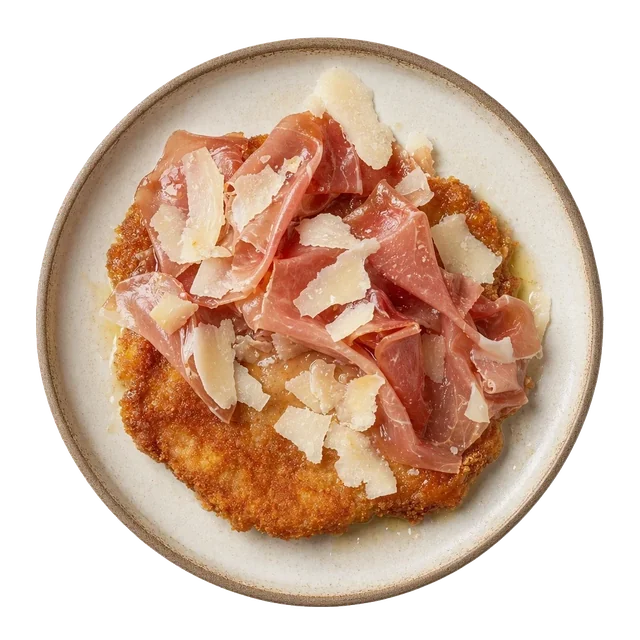
Sangiovese acidity and gentle tannin cut the richness of prosciutto, finocchiona and Tuscan salami, a pairing Vivino drinkers reach for often. The wine's earthy, leathery edge bridges to cured-meat savouriness.

Try with: Ham and salami · Cured meats · Pecorino · More pairings →

Body matching Good match

Stews, game and ribollita

Castellare points this wine at structured and stewed dishes, and its medium body matches the weight of a Tuscan bean ribollita or a red-meat stew without flattening it. The savoury fruit echoes slow-cooked depth.

Try with: Beef stew · Venison Stew · Lamb shank · More pairings →

Avoid Clash

Chilli heat and sweet-sour sauces

The wine's tannin and dry red fruit clash with capsaicin heat and sugary sauces, which make Sangiovese taste hard and bitter. Keep it away from fiery curries and sweet-and-sour dishes; reach instead for an off-dry Italian white.

Skip with: Lamb bhuna · Crispy chilli beef · Szechuan beef · Mongolian beef · Pairing guide →

Drinking + cellar

How long to hold Castellare Chianti Classico

This is the estate's annata, with 7 months in used barriques. It drinks well for 5 to 6 years from the 2022 release; for longer cellaring look to Castellare's Riserva.

Decanting
h1

A short splash decant softens the first-pour edge and opens the aromatics.

Cellar potential
Medium

A Chianti Classico annata with 7 months in used barriques holds 5-6 years but is not built for long ageing like a Riserva or Gran Selezione.

Buy now or wait?
Buy now

£21.60 is the lowest tracked offer for the current vintage and we have no signal of further discounting.

Sources & trust

Sources behind this Castellare Chianti Classico page

Prices & stock

Read directly from each retailer’s public product page once a day. Last refresh: 29 Jul 2026, 00:46 BST. We do not hold stock and we do not accept payment for placement.

Confidence · High
Tasting notes

A style read drawn from the grape and the appellation, not from this exact bottle. We mark these notes openly so you know what you are reading.

Confidence · Medium
Appellation rules & ageing

From the official Italian disciplinare for this denomination, cross-checked against the Ministry of Agriculture register.

Confidence · High
Why it costs what it costs

Our reading of the price, drawn from the disciplinare, public UK duty rates, and typical landed-cost benchmarks. Not a quote from the producer or a retailer.

Confidence · Medium
Drink window & cellar potential

Style guidance for this kind of wine at this price point. Treat it as advice, not a forecast for the bottle in your hand.

Confidence · Medium
Related

Castellare, Sangiovese and Chianti Classico: related pages

Producer
Castellare di Castellina Tuscany

Common Questions

It is 95% Sangiovese (which Castellare calls Sangioveto) and 5% Canaiolo. Castellare uses only native Tuscan grapes, with no Cabernet or Merlot, to keep the most traditional Chianti Classico formula.

The wine ferments in stainless steel with malolactic fermentation, then refines for 7 months in used barriques and a further 7 months in bottle before release. The fruit comes from limestone vineyards at 409m at Castellina in Chianti.

Bright ruby with cherry, raspberry and violet, a touch of liquorice and vanilla, and the tobacco and leather Vivino drinkers note. It is medium-bodied and dry, with moderate acidity, soft tannin and good balance.

Tuscan classics: bistecca alla Fiorentina and grilled red meat, tomato ragù with tagliatelle or pici, pecorino and aged cheese, cured meats, and stews. Castellare itself recommends structured main dishes, stewed dishes and medium-aged cheeses.

Yes. 2022 was Tuscany's warmest, driest year on record but kept fruit intact at reduced yields; the Chianti Classico annate are balanced with soft tannins. Vivino rates the 2022 a 4.0, in the top 3% of wines that year.

You May Also Appreciate

Affiliate disclosure. Some links above are affiliate links. If you buy through them we may earn a small commission at no extra cost to you. Editorial coverage, ratings and tasting notes are written independently and a retailer cannot pay to be listed or to be ranked higher.

How retailer prices are sourced. Prices and stock are read from each retailer’s public product page once a day. Outbound buy links carry rel="nofollow sponsored noopener". The list is sorted by price; we do not accept payment for placement.

What we will never do. Imply we tasted a bottle when we didn’t. Imply stock when a retailer is out. Imply independence on links that are paid affiliate links.

Chianti Classico