About Vinosia
Irpinia is the mountainous heart of inland Campania. It is a cold, high corner of the province of Avellino, where winters bite and summers stay cool. The name traces back to the Latin hirpus, meaning wolf, a fair measure of how wild and remote this country can feel. Wine has been made here for centuries. It tends to run austere and structured rather than soft, built for the table and for keeping rather than for an easy first sip.
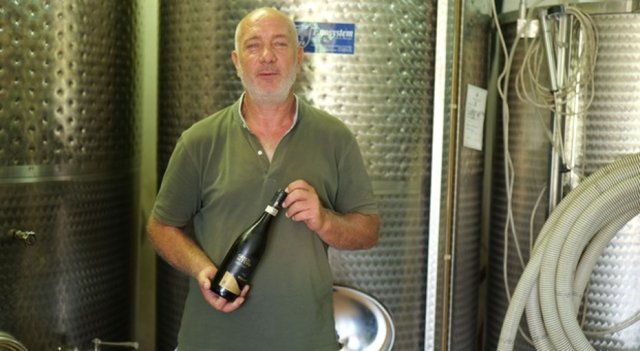
Vinosia was founded at Paternopoli in 2004 by Luciano Ercolino. His family had already played a part in the modern revival of Irpinian wine. Ercolino traces his own wine roots to a grandfather working the vines as far back as 1887. He set out to make wine on his own terms, concentrating on the native grapes of the south. The estate is run as a family business, and the Ercolino name is carried on every label.
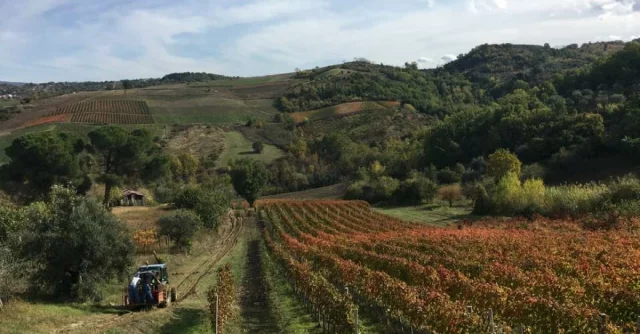
The vineyards fall into two zones. The core sites climb the Irpinia hills to between 380 and 550 metres. They are planted to Aglianico for Taurasi, alongside Fiano, Greco and Falanghina, on volcanic and rocky soils. Temperatures here swing sharply between warm days and cold nights. A second strand reaches south into the Salento in Puglia, worked with the Emera estate. There Negroamaro and Primitivo give Vinosia a warmer, coastal counterpoint to its cool Irpinian base.
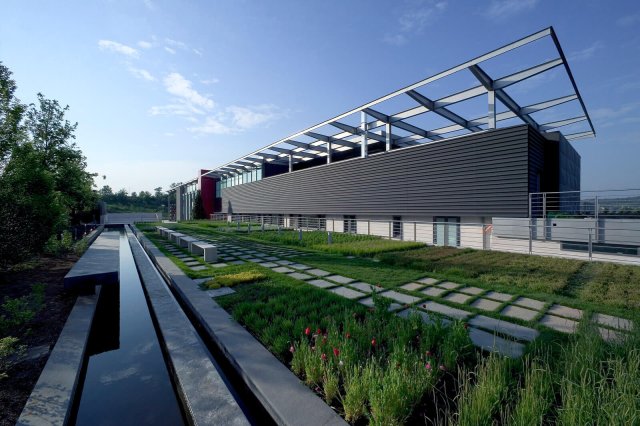
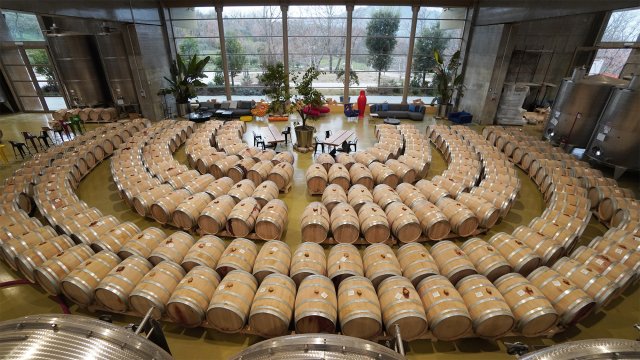
Winemaking centres on a semi-underground cellar cut into the hillside. It was designed with the architect Alessandro Di Blasi, so the surrounding rock holds a steady temperature and trims energy use. Fermentations lean on indigenous yeasts drawn from the estate's own vineyards. The reds then age in French oak, with gentle micro-oxygenation. The estate has also built practical environmental measures into the site. They include photovoltaic panels, recovery of cellar wash water, and insulation that it reports as saving around 60 tonnes of carbon dioxide a year.
The Irpinia benchmarks are the Santandrea Taurasi from Aglianico, the Le Grade Fiano di Avellino and the L'Ariella Greco di Tufo. Next to them sit Irpinia DOC bottlings such as the Fontana della Loggia Falanghina and the Neromora Aglianico, plus a Falanghina under the Beneventano IGT. Taken together, they set out the estate's case: that Irpinia's native varieties, grown high and made with restraint, sit among Campania's most serious wines.
Editorial · ItalianWines.co.uk






 Campania
 Est. 2004
  11 wines