






 Campania
 Est. 1997
  1 wine
  Tastings
 Tours
Tours
 Booking required


Wine area
Wine area
Denominations Produced
Wine areaDOC
Your cellar, your trips, and the wines you've been tracking are right where you left them.
New here?
Free, always. Education first, we'll never sell you anything you didn't ask to see.
Already have an account?
Enter the email you signed up with and we'll send a link to choose a new password.
La Sibilla is the Di Meo family's estate in Bacoli, on the Tyrrhenian rim of the Campi Flegrei west of Naples. The Di Meo family, nicknamed the Spigoni, has worked this volcanic ground for five generations. Luigi Di Meo and his wife Restituta founded La Sibilla in 1997. Ungrafted Falanghina and Piedirosso vines grow inside the Parco Monumentale di Baia. The wines age in Roman aqueduct cisterns, built to feed the imperial fleet based at Bacoli's Piscina Mirabilis.
Book a visit
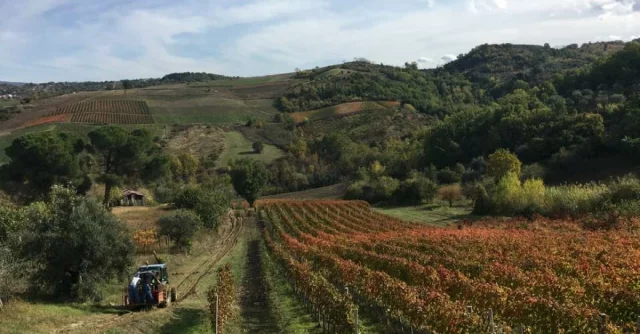
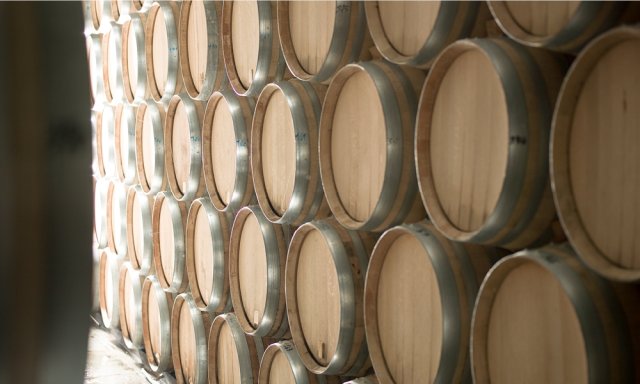
The cellar is dug into a Roman aqueduct. That channel once carried water from the Apennines down to the Piscina Mirabilis, the cistern at Bacoli that supplied the imperial fleet at Misenum. Behind the tuff walls the temperature stays constant and the air stays humid. The Falanghina can rest in bottle there with no cooling equipment. The Romans designed that benefit into the structure two thousand years ago. The vineyards climb the hill of Baia just above, between the houses of the modern town and the Parco Monumentale di Baia. That park holds what is left of the imperial bath complex.
The Di Meo family was on this land before La Sibilla existed as a brand. Their nickname, the Spigoni, means ears of wheat. It dates from the years when grain came before vines. The first Luigi Di Meo, great-grandfather of the winery's founder, bought the family land. In 1938 the Italian state took over the property because of the archaeological remains beneath it. It then granted the family the right to plant vines inside the protected zone. That is why the rows today run between Roman walls and stretches of opus reticulatum stonework. Luigi Di Meo and his wife Restituta founded La Sibilla in 1997, the year the first labelled bottles appeared. Today they run the cellar and vineyards with their three sons, Vincenzo, Salvatore and Mattia.
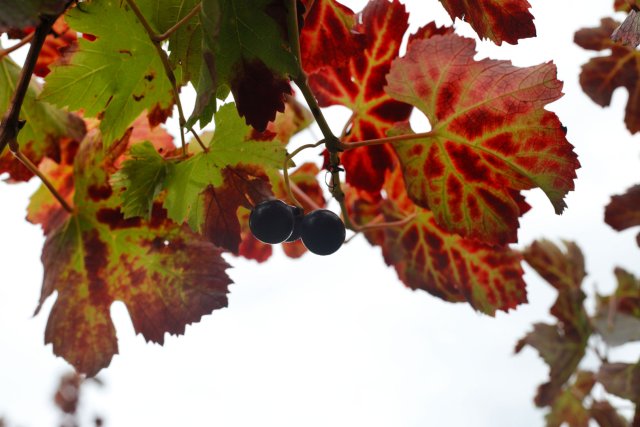
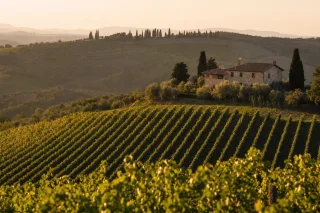
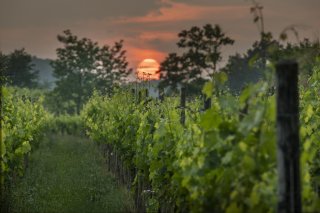
The estate works two grapes from the Campi Flegrei DOC. Falanghina Flegrea makes the whites and Piedirosso the reds, both planted on their own roots. The Phlegraean soils are sandy, basaltic and deep enough that phylloxera never spread here. So the vines have never been grafted onto American rootstock, as they have nearly everywhere else in Europe. Some parcels on the Baia hill carry vines older than sixty-five years. The single-vineyard whites in the Selezione tier come from three plots. Cruna DeLago lies near Lake Fusaro. The older Vigna Madre and Domus Giulii vineyards sit inside the archaeological area.
Three lines run from easy drinking to age-worthy. The Tradizione bottlings, led by the Campi Flegrei Falanghina, are built for the salt and seafood of the Bay of Naples table. The Selezione tier centres on the Cruna DeLago white. It takes the same Falanghina through a longer fermentation and a few years in bottle. The Ricerca line is where the family experiments with later harvests, longer rest and more time in the cisterns. Its current wine is Passio, a Falanghina passito.
Tastings happen in the cellar by appointment, on Friday and Saturday. The visit walks down through the vineyards, from the new Piedirosso plantings to the Cruna DeLago parcel. It then enters the Roman cisterns themselves before the tasting begins. Three flights are offered. They range from a short introduction to the Tradizione range up to the full set, with the Selezione and Ricerca bottlings included. Bacoli is on the Cumana railway out of Naples. The cellar is four hundred and fifty metres from Fusaro station, the simplest way to arrive without driving the Phlegraean coast.
Plate I · CAMPANIA
Wine area

Winery
Bacoli, Napoli
6 tastings, checked by our editors. From €20.
 Tasting & Tour
The experience begins with a walk through the vineyards near the Baia hillside, passing by Cruna DeLago, up to the new Piedirosso plantings. It continues with the exploration of the three historic cellars among ancient walls and Roman cisterns within the Baia Monumental Park, concluding this journey with a pleasant tasting. Tasting of the Tradition line: Falanghina Campi Flegrei and Piedirosso Campi Flegrei. A first taste to discover our reality made of simple gestures and flavors that draw from tradition.
via Winalist
 Tasting & Tour
Begin with a walk through the vineyards near the Baia hillside, passing by Cruna DeLago, until you reach the new Piedirosso plantings. Continue with the exploration of the three historic cellars among ancient walls and Roman cisterns within the Baia Monumental Park, concluding this journey with a pleasant tasting. Tasting of the Selection line: CRUna DeLago, Domus Giulii, and Vigna Madre. Ancient vineyards and advanced winemaking techniques intertwine to create wines that defy time.
via Winalist
 Tasting & Tour
The experience begins with a walk through the vineyards near the Baia hillside, passing by the Cruna DeLago, and up to the new Piedirosso plantings. It continues with the exploration of the three historic cellars among ancient walls and Roman cisterns within the Baia Monumental Park, concluding this journey with a pleasant tasting. A journey through history, made of traditions and values that are renewed thanks to the research and projects of the new generation looking to the future. A tour that includes a tasting of all our wines.
via Winalist
Tasting & Tour
Vineyard walk on the Baia hill from the new Piedirosso plot down to the Cruna DeLago parcel, a tour of the Roman aqueduct cisterns that hold the cellar, and a tasting of the Tradizione line led by the Campi Flegrei Falanghina. Bookable Friday or Saturday morning, around an hour, by appointment via the request form on the official site.
on lasibillavini.it
 Tasting & Tour
The same vineyard and cistern tour, with a tasting that adds the single-vineyard Cruna DeLago Falanghina from the Selezione tier on top of the Tradizione bottlings. It lets visitors compare Cruna DeLago, from a vineyard near Lake Fusaro, with the same Falanghina Flegrea in the Tradizione line.
on lasibillavini.it
 Tasting & Tour
Full flight across all three lines, ending with the Ricerca tier and the Passio Falanghina passito. The most useful visit for tasters who want to understand La Sibilla's range from the everyday Campi Flegrei Falanghina to the late-harvest experiments. Booking goes through the request form on lasibillavini.it/accoglienza.
on lasibillavini.it
Not seeing the estate you want? Estates without an online listing are reachable directly, and their phone and email are in Plan your visit.
Some booking links earn italianwines.co.uk a commission. This never affects price or what we recommend.
La Sibilla's current bottle selection is easiest to understand through Falanghina.
Tell us what you need and we'll help you reach La Sibilla and arrange a visit or tour. We reply within two working days.