About Sorrentino
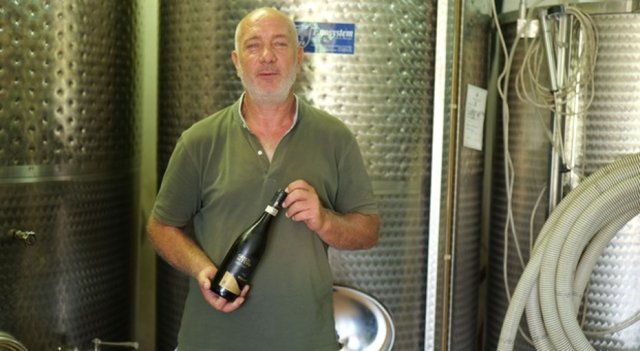
The modern chapter began in 1990. Paolo Sorrentino and Angela Cascone turned a long-running family farm in the Vesuvian foothills into a focused wine business. The family line goes back further, to the late 1800s. Grandmother Benigna kept the vineyards working through the Second World War. Three siblings, Giuseppe, Benny and Maria Paola, now run the vines, the sales and the hospitality in turn.
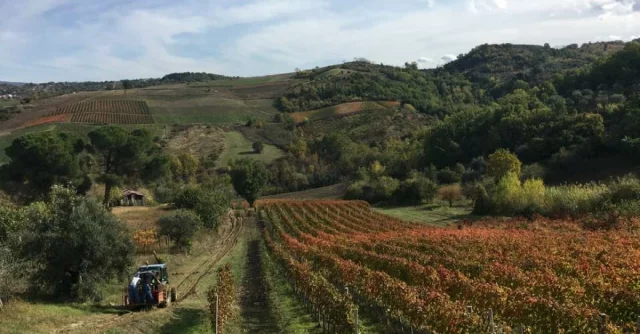
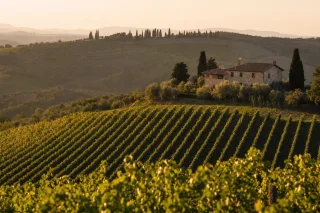
The estate has been certified organic since 2001. The care goes beyond the certificate. The estate captures rainwater, runs on solar power, uses biodegradable packaging and grows cover crops on the vineyard floor. The vineyards sit in terraces between roughly 200 and 500 metres above sea level. The soil is the volcano's loose, mineral-rich sand. Rows follow the slope, and the pruning is matched to each grape.
Four Vesuvio DOC wines anchor the Classic line: Lacryma Christi Bianco "5 Viti", Lacryma Christi Rosso, Falanghina "Macerina '91" and Piedirosso "7 Moggi". The Falanghina has a story of its own. The 1991 Falanghina Vesuvio came from old family pergolas that Paolo Sorrentino rediscovered. He made it with cold maceration. It was one of the early vintages of Falanghina bottled on its own on the volcano.
The Crù Prodivi line goes further. It singles out individual vineyards for grapes that reward closer attention. Aglianico Pompeiano IGT "Don Paolo" comes from a parcel at around 500 metres, on the high side of the estate. Catalanesca and Caprettone are bottled on their own from the same volcanic terrace. The Bubbly line turns on DòRè, a vintage-dated sparkling Caprettone under the Vesuvio DOC, from grapes grown on the cone itself. It is the only metodo classico Lacryma Christi sparkling grown entirely on the volcano. A sparkling Piedirosso rosé, made the same way, shows what the local red grape can do.
Visitors are welcome all year round. The cellar runs guided wine tours, sommelier-led tastings of the award-winning DOC and IGT wines, and walks through the terraced vineyards. Vesuvius rises on one side, and the Gulf of Naples spreads out below. Pompeii is seven kilometres away and Naples around 25. The Sorrento and Amalfi peninsulas are under an hour. The on-site Vesuvio Inn gives visitors a wine-country base for a Campania trip. Few estates offer an organic, single-vineyard take on Vesuvio DOC and Pompeiano IGT, plus a sparkling Lacryma Christi grown on the volcano. This one does, with a clear estate identity behind the wines.
Editorial · ItalianWines.co.uk








 Campania
 Tastings
 Tours
Tours
 Accommodation
 Booking required


 Wine grape



 38
38