






Wine route
Cinque Terre Terrace Trail
2 days · 6 stops
Open the driveYour cellar, your trips, and the wines you've been tracking are right where you left them.
New here?
Free, always. Education first, we'll never sell you anything you didn't ask to see.
Already have an account?
Enter the email you signed up with and we'll send a link to choose a new password.
Liguria · DOC
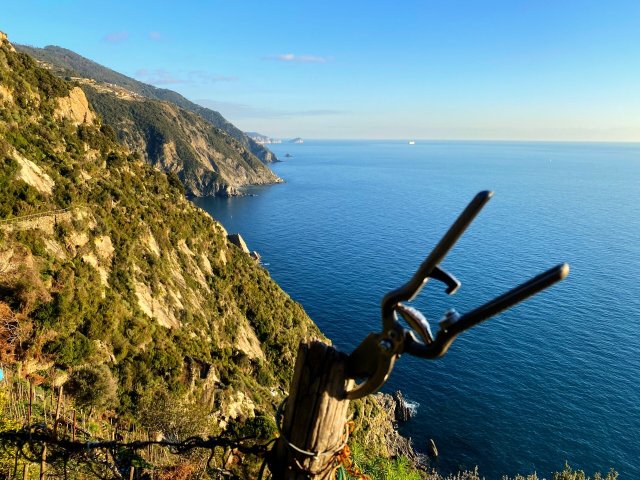
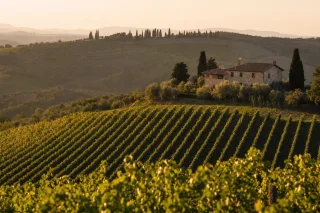
Cinque Terre DOC is wine from a cliff. Dry-stone terraces climb above Riomaggiore, Vernazza and Monterosso. Every job here is done by hand or by monorail. Bosco leads the salty whites. Dry those same grapes in a village attic and you get Sciacchetra, one of Italy's rarest sweet wines.
Decode the label
One word on the front changes the ageing, the strength and the price.
On the label
Bianco
The dry white of the terraces
Drink it young, cold and within sight of the sea if you can manage it.
In stock from £29
On the label
The three coste
Costa de Sera, de Campu, da Posa
Single-costa bottlings from mapped parcels above Riomaggiore.
No bottles in stock right now
On the label
Sciacchetra
The attic-dried rarity
A few thousand half-bottles a year; hard cheese or nothing.
No bottles in stock right now
The boundary
Everything on this page, the estates, the bottles, the sub-zones, sits inside this line.
Wine route
2 days · 6 stops
Open the drive
Estate 1
Riomaggiore
Tastings available
The zone is the terraced Riviera between Punta Mesco and Punta di Montenero: the whole communes of Monterosso, Vernazza and Riomaggiore plus the Tramonti coast of Portovenere, all in La Spezia province. Vines grow on dry-stone terraces that fall from the coast path to the water, and the three crus sit together above Riomaggiore and Volastra on the zone's warmest, steepest stretch.
Inside the zone
Click or tap a pin for its estate. The numbered pins match the estate cards below.
Towns worth knowing
The co-op cellar sits at Groppo above Manarola; Possa farms from Riomaggiore itself.
In the glass
One profile at a time, never blended into a single set of bars.
Lemon
Almond

Wet stones

Honey

Apricot
Raisin
The disciplinare
The same table on every denomination page, straight from the production rules.
Solid means the rules demand it. Striped means optional, up to that amount. The words on the right say the same rule.
Appassimento stays in the zone Sciacchetra's grapes must dry, press and age inside the DOC's own territory.
40 percent, twice Bosco is at least 40 percent of the blend, and Sciacchetra's must yields at most 40 percent of its weight.
The crus are mapped to the sheet each costa is delimited on named cadastral sheets of Riomaggiore commune.
Patience is legal tender Sciacchetra releases the November after harvest; the Riserva waits until its third.
Ageing and alcohol minimums per tier are in the label guide above.
Editor's cellar
Live prices, compared across 2 UK retailers.
Cellar doors · inside the zone
One estate inside the zone opens its doors today. A small list, honestly kept: only working cellars with confirmed visits appear here.
No estates match these filters. Clear a filter to see more.
The mapped crus
Three coste above Riomaggiore carry their own name on the label, each delimited sheet by sheet in the disciplinare.

A single costa above Riomaggiore, mapped to sheet 30 of the commune's cadastre: yields tighten to 8.5 tonnes and the minimum rises to 11 percent natural.
Terraces on sheets 15 and 16 of Riomaggiore around the hamlet of Groppo, named for the campo, the rare flat patch; same 8.5-tonne cap as its sibling coste.
Sheet 4 of Riomaggiore, delimited off the Groppo-Volastra-Corniglia road: the cru Possa's growers made famous, capped at 8.5 tonnes with 11 percent minimum.
Vintage provenance
No denomination-wide vintage chart is published for the Cinque Terre: production is tiny and quality tracks the grower and the costa more than the year.
What to check instead
The costa: where a wine comes from inside the zone changes what is in the glass. See them above.
The producer: quality here is tracked estate by estate rather than year by year.
Every Cinque Terre wine starts from the same blend. Bosco makes up at least 40 percent. Albarola and Vermentino together can reach 40 percent. Other local whites can add up to 20 percent. The yield cap is 9 tonnes of grapes per hectare. That looks modest on paper. In practice it is heroic work, because every tonne rides a monorack trolley down the cliff. Three sottozone tighten the rules further: Costa de Sera, Costa de Campu and Costa da Posa. Their cap drops to 8.5 tonnes, and the grapes must reach 11 percent natural alcohol. Sciacchetra uses the same grapes, dried on racks inside the zone. At most 40 percent of their weight may become wine. The finished wine must reach 17 percent total alcohol, with at least 13.5 percent developed. It cannot be sold before the 1st of November after harvest. The Riserva waits until the 1st of November of the third year.
On the table
The home country leads; global pairings that genuinely work follow.
In-depth guide
It is the sweet wine of the Cinque Terre, made from dried grapes. Bosco-led bunches dry in village attics. At most 40 percent of their weight is then pressed into wine. That wine reaches 17 percent total alcohol. It goes on sale the November after harvest, and the Riserva waits until its third year.
Bosco is at least 40 percent of the blend. Albarola and Vermentino together can reach 40 percent. Other local whites can add up to 20 percent. The same blend serves the dry bianco, the three coste and the Sciacchetra.
They are the DOC's three official sottozone, single coste above Riomaggiore. The DOC rules map each one parcel by parcel. Yields drop to 8.5 tonnes, and the minimum natural alcohol rises to 11 percent. The co-op bottles all three.
Because nothing here is mechanised. The terraces are reached on foot or by monorack rail, and some plots only by boat. The walls need constant rebuilding. The 9-tonne yield cap is a paper figure, and the real crop is usually far less.
Lemon, green herbs and almond, over a strongly salty finish. It is light-bodied and brisk. It is made for the villages' anchovies, both fried and marinated.