






Wine route
Itria Valley Whites
1 to 2 days · 5 stops
Open the driveYour cellar, your trips, and the wines you've been tracking are right where you left them.
New here?
Free, always. Education first, we'll never sell you anything you didn't ask to see.
Already have an account?
Enter the email you signed up with and we'll send a link to choose a new password.
Puglia · DOC
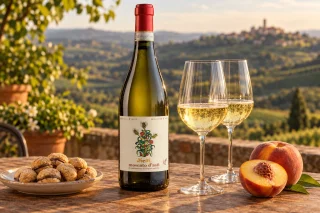
Ostuni is the White City, and it keeps two rarities. Its bianco leads with Impigno, a grape grown almost nowhere else. Its red is Ottavianello, Italy's only denomination built on Cinsault. Both come from the olive-silvered hills between the town and the Adriatic. They are made in tiny and stubborn quantities.
Decode the label
One word on the front changes the ageing, the strength and the price.
On the label
Bianco
Impigno's saline white
The aperitivo answer under the White City's walls.
No bottles in stock right now
On the label
Ottavianello
Italy's only Cinsault DOC
Chill it lightly and pour it with the bombette.
In stock from £10.95
The boundary
Everything on this page, the estates, the bottles, the sub-zones, sits inside this line.
Wine route
1 to 2 days · 5 stops
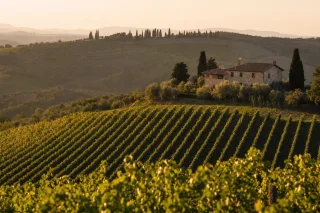
Open the driveThe zone drapes over the last limestone folds before the Adriatic: Ostuni, Carovigno, San Vito dei Normanni and San Michele Salentino entire, with parts of Latiano, Ceglie Messapica and Brindisi. Millennial olive groves dominate the plain; the vines take the rises, close enough to the sea that salt rides every breeze.
Inside the zone
Towns worth knowing
The White City's enoteche are the realistic place to taste both wines.
In the glass
One profile at a time, never blended into a single set of bars.
Lemon

Green Apple
Almond
Cherry

Redcurrant

White pepper
The disciplinare
The same table on every denomination page, straight from the production rules.
Solid means the rules demand it. Striped means optional, up to that amount. The words on the right say the same rule.
Italy's Cinsault lives here Ottavianello is the French grape under a Puglian name, protected nowhere else in Italy.
Two grapes the world forgot Impigno and Francavilla survive almost entirely inside this DOC.
Seven communes by the sea from Ostuni and Carovigno to the edge of Brindisi, between olive groves and the Adriatic.
Ageing and alcohol minimums per tier are in the label guide above.
Editor's cellar
Live prices, compared across 3 UK retailers.
Vintage provenance
No vintage chart exists for Ostuni: volumes are tiny, the wines are drunk young, and quality follows the handful of cellars that bottle them.
What to check instead
The producer: quality here is tracked estate by estate rather than year by year.
The bianco is built on Impigno, at 50 to 85 per cent. Francavilla, another local survivor, takes 15 to 50 per cent. Bianco d'Alessano and Verdeca can add up to 10 per cent between them. The wine must reach 11 per cent alcohol. The Ottavianello needs at least 85 per cent of its namesake grape. That is the Cinsault of southern France, under a Puglian name. Negroamaro, Malvasia Nera, Notar Domenico and Susumaniello share the remainder. Minimum alcohol here is 11.5 per cent. Neither wine carries an ageing mandate, so both are made to drink young. The zone takes in seven communes of Brindisi province. Ostuni, Carovigno, San Vito dei Normanni and San Michele Salentino are covered entire. Parts of Latiano, Ceglie Messapica and Brindisi itself make up the rest.
On the table
The home country leads; global pairings that genuinely work follow.
In-depth guide
The Puglian name for Cinsault, and Ostuni's red. The DOC requires at least 85 per cent of it, which makes this Italy's only Cinsault denomination. Expect a pale, spiced, cherry-bright red that takes a light chill.
Impigno at 50 to 85 per cent, with Francavilla at 15 to 50 per cent. Both are local rarities. Bianco d'Alessano and Verdeca can add up to 10 per cent. The wine is light and dry, with a salty edge, at 11 per cent minimum.
Rarely. Production is tiny, and most of it is drunk in Brindisi province. It is a wine to order on the spot, in the White City's restaurants, rather than to hunt on British shelves.
Explore more Puglia
Same region only: the denominations Ostuni drinkers reach for next.


