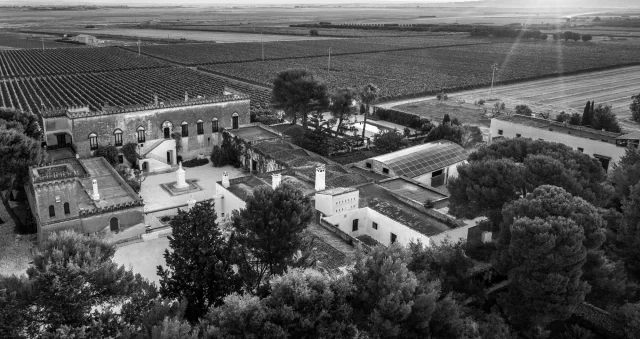
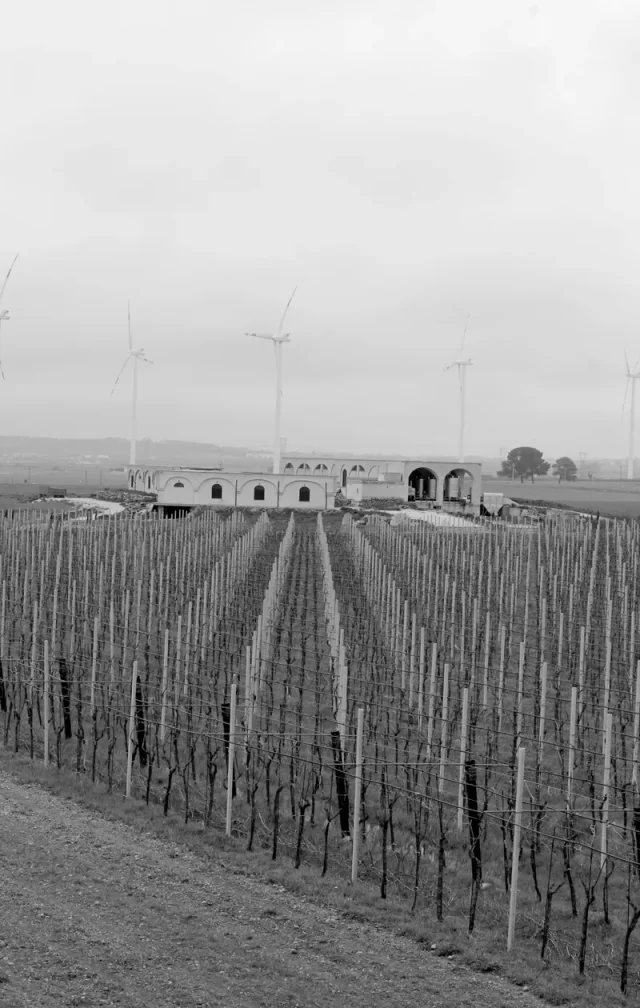
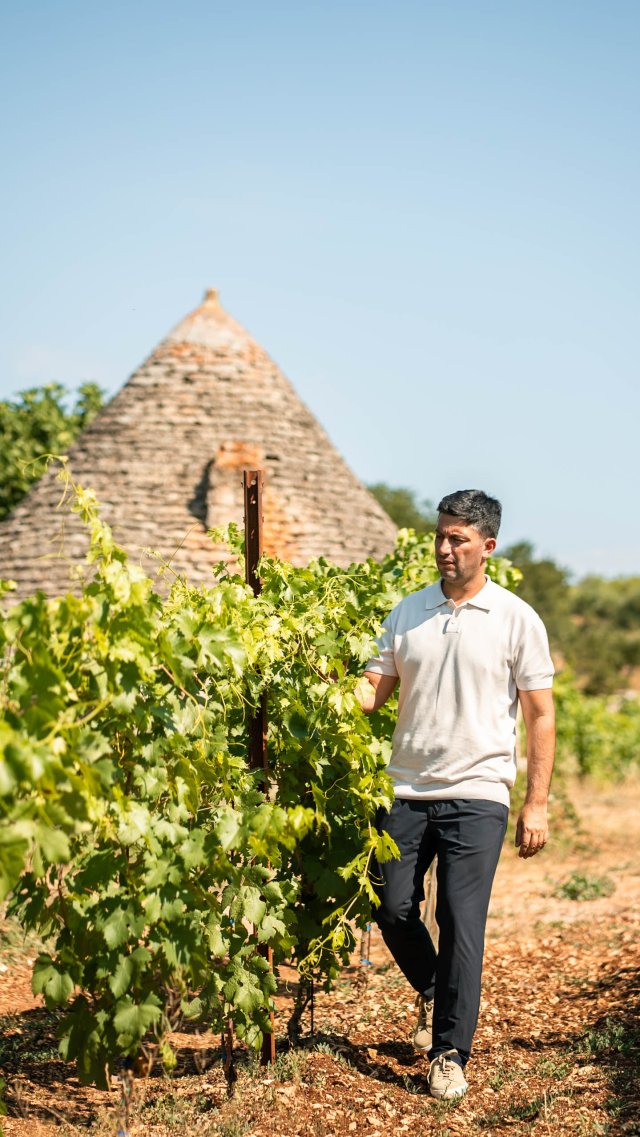
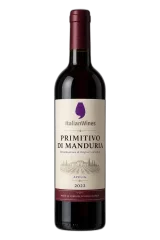
The cellars sit in San Marzano di San Giuseppe, in the province of Taranto, on the strip of land between the Ionian and Adriatic seas that anchors the Primitivo di Manduria DOP zone. The town is one of the historic cradles of Primitivo, with bush-trained vineyards that go back generations. When nineteen local growers came together in 1962 to set up Cantine San Marzano, the appellation did not yet exist as the export label it would later become. The co-operative was a way to pool old vines and shared know-how at a moment when the region's wines mostly travelled north as bulk.
The shift from bulk to brand took shape in two stages. In 1982 Francesco Cavallo was appointed Chairman of the Board, a role he held for forty years and one that gave the winery a single editorial voice through the post-war modernisation of southern Italian wine. In 1996 the cellar's first bottling line came online, and the membership took the more demanding step of selling under their own labels rather than as a producer of unbranded wine. From that point on, Cantine San Marzano was building a portfolio.
The label that defines the producer arrived in 2000. Sessantanni Primitivo di Manduria DOP is sourced from bush-vines over sixty years old, the heritage stock the co-operative was founded to protect. The wine became the calling card for what old-vine Primitivo could do: dense black fruit, dried fig and chocolate notes, alcohol balanced by the structure of dry-farmed alberello vineyards. Anniversario 62 Primitivo di Manduria DOP Riserva and Sessantanni Limited Edition sit alongside it as the top-end statements, and 11 Filari Primitivo di Manduria DOCG Dolce Naturale extends the range into the rare sweet expression of the same DOCG.
Beyond the Manduria reds, the bulk of the catalogue lives under Salento IGP. The F Negroamaro selection works the second Salento native at the same level the producer applies to Primitivo, while Susco Susumaniello and Amai Rose give the more obscure local grape its own line. Tramari Rose di Primitivo and Edda Bianco have become recognisable retail names in their own right, and the entry-level Il Pumo and Talo ranges spread across Salento IGP, Puglia IGP, Salice Salentino DOP and Valle d'Itria IGP. Liboll Spumante and the metodo classico Calce sit on the sparkling side. Naca Primitivo Puglia IGP BIO is the certified organic line within the catalogue.
The estate is open for tastings by appointment only, with bookings handled through the dedicated shop contacts rather than a public booking platform. The visiting offer is winery-led rather than agritourism in the usual Pugliese sense: there is no on-site restaurant, and accommodation is not part of the portfolio. Cantine San Marzano remains a corporate co-operative, San Marzano Vini S.p.A., not a family estate, and the editorial throughline is the old-vine Salento vineyards rather than a single founder narrative.









 Apulia, Italy


 Est. 1962
  24 wines
  Tastings
 Tours
Tours
 Accommodation
 Booking required