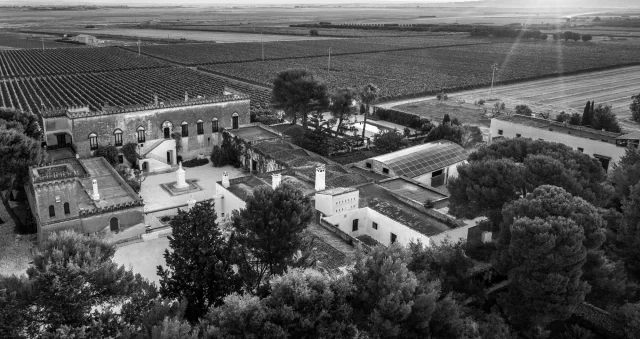
L'Archetipo's first furrow was opened in 1970 by Carlo Dibenedetto Sr in Contrada San Giorgio, on the gravel plateau between Castellaneta and the Ionian coast. For two decades the estate sold its grapes and wine in bulk; the move to bottling in 1990 turned the family work into a named identity.
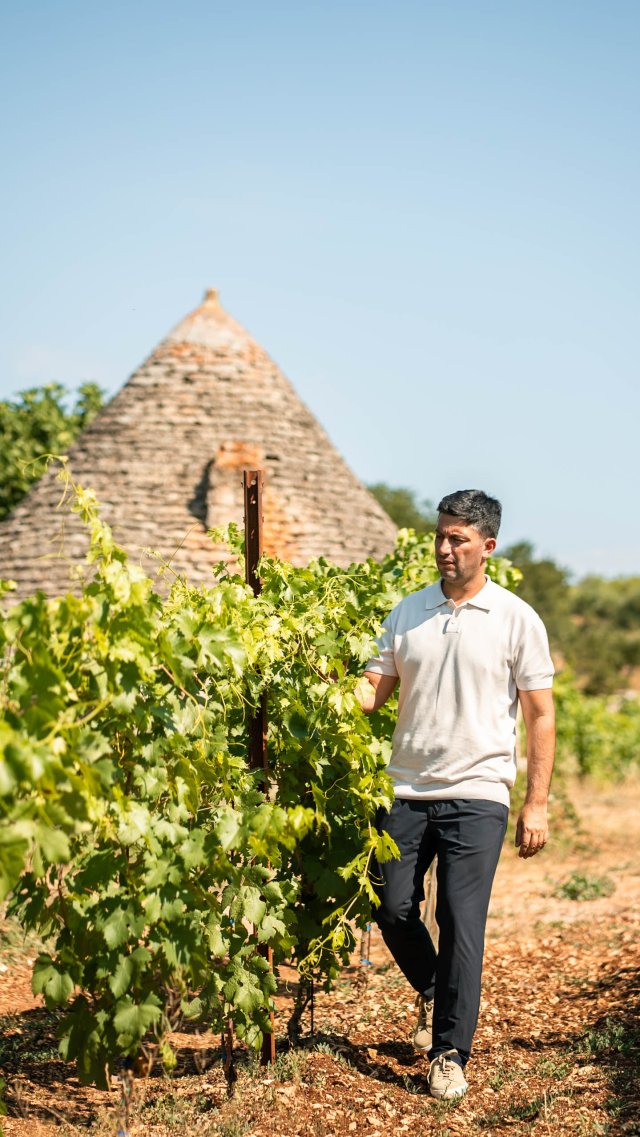
His son Francesco Valentino, an agronomist by training, began converting the vineyards to organic farming in the 1980s. He read Rudolf Steiner and shifted to biodynamics in 2000, then read Masanobu Fukuoka and arrived at agricoltura sinergica, the synergistic-agriculture method now practised across the estate. The vineyards are not ploughed, no synthetic fertiliser or pesticide enters the soil, and the rows are planted in companion patterns so that vines, grasses and legumes work as one ecosystem.
In 2010 the family built a new gravity-fed cellar entirely in tufa stone in Contrada Tafuri, where most of the wines mature today. From 2013 they began recovering older Apulian varieties, including Susumaniello, Marasco and Marchione, alongside their established Primitivo, Aglianico and Fiano vineyards. From 2015 the cellar pioneered ancestral-method sparkling wines under the Susumante and Marasco labels.
The estate joined Luca Gargano's Triple A catalogue (Agricoltori, Artigiani, Artisti) in 2016, which means: massal selection, hand-harvest, native yeasts only, no filtration or fining, and only minimal sulphur at bottling. The family team now spans two generations: Francesco Valentino and Anna Maria Passarelli with their children Carlo Nazareno, Domenico, Andrea and Maria Clelia, each with a named responsibility from soil work to cellar to export.
Most of the wines wear the Salento or Puglia IGT label rather than DOCG. As is typical of Triple A producers, the estate prefers the freedom to vinify outside DOC rules in order to keep the wine as close to the vineyard as possible. Reference bottles include Primitivo Mistico, Aglianico, Fiano Salento and the orange Verdeca Sette Lune.









 Apulia, Italy


 12 wines
  Tastings
 Tours
Tours
 Accommodation
 Walk-ins welcome