





 1 wine
  Tastings
 Tours
Tours
 Accommodation
 Booking required
Piluna wine tour
Cellar visit, walk-through of the on-site Merum wine museum, and a tasting of three Castello Monaci wines.
EnquireCastello Monaci sits at the heart of Salento, a 16th-century estate at Contrada Monaci near San Pancrazio Salentino in the province of Brindisi. The castle began life as a Basilian monastic refuge before passing through noble Apulian families to its current Memmo stewardship, and today its white tuff cellar and Merum wine museum frame an estate dedicated to the native Salento grapes Primitivo, Negroamaro, and Malvasia Nera.

 Apulia
Visit experiences, curated by our editors. Enquire with the winery where booking details are not published.
Cellar visit, walk-through of the on-site Merum wine museum, and a tasting of three Castello Monaci wines.
EnquireCellar tour and Merum museum walk, with three glasses of Castello Monaci wine paired with a platter of Apulian cured meats and cheeses.
EnquireCellar, Merum museum, and castle visit, tasting of three reference Castello Monaci wines, followed by a sit-down lunch from the menu of the in-house chef.
EnquireCellar visit, walk-through of the on-site Merum wine museum, and a tasting of three Castello Monaci wines.
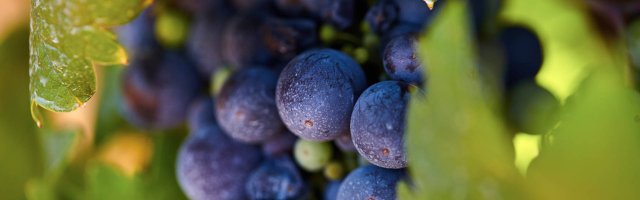
EnquireSalento's flat, sun-bleached coastal plain between Brindisi and Lecce gives Castello Monaci its raw material. More than 200 hectares of vineyard ring the castle, planted to the three grapes that define this southern tip of Apulia: Primitivo, Negroamaro, and Malvasia Nera di Lecce. The vines sit on iron-rich red clay over limestone bedrock at Contrada Monaci, and the estate's land covers enough surface to keep the cellar fed entirely from grapes farmed within sight of the towers.
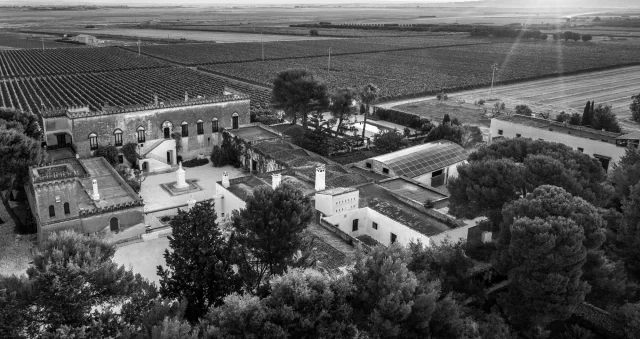
The castle is documented in the Salice Salentino land register from the 1500s, when Basilian monks worshipped and offered refuge there. Successive owners followed: the Martino family, then the Parry Graniger, and finally the Provenzano di Ugento line that brought the property into the Memmo family, the current heirs. Six centuries of additions and repairs sit behind the ivy-covered towers, the courtyard palms, and the gardens that anchor the site today.
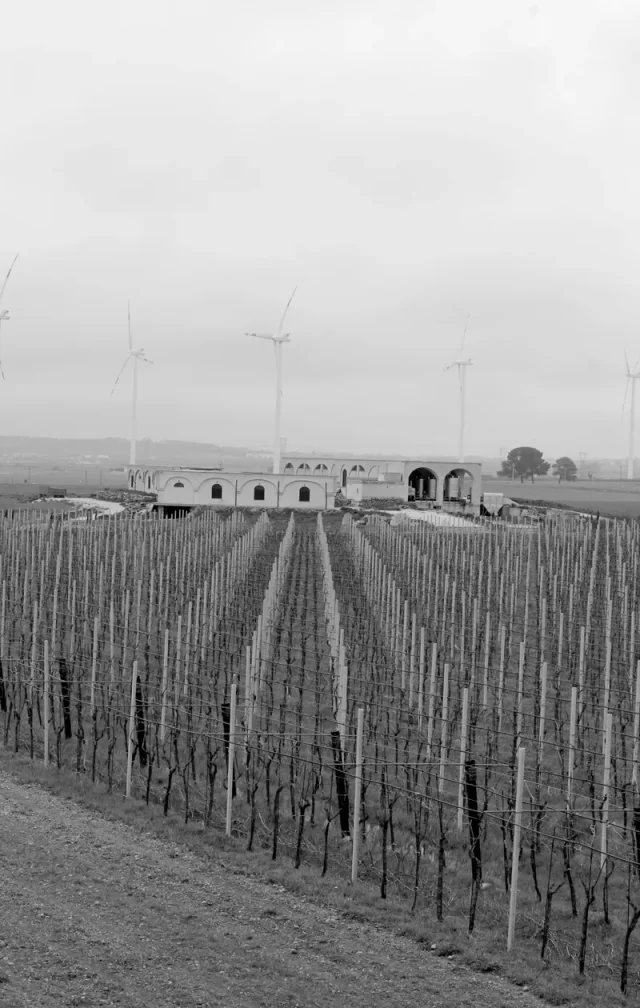
Wine production lives in a separate building from the castle keep. The Memmo family built the working winery in the 1970s in the local white tuff stone, which insulates the cellar without mechanical cooling and gives the building its almost chalk-bright walls. Inside, refrigerated pressing feeds thermo-controlled fermentation tanks; below ground, more than 1,000 barriques and 18 large French oak casks rest in a barrel cellar shovelled directly into the tuff.
The wine range is built around Salento IGT bottlings named for the estate's Greek and local heritage. Piluna and Artas are monovarietal Primitivo. Maru is a Negroamaro. Kreos is a Negroamaro rose. Aiace anchors the top of the red range, and the white Acante and the indigenous-grape Coribante sit alongside, while Liante carries the Salice Salentino DOC label. The names trace back to Magna Graecia: piluna refers to the terracotta vessels Greek and pre-Roman growers used to store wine and oil.
Castello Monaci is also a working cultural site. The Merum wine museum, housed in a 1930s wine factory on the estate, traces the history of Salento viticulture from the rural way of life through the era when local wines were bulk-blended for stronger northern bottlings, and into the modern phase that has lifted Salento to a recognised origin. The museum is part of every booked wine tour, and the estate stays open to visitors year-round.
Editorially verified by ItalianWines.co.uk.
Plate I · APULIA
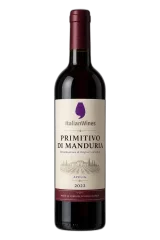
Castello Monaci's current bottle selection is easiest to understand through Primitivo.