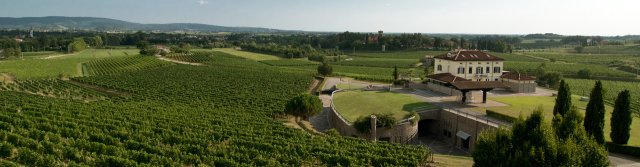
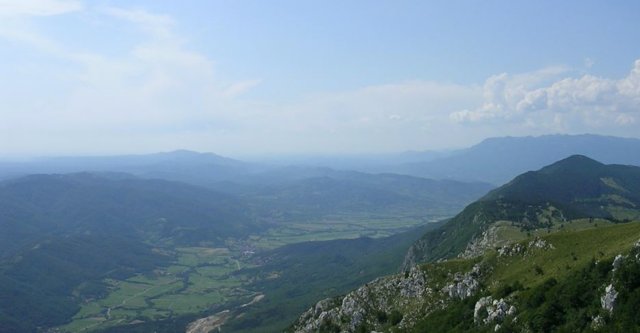
The estate sits at Localita Tre Buchi, a single hill road in the Oslavia frazione of Gorizia, where Italian and Slovenian vines run into each other across the border. Radikon family records go back to 1861 in this corner of the Collio Goriziano, and Stanko Radikon bottled his first commercial vintage of Pinot Grigio, Sauvignon, Ribolla Gialla and Tocai in 1980. By the late eighties the work had a clear aim: low yields, hand-picked grapes, almost nothing added in the cellar.
The break came in 1995. Stanko started fermenting Ribolla Gialla on its skins for weeks at a time, the way a red is made, and the colour, texture and savour of the resulting wine reset what skin-contact whites could be in Italy. By 2002 every Radikon white macerated for around three months on its skins and bottled with no added sulphur. The estate stepped out of the Collio DOC because the long maceration sat outside DOC rules, and the labels have used the Venezia Giulia IGT designation ever since.
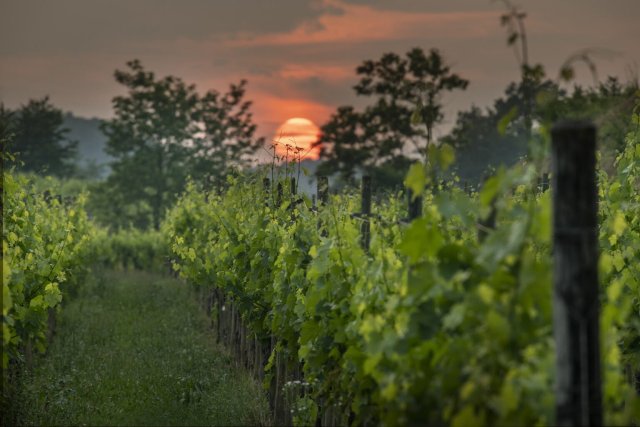
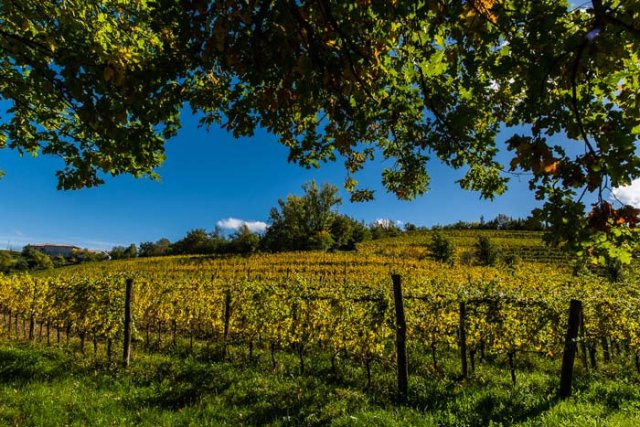
Eleven hectares of ponca, the eocene sandstone and marl that streaks Oslavia's slopes, anchor the vineyards. The main range, all aged for three years in old wooden barrels and at least a year in bottle, includes Ribolla, Oslavje (a Pinot Grigio, Sauvignon and Chardonnay blend on the label since 1992), Jakot (Friulano renamed to make a quiet point about the Tocai naming dispute), Merlot and Pignoli. A shorter-maceration S Line of Slatnik, Sivi and RS gives an entry into the house style, while Ribolla 3781 and Modri sit at the top of the cellar as long-aged collection bottlings.
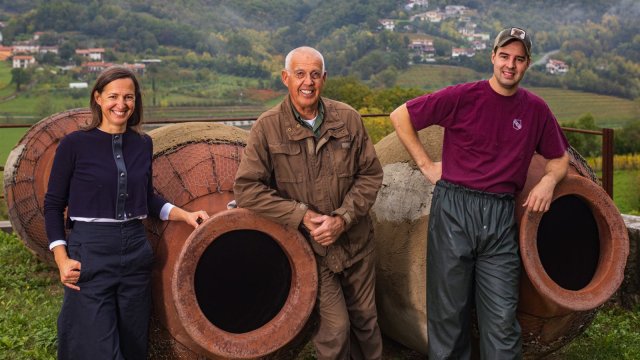
Stanko died in September 2016. His son Sasa, who had already created the S Line in 2009, took over and has kept the philosophy intact: spontaneous fermentation, no sulphites, very long ageing, the same ponca and the same hands. In 2023 his daughter Ivana joined the cellar and launched the Pop Line, a fresh-style Bianco and Rosso macerated for only a few days in stainless steel. Four guest rooms with a view across the vines complete the estate above Oslavia.







 Friuli Venezia Giulia, Italy


 Est. 1979
  3 wines
  Tastings
 Tours
Tours
 Accommodation
 Booking required