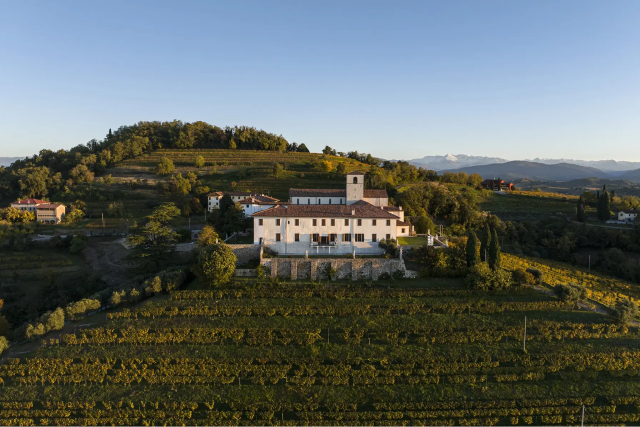
La Castellada takes its name from the hill of Oslavia, where Giuseppe Bensa returned in 1954 after years working in Switzerland. The property he bought above Gorizia was a tavern with vines attached. For three decades the family poured demijohns of their own wine across the counter, rather than bottling it. The shift came in 1985, when sons Giorgio and Nicolò released the first labelled wines. In 2009, twenty-four years later, Nicolò's sons Matteo and Stefano joined the cellar. That left the estate fully family-run across three generations.
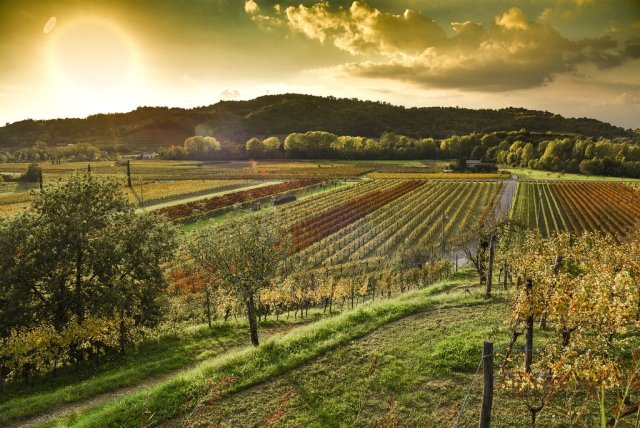
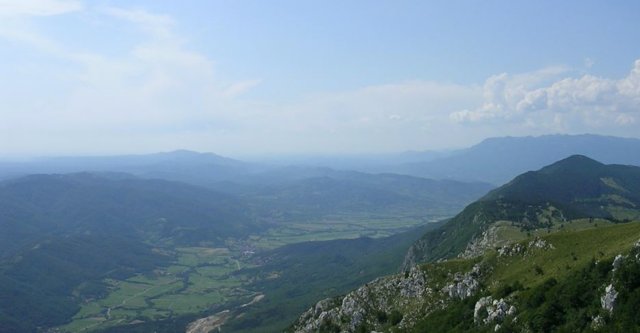
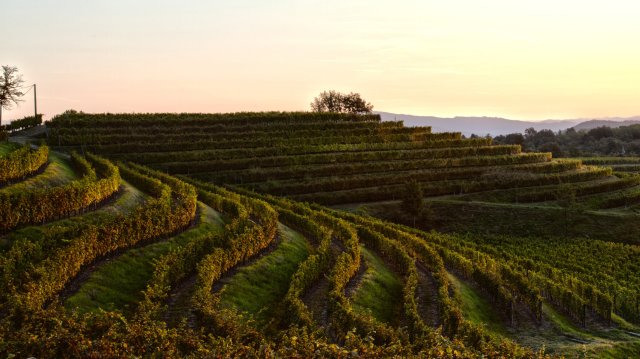
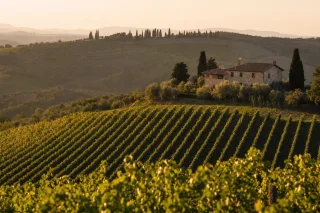
The Collio side of the Italian border is built on ponca, a layered Eocene stone that locals call flysch. La Castellada's vineyards cover ten hectares at around 180 metres, about 14 football pitches of vines. Half the vines are 45 to 55 years old. The other half were planted at higher density, roughly twenty-five years ago. Cool air slips down from the Julian Alps, and the Adriatic pulls warm currents up the valley. That gives Oslavia a long, breezy ripening season. It has made the place one of the most distinctive corners of Friuli Venezia Giulia.
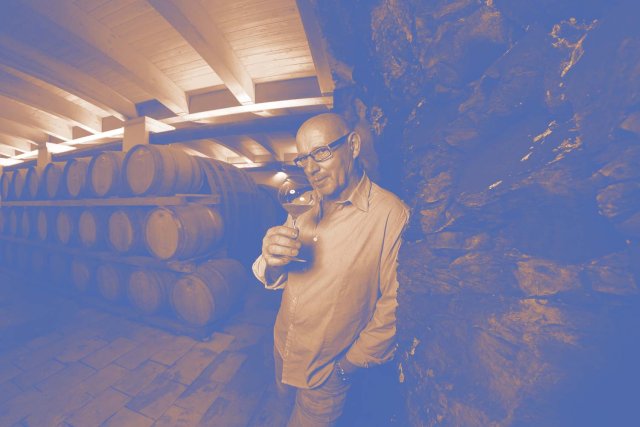
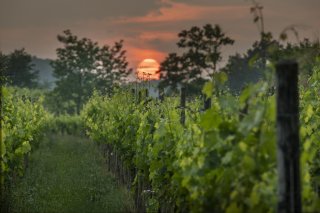
The Bensas farm with a light touch, the approach that became the Oslavia signature long before "natural wine" was a marketing category. The vine rows stay fully grassed over, which feeds biodiversity. Pruning holds yields back on purpose. The only vineyard treatments are copper sulphate and sulphur. Fermentation runs on native yeasts, in conical vats. The skins stay in the juice for varying lengths: roughly four days for the single-variety whites, and around two months for the orange-style Bianco della Castellada blend. The wines then age for two years in old Slavonian botti, barriques and tonneaux. They refine for a year in steel and rest a final year in bottle before release. Nothing is filtered, sulphur use stays low, and the cellar is intentionally slow.
Beyond its own labels, La Castellada belongs to the Associazione Produttori Ribolla di Oslavia. This small group pulled Ribolla Gialla out of bulk supply and reframed it as a benchmark orange-style white. Alongside Radikon, Gravner, Dario Princic, Il Carpino, Fiegl and Primosic, the Bensas helped argue the case. This thick-skinned local grape, the group said, deserved a long soak on its skins, large oak and serious bottle age. The range now runs from a fresher Ribolla Gialla Collio DOC and a single-variety Friulano to the deeply structured Bianco della Castellada. A small parcel of Merlot completes it, one of the more confident reds on the Oslavia ridge.
The estate is private and the cellar is small, but the family is hospitable. Visitors are welcomed by appointment, through the Bensas' direct line. The address is still the original tavern site at Località Oslavia 1. The Sacrario Militare war memorial and the Slovenian frontier are visible from the vineyard rows. The wine list reads as a study in what Oslavia does best. Whites, native and international, get time on skins, in oak and in glass. And there is a Merlot grown on ponca rather than gravel. For UK drinkers coming to Friuli for the first time, La Castellada is one of the names that explain the place. It shows why sommeliers in London, New York and Tokyo take the region so seriously.







 Friuli Venezia Giulia
 Est. 1954
  7 wines
  Tastings
 Booking required