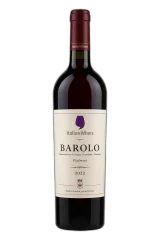



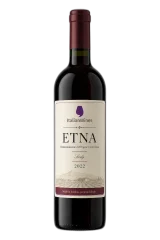
Domenico Clerico Domenico Clerico Pajana 2018
DOCG

Domenico Clerico Barolo Pajana

Domenico Clerico

Vintages 2020 2018

Single-vineyard Barolo DOCG from the Pajana plot in Monforte d'Alba's Ginestra cru, 100% Nebbiolo on sandy limestone. Clerico's modernist hand frames tar, dried rose and forest floor over firm tannin and bright acidity. Cellars a decade plus.

UK Market From £58.64 Found across 2 retailers
Check Availability
Verified retailers Price comparison Updated daily
Tasting Notes

Tasting Clerico's Pajana: tar, rose and Ginestra spice

Across more than 4,400 Vivino ratings the descriptors that recur for Pajana are leather, tar and tobacco over red cherry and dark plum, with a dried-rose lift. Grown on the sandy, active-limestone soils of the Ginestra cru, it carries Domenico Clerico's polished, barrique-shaped style.

Tasted by
ItalianWines editorial (drinker consensus)
Tasted on
12 June 2026
Source
Drinker consensus · confidence Medium
Taste profile
Body Light / Full
Tannins Smooth / Grippy
Sweetness Dry / Sweet
Acidity Soft / Crisp
Nose

Tar, dried rose and forest floor lead, the markers Nebbiolo drinkers return to most for Pajana across more than a thousand detailed Vivino notes. Beneath sit red cherry and dark plum, tobacco and a sweet, toasty edge from Clerico's barrique ageing.

VioletViolet
CherryCherry
PlumPlum
TobaccoTobacco
TarTar
LeatherLeather
OakOak
LiquoriceLiquorice
Palate

Full-bodied and firmly tannic, with the high acidity Barolo is built on cutting through the fruit. The sandy, active-limestone soils of the Ginestra plot lend a velvety mid-palate, while leather, liquorice and savoury spice carry the Nebbiolo length.

Finish

Long and gripping, with the fine, dusty tannin that marks Clerico's Pajana closing on tar and dried herbs, asking for rich food or more time in the cellar.

Overall

A single-vineyard Ginestra Barolo that drinkers rate at 4.2 on Vivino and critics push to 95-plus in top years; polished and modern in style, it rewards braised meat now or a decade in the cellar. One for Nebbiolo enthusiasts more than newcomers.

Drink now Best by 2042
Live UK pricing

Buying Pajana: two Barolo vintages in stock

Two vintages are listed here, the cooler, perfumed 2018 and the riper, mid-weight 2020, from a small set of UK merchants between roughly £73 and £107. Both are single-vineyard Ginestra Barolo, released after the DOCG's minimum 38 months of ageing.

Best price · 75 cl £58.64 at 8wines
Price spread £58.64 – £106.70 Across 2 UK retailers tracked
Retailers tracked 2UK 3 in stock
Vintages live 2020 · 2018 Current release: 2020
Per-litre (75 cl basis) £78.19 Per-litre price for the lowest current offer
Last checked 30 May 2026, 16:12 BST Refreshed once every 24 hours
Wine fit score

How Pajana rates as an Italian wine

A high-classification, single-vineyard Barolo scores high for cellaring and special-occasion drinking and lower for everyday or beginner appeal. Tar-and-rose Nebbiolo with firm tannin is a connoisseur's style, not a soft introductory red.

Best for cellar 8.8/10

A DOCG Barolo with 38-plus months of mandated ageing, high tannin and acidity and a 15-to-20-year track record is built for the cellar.

Best for an occasion 8.8/10

A prestige single-vineyard Barolo from a benchmark Monforte estate, priced and structured for a special table.

Best with food 8.4/10

High tannin and bright acidity make Pajana excellent with fatty braised meat, game and aged cheese, though that same grip narrows it away from delicate or spicy food.

Best value 7.2/10

At roughly £73 to £107 it is priced like a serious single-vineyard Barolo, but the 95-plus critic scores and Ginestra cru pedigree make it fair value within that tier.

Scoring is rule-based and deterministic. The model and weightings are documented in our editorial methodology.

Denomination Compliance Snapshot

Barolo in five fields

A compact view of what the Barolo denomination actually requires, and how this bottle sits inside it. Pulled from the official Italian disciplinare.

Allowed grapes
1 varieties listed
This bottle: Nebbiolo.
Minimum ageing
38 months minimum
Of which 18 months in oak.
Region / area
Cuneo, Langhe: Barolo, Castiglione Falletto, Serralunga d'Alba, La Morra, Monforte d'Alba, Novello, Verduno, Grinzane Cavour, Diano d'Alba, Cherasco, Roddi
Source: Disciplinare.
Style
DOCG · Barolo
Minimum ABV at this colour: 13.0%.
Classification
DOCG (Denominazione di Origine Controllata e Garantita)
Retailer Shortlist

Where to Buy

Compare tracked offers from verified retailers at a glance. Stock is shown only where the retailer exposes it. Logos, sale pricing, and the strongest offer are surfaced first.

Best Live Price £58.64
Retailers Tracked 2
Last Checked 30 May 2026
8wines logo

8wines

Best price In stock
Vintage 2018
£58.64
£78.19/L · checked 30 May
Visit retailer
75 cl · On sale (was £73.30) · Low stock confidence
Vintages

2018 and 2020 Pajana across two seasons

Antonio Galloni called 2018 the most inconsistent Barolo vintage in 25 years, yet its best sites gave elegant, aromatic, early-approachable wines; 2020 is graceful and mid-weight, built on balance more than power. Pajana sits at the refined end of both.

2020 Current release
Lowest price
£106.70
Retailers
1 in stock
ABV
14.5%
Window
Drink now through 2042

A graceful, mid-weight Barolo vintage built on balance and perfume more than power, with many growers bottling a little earlier. Pajana keeps its sandy-soil richness here, supple enough to enjoy from the mid 2020s yet structured to run into the early 2040s.

2018 Previous release
Lowest price
£58.64
Retailers
2 in stock
ABV
14.5%
Window
Drink now through 2038

A cooler, uneven Barolo season that Antonio Galloni rated the most inconsistent in 25 years; the strongest Ginestra sites still made perfumed, finely tannic wines that drink early. Pajana shows the elegant, aromatic side, approachable now and holding into the late 2030s.

Drink-now / hold guidance reflects general style cues for this wine, not a forecast for a specific bottle. Where vintage-level editorial notes exist, they appear above.

The disciplinare, the place, the label

What sits behind a single-vineyard Ginestra Barolo

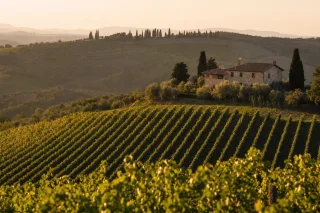
Pajana is one named plot inside the Ginestra cru, planted in 1971 and 1991 at 330 to 340 metres on Lequio-Serravallian marl. Yields are capped at 8 tonnes a hectare under the Barolo disciplinare, and Clerico ages the wine in oak before release.

01

DOC, DOCG, IGT: what the badges mean

Italian wine law sorts bottles into a pyramid. DOCG sits at the top: tightly drawn boundaries, prescribed grapes, mandatory ageing, government tasting before release. DOC is the same idea with looser thresholds. IGT (Indicazione Geografica Tipica) is broader still, requiring only that 85% of the grapes come from the named territory.

Barolo is in the DOCG tier. That is not a quality verdict, it is a description of how much freedom the producer has at vinification and ageing.

02

The denomination rules, in detail

  • Allowed grapes. 1 varieties listed in the disciplinare
  • Yield ceiling. 8.0 tonnes per hectare
  • Minimum ABV. 13.0% vol
  • Minimum ageing. 38 months total (of which 18 in oak)
  • Tasting panel. Mandatory pre-release tasting commission
03

Region and area context

Barolo falls within Piedmont , covering Cuneo, Langhe: Barolo, Castiglione Falletto, Serralunga d'Alba, La Morra, Monforte d'Alba, Novello, Verduno, Grinzane Cavour, Diano d'Alba, Cherasco, Roddi. The denomination is further divided into 11 sub-zones.

04

Reading the label

  • Domenico ClericoProducer / estate
  • NebbioloGrape varieties (in declared order of dominance)
  • Barolo DOCGGeographic indication and quality tier
  • 2020Vintage (year of harvest)
  • 14.5% vol · 75 clAlcohol by volume and bottle size
  • Imbottigliato all’origineEstate-bottled
05

What sits behind the price of Domenico Clerico Pajana

Tracked from
£58.64
Direction
Mostly cost up
Drivers
5 up / 1 down
Main factor
Single-vineyard Ginestra fruit, plots planted 1971 and 1991
  1. 01

    Single-vineyard Ginestra fruit, plots planted 1971 and 1991

    Cost up

    Pajana is one named plot in the Ginestra cru, not a blended village Barolo; old-vine, low-yield Nebbiolo from a single site commands a premium over basic Barolo.

  2. 02

    DOCG ageing plus a modernist barrique programme

    Cost up

    Barolo law demands at least 38 months ageing, 18 in oak; Clerico's French barriques, a share of them new, add barrel cost and tie up capital for years before release.

  3. 03

    Low Barolo yields capped at 8 tonnes per hectare

    Cost up

    The disciplinare caps yields at 8 t/ha and Nebbiolo on these sandy Monforte slopes gives little, so each vine returns few bottles and lifts the unit cost.

  4. 04

    Critic demand: 95-plus scores from Parker, Suckling and Dunnuck

    Cost up

    Recent Pajana vintages earned 96 to 97 points from Wine Advocate, James Suckling and Jeb Dunnuck, and that score-driven demand supports the £73 to £107 UK shelf price.

  5. 05

    UK duty and VAT on still wine

    Cost up

    UK excise duty on still wine up to 15% is £2.67 a bottle in 2026, and 20% VAT on a roughly £90 bottle adds about £15 more before any merchant margin.

  6. 06

    Priced below Clerico's Percristina and Serralunga grand crus

    Cost down

    Within the cru tier Pajana sits below Clerico's flagship Percristina and many Serralunga grand crus, making it one of the estate's more attainable single-vineyard Barolos.

Perfect Pairings

Dishes that complement this wine

Food Pairing

Nebbiolo tannin and tar: dishes for Pajana

Pajana's firm tannin and high acidity are built for fat and protein: Barolo-braised beef, white-truffle tajarin and aged Piedmontese cheese all meet its structure. The same grip makes it a poor match for chilli heat or delicate white fish.

Tannin softening Strong match

Slow-braised beef and veal

Nebbiolo's firm, fine-grained tannin binds with the collagen and fat of long-braised meat, while Pajana's bright Langhe acidity lifts the heavy reduction sauces. Brasato made with Barolo itself is the textbook match.

Try with: Brasato al Barolo · Ossobuco alla Milanese · Beef stew · More pairings →

Aromatic bridge Strong match

White truffle and porcini

The tar, dried rose and forest-floor aromas that define Pajana mirror Alba white truffle and dried porcini, so wine and dish amplify each other rather than compete. Egg-rich tajarin gives the tannin a little fat to grip.

Try with: Tajarin al Tartufo · Porcini mushroom risotto · Agnolotti del Plin · More pairings →

Fat cutting Good match

Game and roast wildfowl

High acidity and a dusty tannic grip cut through the fat and gamey richness of venison and duck, refreshing the palate between bites. The wine's full body keeps pace with dark, savoury meat.

Try with: Venison Stew · Roast Duck · Rack of lamb · More pairings →

Acidity matching Good match

Aged Piedmontese hard cheese

Nebbiolo's acidity scrubs the palate clean against dense, salty aged cheese, while the tannin finally finds the protein and fat it needs. Local Castelmagno and aged Toma are the regional partners.

Try with: Castelmagno · Aged Toma · Parmigiano Reggiano

Body matching Good match

Hearty Langhe primi

Pajana's full body and long, savoury finish carry rich Piedmontese first courses without being overwhelmed, and a touch of bitterness in radicchio echoes the wine's herbal edge.

Try with: Agnolotti del Plin · Radicchio risotto · Tajarin al Tartufo · More pairings →

Avoid Clash

Chilli heat and delicate white fish

Firm tannin and 14.5% alcohol amplify chilli heat and turn bitter against delicate white fish, while the wine's structure flattens lighter dishes. Save Pajana for rich, savoury food.

Skip with: Vindaloo · Sichuan hotpot · Steamed sea bass · Sushi · Pairing guide →

Drinking + cellar

Cellaring Pajana from the Ginestra cru

The 2018 is drinking from release and should hold to the late 2030s; the riper 2020 will reward a few more years and run into the early 2040s. Nebbiolo's tannin and acidity, plus Clerico's oak framing, give Pajana the spine for long ageing.

Drinking window
2025 → 2042

Peak around 2032. Best in the years above; holds without falling over either side.

Decanting
h1

A short splash decant softens the first-pour edge and opens the aromatics.

Cellar potential
High

A DOCG Barolo with 38-plus months of mandated ageing, high tannin and acidity and a 15-to-20-year track record is built for the cellar.

Buy now or wait?
Buy now

£58.64 is the lowest tracked offer for the current vintage and we have no signal of further discounting.

Sources & trust

Sources behind this Pajana page

Prices & stock

Read directly from each retailer’s public product page once a day. Last refresh: 30 May 2026, 16:12 BST. We do not hold stock and we do not accept payment for placement.

Confidence · High
Tasting notes

Drawn from what drinkers consistently report on Vivino and Wine-Searcher, summarised in our own words. A crowd read across many tasters, not a single critic.

Confidence · Medium
Appellation rules & ageing

From the official Italian disciplinare for this denomination, cross-checked against the Ministry of Agriculture register.

Confidence · High
Why it costs what it costs

Our reading of the price, drawn from the disciplinare, public UK duty rates, and typical landed-cost benchmarks. Not a quote from the producer or a retailer.

Confidence · Medium
Drink window & cellar potential

Style guidance for this kind of wine at this price point. Treat it as advice, not a forecast for the bottle in your hand.

Confidence · Medium
Related

Pajana's place in Barolo and the Ginestra cru

Producer
Domenico Clerico Piedmont
Grapes
Nebbiolo
Denomination
Barolo DOCG

Common Questions

Pajana is a single-vineyard Barolo DOCG made entirely from Nebbiolo grown in the Pajana plot of the Ginestra cru in Monforte d'Alba, Piedmont. It is one of several crus bottled by the late Domenico Clerico's estate, first produced in 1990.

Expect tar, dried rose and forest-floor aromas over red cherry, dark plum and tobacco, framed by Clerico's barrique ageing. It is full-bodied and firmly tannic with the high acidity typical of Barolo, and drinkers rate it 4.2 on Vivino.

This page lists the 2018 and 2020 vintages from UK merchants, roughly £73 to £107 a bottle. The 2018 is a cooler, perfumed year drinking early; the 2020 is riper and mid-weight with longer cellaring ahead.

Its tannin and acidity suit rich, savoury food: Barolo-braised beef, ossobuco, white-truffle tajarin, game and aged Piedmontese cheese. Avoid chilli heat and delicate white fish, which clash with the wine's structure.

The 2018 is drinking now and should hold into the late 2030s, while the 2020 will reward keeping into the early 2040s. Nebbiolo's tannin and acidity give single-vineyard Barolo the spine for fifteen to twenty years.

The Pajana plot sits at 330 to 340 metres in the Ginestra cru of Monforte d'Alba, on sandy soils with a high share of active limestone over Lequio-Serravallian marl. Its name comes from an old hilltop road linking Monforte and Serralunga.

You May Also Appreciate

Affiliate disclosure. Some links above are affiliate links. If you buy through them we may earn a small commission at no extra cost to you. Editorial coverage, ratings and tasting notes are written independently and a retailer cannot pay to be listed or to be ranked higher.

How retailer prices are sourced. Prices and stock are read from each retailer’s public product page once a day. Outbound buy links carry rel="nofollow sponsored noopener". The list is sorted by price; we do not accept payment for placement.

What we will never do. Imply we tasted a bottle when we didn’t. Imply stock when a retailer is out. Imply independence on links that are paid affiliate links.

Domenico Clerico Pajana