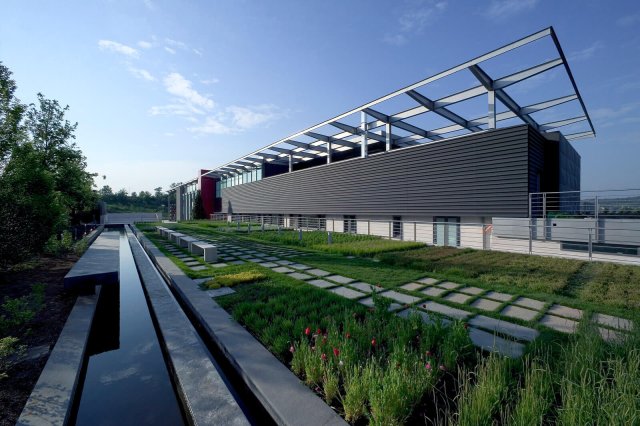
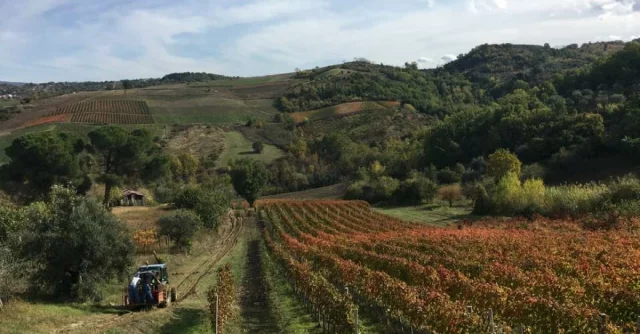
The cellar is dug into the Roman aqueduct that once carried water from the Apennines down to the Piscina Mirabilis, the cistern at Bacoli that supplied the imperial fleet at Misenum. Constant temperature and a humid microclimate behind the tuff walls let the Falanghina rest in bottle without temperature control, the same engineering benefit the Romans designed into the structure two thousand years ago. The vineyards climb the hill of Baia immediately above, between the houses of the modern town and the Parco Monumentale di Baia, the archaeological park that contains what is left of the imperial bath complex.The Di Meo presence on this land predates La Sibilla as a brand. The family nickname Spigoni, ears of wheat, dates from the period when grain came before vines. The first Luigi Di Meo carried wine for local nobility by mule in the early 1800s. His son Pasquale bought the first parcel of land at the end of the nineteenth century. In 1938 the Italian state expropriated the property over the archaeological remains beneath it, then granted the family the right to plant vineyards within the protected zone, which is why the present rows are interlaced with Roman walls and opus reticulatum. The current Luigi Di Meo founded the modern azienda and bottled the first labelled vintage in 1993, with his wife Restituta and their three sons Vincenzo, Salvatore and Mattia now running the cellar and the vineyards together.The estate works two grapes from the Campi Flegrei DOC, Falanghina Flegrea for the whites and Piedirosso for the reds, both planted on their own roots. The Phlegraean soils are sandy, basaltic and deep enough that phylloxera never colonised the area, so vine material has not been grafted onto American rootstock as it has nearly everywhere else in Europe. Some of the parcels on the Baia hill carry vines older than sixty-five years. The single-vineyard whites in the Selezione tier come from the Cruna DeLago plot above Lake Lucrino and from the older Vigna Madre and Domus Giulii vineyards inside the archaeological perimeter.Three lines move from drinkable to age-worthy. The Tradizione bottlings, led by the Campi Flegrei Falanghina, are built for the salt and seafood of the Bay of Naples table. The Selezione tier, with the Cruna DeLago white at its centre, lifts the same Falanghina into a longer fermentation and a few years of bottle. The Ricerca line, currently a Falanghina passito called Passio, is where the family experiments with later harvest, longer rest and more time in the cisterns.Tastings happen in the cellar by appointment on Friday and Saturday mornings. The visit walks down through the vineyards from the new Piedirosso plantings to the Cruna DeLago parcel, then into the Roman cisterns themselves before sitting down to taste. Three flights are offered, from a short orientation to the Tradizione range up to the full set including the Selezione and Ricerca bottlings. Bacoli is on the Cumana railway out of Naples and the cellar is four hundred and fifty metres from Fusaro station, which is the simplest way to arrive without driving the Phlegraean coast.








 Campania, Italy


 1 wine
  Tastings
 Tours
Tours
 Accommodation
 Booking required